Modern Deck Guardrail with Electrical Tubing Balusters
There are a bunch of different materials that can be used for creating an building a deck guard rail. One of the most common simplest methods is to just use pressure treated materials like the frame these decks are most commonly built with. More ornamentational elements can also be used.
Today, we’re showing an example of a deck that is built in a relatively simple and common configuration and style, but they used an interesting material for the guardrail balusters. The material shown here looks similar to a pipe, has a metallic type exterior finish, but it’s not something normally used for decorative type installations. It’s actually a type of electrical conduit. It’s a light tubing called EMT, in the electrical industry.
The tubing is comparatively inexpensive. It holds up well to deterioration because it’s covered with a zinc coating. Zinc coatings are used in galvanization type processes to prevent steel or iron from rusting. The zinc coating isn’t the most durable of all types of materials, but it does okay, to deter and slow the process of rusting.
One somewhat unique element of this deck though is that it isn’t built with the more common 2x frame and 5/4 deckboards. Instead it is an elevated concrete deck. Unlike the more common and typical backyard decks that we’re referring to, this type of deck needs to have a more significant structural load path. As well, the construction of the deck itself requires substrate forming. Essentially, a frame and form boards need to be laid and supported below the area of the concrete. Concrete is extremely heavy, but once in place, it has high rigidity. If reinforced, it can also have a moderately high degree of resistance to deflection and a sufficient tensile strength.
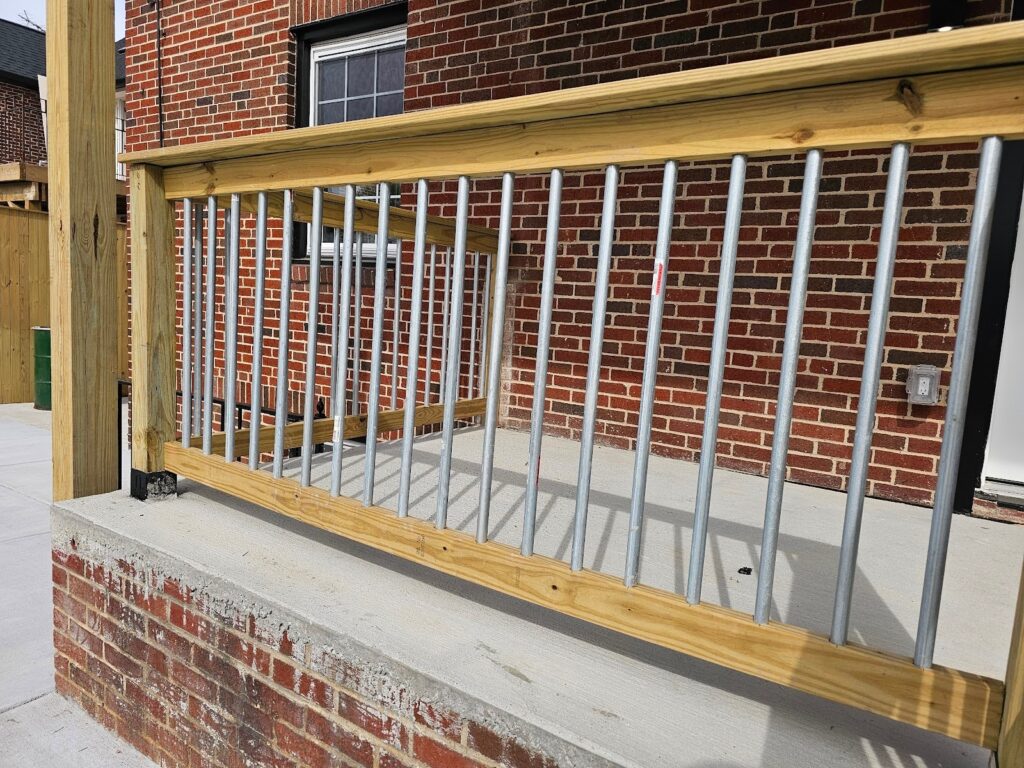
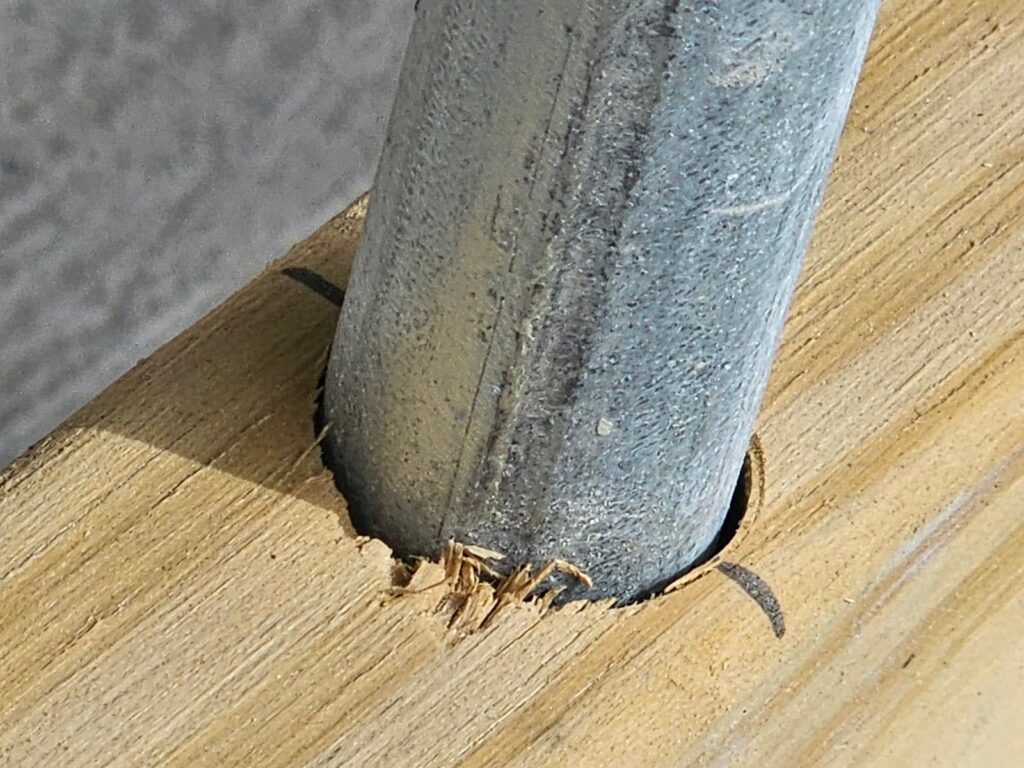
Along the top of the bottom rail on the underside of the upper rail of the guardrail, 7/8 in diameter holes have been bored or cut into the rails to create a location to set and nestle the balusters. To avoid compromising the axial strength of the rails, these holes can be set just moderately deep. In other words they can be built or cut relatively shallow.One of the problems, particularly at the lower rail, is that by cutting a recess into the upper surface of the rail, it creates a pool or small reservoir area, at each baluster base, which water can enter.
Water will not drain from this area and therefore has a higher tendency to seep into the wood which will accelerate the timeline of deterioration. This type of deterioration can be deterred through applying sealant type chemicals, but it’s one of the few inherent design shortcomings in this type of installation.
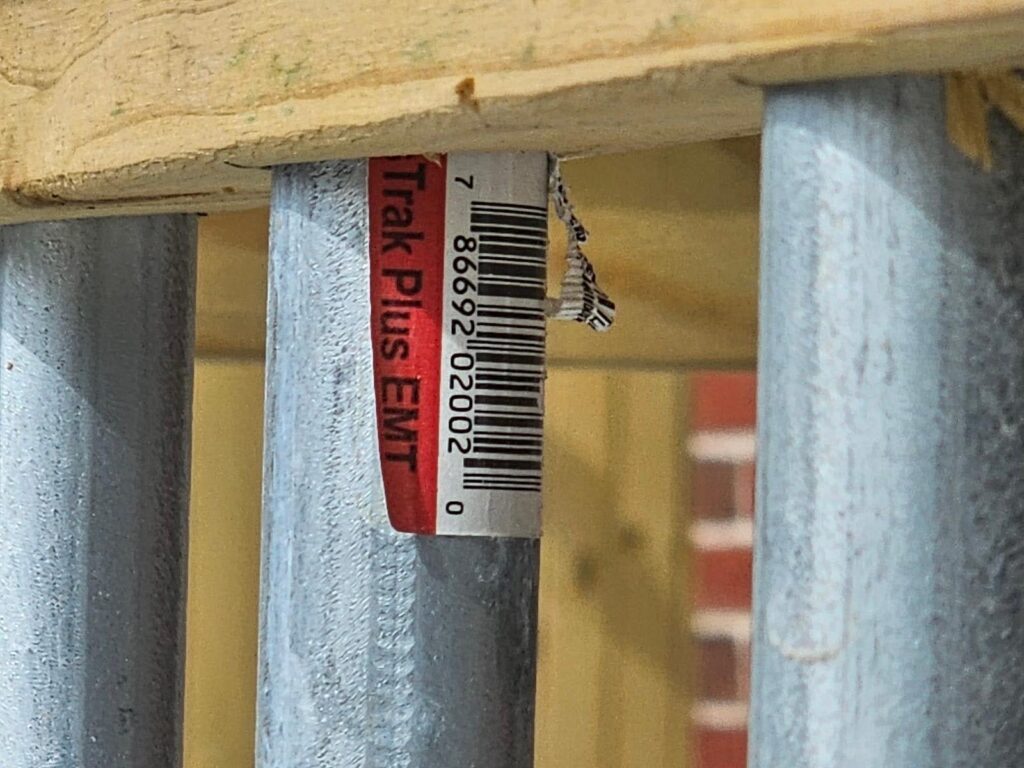
In the next picture below, you can see an example of where they left one of the original product tags on the tubing. Although it has been used for an entirely different purpose, this is a clear sign that it’s actually an electrical product. From a building code perspective, if installed in the right configuration and methodology, it’s not inappropriate to use a material like this, although it’s not common.
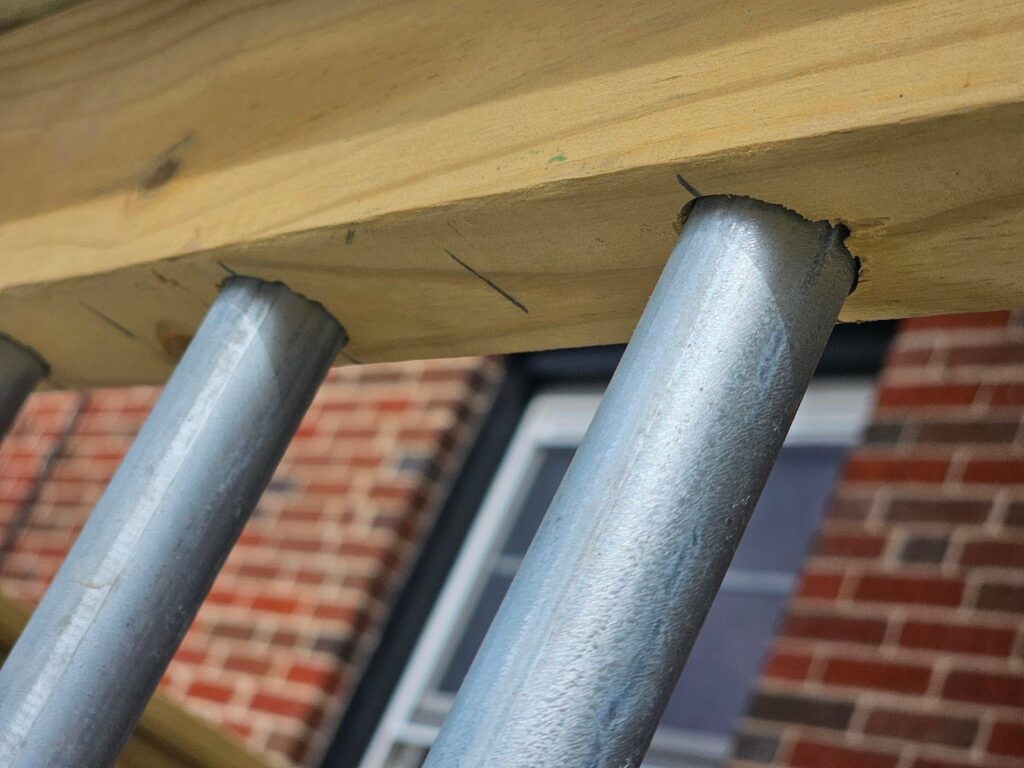
If you look closely in the next picture below, you can see that the rail boards have been marked with a spacing layout. This layout was marked on the board before the individual bores or holes were cut into the board. By creating a spacing that’s less than 4 in of net opening, it allows the balusters to meet one of the code requirements, in most cases. We recommend putting the spacing just a little bit tighter because it avoids any possible error or deviation that creates a spacing accidentally just larger than the code tolerance. Often, even though it’s smaller than the maximum requirement, we may recommend a spacing of 3.5 inches on center.
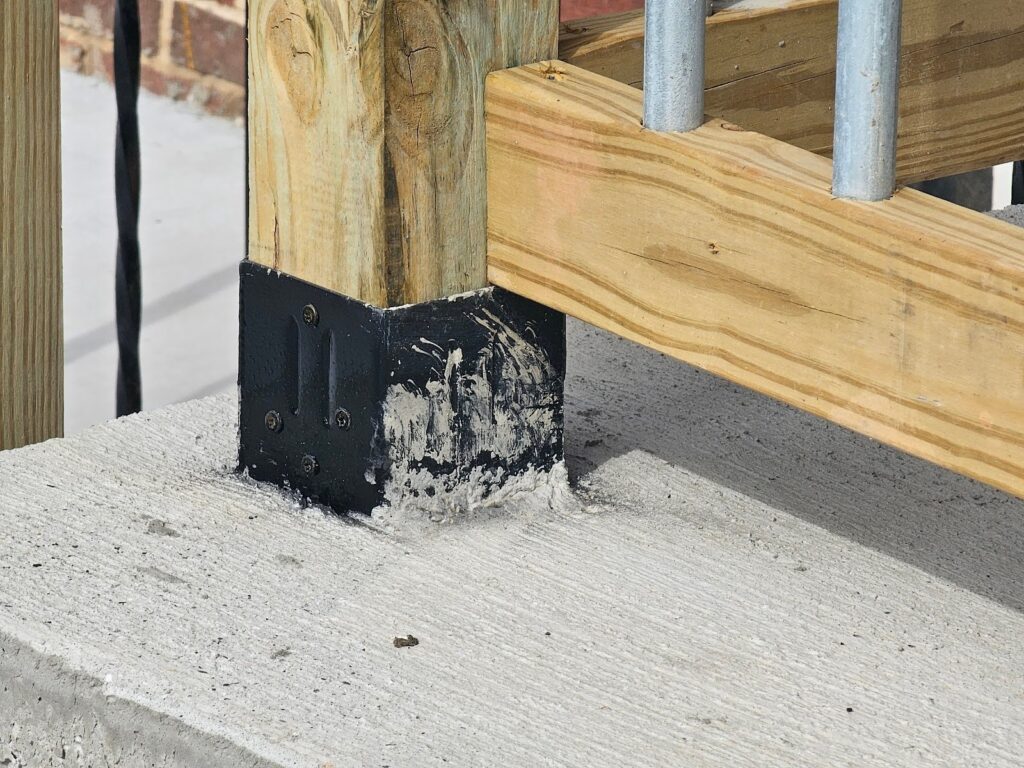
The picture below shows one of the corner post bases. Here you can see a metal hardware tie has been used to connect the post to the concrete deck substrate. In lieu of a framed deck, there are not easy or typical methodologies for connecting wood to concrete in a configuration like this with typical fasteners. Instead, the base plate is cast directly into the concrete before it hardens. Once hardened, the base connector is very stable.
Use a contractor who understands and cares about doing things right. Always, feel free to reach out to us here at Dupont Decks and Patios. We are happy to help with almost all steps of the deck building and design process. A backyard and outdoor space should make a significant, positive impact on both quality of life and home value. We can help with more than just decks, we also build patios, pergolas, ramadas, awnings, gazebos, arbors, and privacy fences.
Let us know about your ideas and talk to us if you have questions about possibilities. We are happy to participate in improving your outdoor space and quality of life! You can call us at (202) 774-9128. You can find us online at https://dupontdeckspatiosdc.com and you can email us there as well at https://dupontdeckspatiosdc.com/contact-us