Synthetic Deck Handrails and Guardrail Systems Explained – Part I
There are a handful of common options for the materials used for the construction and fabrication of handrails and guardrails. Today we’re going to look at some of the types least commonly used here in Washington DC. Instead of the more common steel or stick framed wood handrail or guardrail systems we see most often in DC, today we’re looking at synthetic vinyl and aluminum handrails. We stopped by one of our local showrooms and are showing some of those options here on our blog.
The pictures below show a few different examples of some of the materials that can be used from this class of anodized aluminum and synthetic vinyl handrails. Composite materials are made to look like more traditional wood. Aluminum materials are generally made to look like steel type installations.
There are some pretty significant differences between these different types of materials. Steel, for example, is generally prefabricated, to a degree offsite. After the Initial measurements have been taken, steel systems are largely built in a fabrication shop. Then the steel is brought to site and assembled and customized to fit at the points of connection. Even when shop finished, in other words, painted off site before being brought to the site, generally a final touch up will need to be completed after the installation.
Any spot welds or connections made on site will generally need a reapplication of primer and paint. We highly recommend using a good primer on steel guard rails and handrails before the finish coats of the final paint are applied.
One of the few downsides to steel and real wood materials is that they do need a bit of upkeep and maintenance over their lifespan. They need to be recoated and coated well with tough finishes so that they will not deteriorate at an accelerator rate. Wood doesn’t rust like steel, but most species of wood deck and guardrail and handrail materials will deteriorate slowly if left unprotected. They basically need to have high quality sealers and or stains applied to protect the wood fibers.
Sealers fill some of the pourous elements of the wood fibers and help protect water entering deep into the grain fibers of the wood. This makes the wood last much longer because water is one of the two main types of factors that accelerate deterioration of wooden materials. The other big deteriorating factor is exposure to ultraviolet. Ultraviolet light comes directly from the Sun and will break down and damage wood materials.
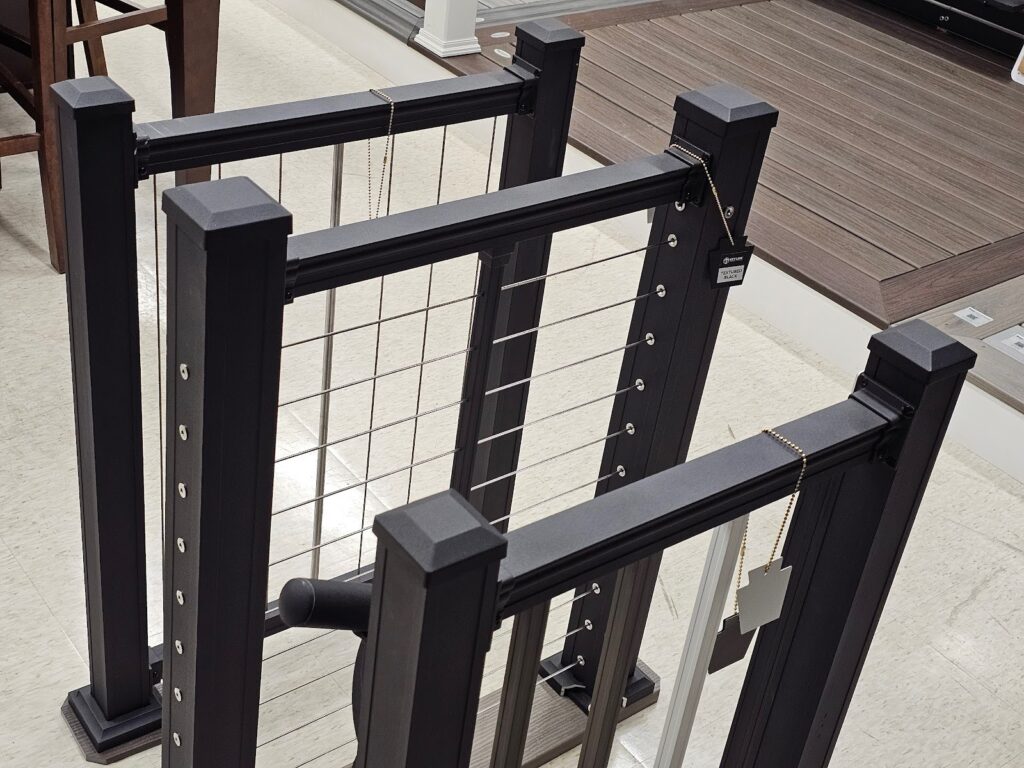
Aluminum materials like the ones shown in the picture of an sample guardrail are generally resistant to the deleterious effects of exposure to ultraviolet. However, PVC can be seriously damaged by long-term exposure to ultraviolet. In more recent years, the composition of exterior grade PVC has changed, to a degree. Today, these chemicals last better than they did just a few years ago.
Even in the case of aluminum though, the finish or coating on top of the aluminum is normally an anodized paint. Anodized paint performs much better than typical field applied paints, in most cases, but it doesn’t last forever. UV also negatively affects the lifespan of even anodized paints.
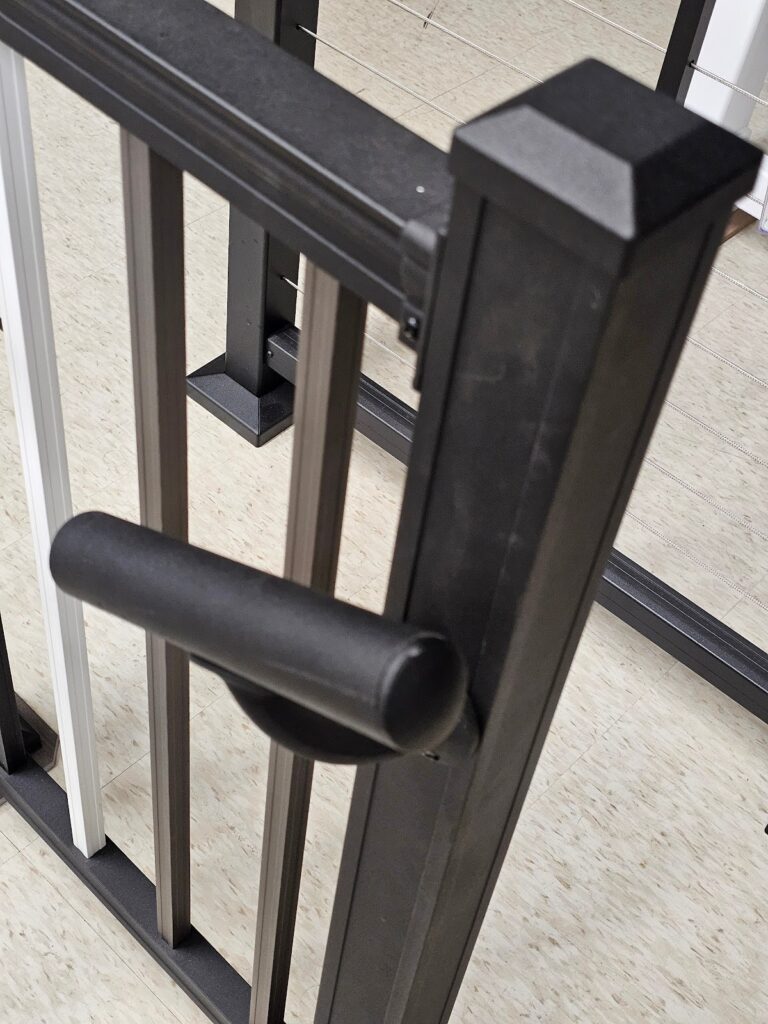
In the pictures above and below you can see sample handrail installations. There’s a difference between a handrail and guardrail. We are kind of lumping them together here because they’re being built with similar materials and they kind of go together. From a Code perspective though they have different rules and are classified in different ways. A handrail is something you grab a hold of to help yourself walk up or down instead of steps. In contrast, a guardrail is something that prevents you from falling off the edge of a platform or elevated area, like a deck.
The particular example shown here happens to be very small because it’s just a sample. In real applications, the handrail will normally extend the length of the stair treads and risers and even a bit beyond on both ends.
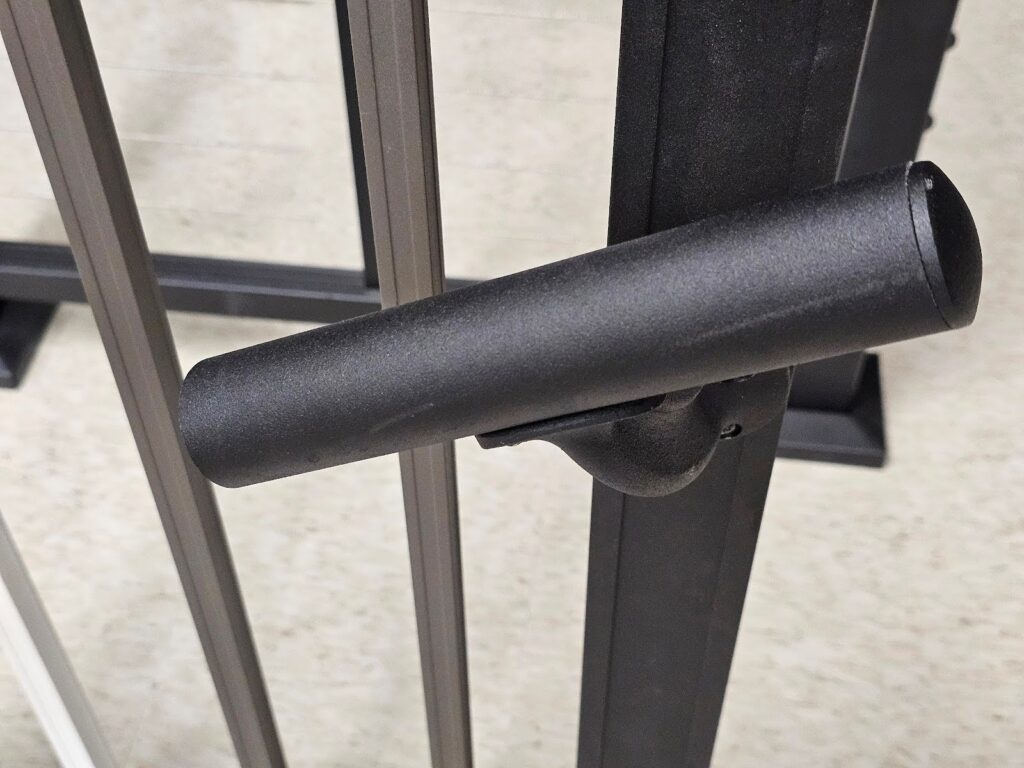
This coming week we’ll look at examples of posts. Posts are used in all types of construction of decks to support both handrails and guardrails. The post itself will generally be the pathway of load or support. The intermediary handrail or guardrail will support someone’s force or weight, but will then extend that force or load out to the post which will support the intermediary sections of guardrails or handrails.
In this coming week’s blog, we’ll also continue talking about the same topic and we also look at some of the decorative post caps used at decks built with guardrails and handrails of this material type.
Use a contractor who understands and cares about doing things right. Always, feel free to reach out to us here at Dupont Decks and Patios. We are happy to help with almost all steps of the deck building and design process. A backyard and outdoor space should make a significant, positive impact on both quality of life and home value. We can help with more than just decks, we also build patios, pergolas, ramadas, awnings, gazebos, arbors, and privacy fences.
Let us know about your ideas and talk to us if you have questions about possibilities. We are happy to participate in improving your outdoor space and quality of life! You can call us at (202) 774-9128. You can find us online at https://dupontdeckspatiosdc.com and you can email us there as well at https://dupontdeckspatiosdc.com/contact-us