Steel Guardrails Installed on Kneewalls for Deck Safety
We’re looking at a construction installation that’s similar to a deck, but it’s really on an elevated grade. Decks are normally built above the ground. Here, the ground is built up and turned into a terrace, like a raised patio. Because there’s a drop off though on the other side of the raised knee wall which is retaining the earth on the patio side, they’ve installed a guardrail to prevent any risk of falling off the elevated area.
Most adults wouldn’t just walk off the edge, but you can’t think about what most people would do most of the time. When you’re designing something that has a drop off like this, particularly where the drop off is more than about 30 inches high, you should provide some provisions for safety. In fact, the building code may require it depending on the specific location and configuration of the installation.
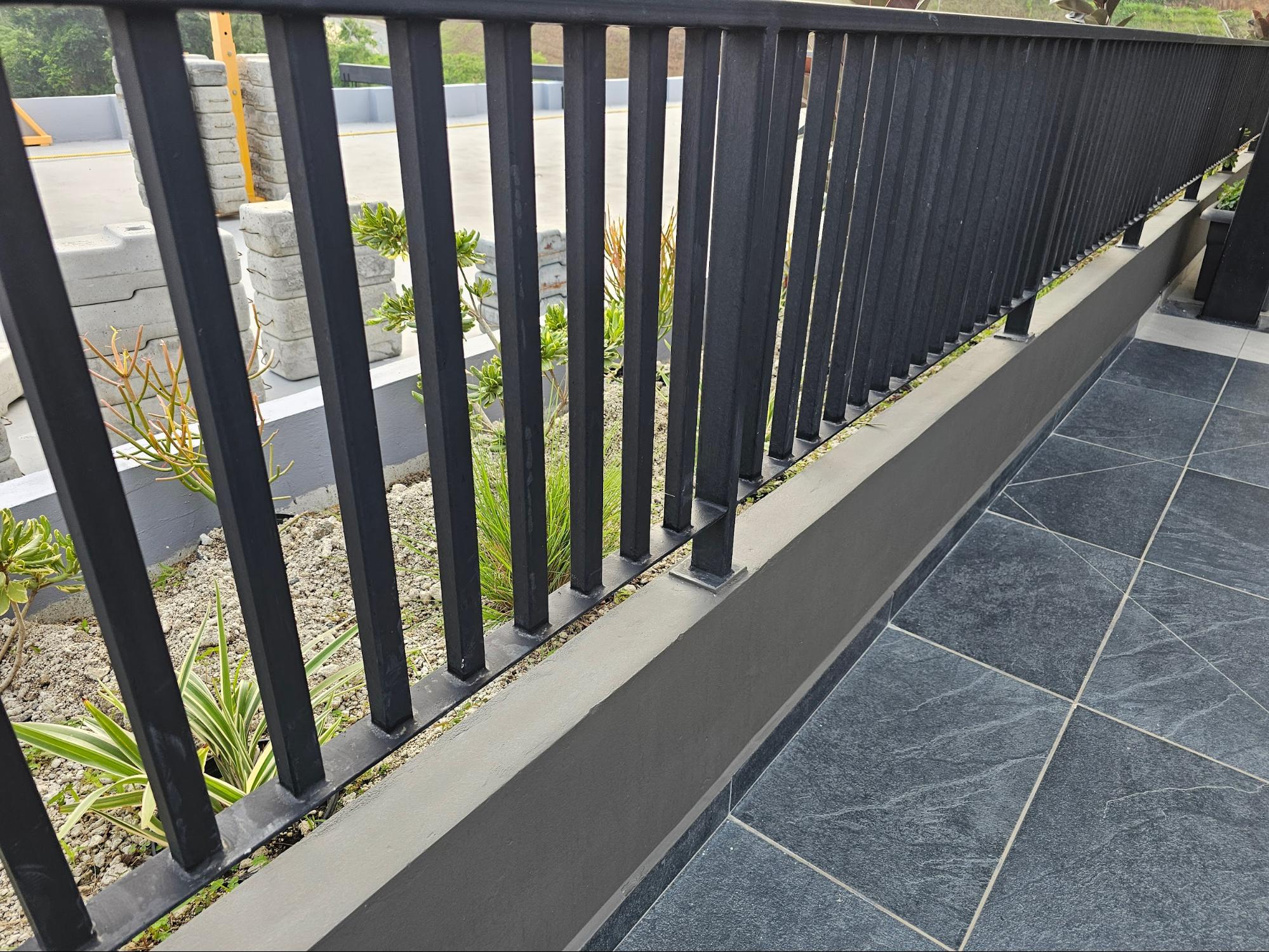
At the base of the guardrail, there is a curb that’s built up above the elevation or height of the paving. That particular curb appears to be installed to specifically give the post-mounting location a position higher than the horizontal plane of the walking surface. It’s possible, in circumstances where you have building materials assembled in this type of arrangement, that there is an interior space below the balcony. This type of installation is very common on buildings that have been renovated and converted into other uses such as condominiums. Even where there are apartments or homes with modern retrofits, builders and developers, may install balconies over interior spaces.
We generally recommend against building new balconies over interior spaces unless it’s going to be done by a professional like ourselves, all the way through. Otherwise, particularly where developers are involved using multiple trade contractors, important steps might be skipped.
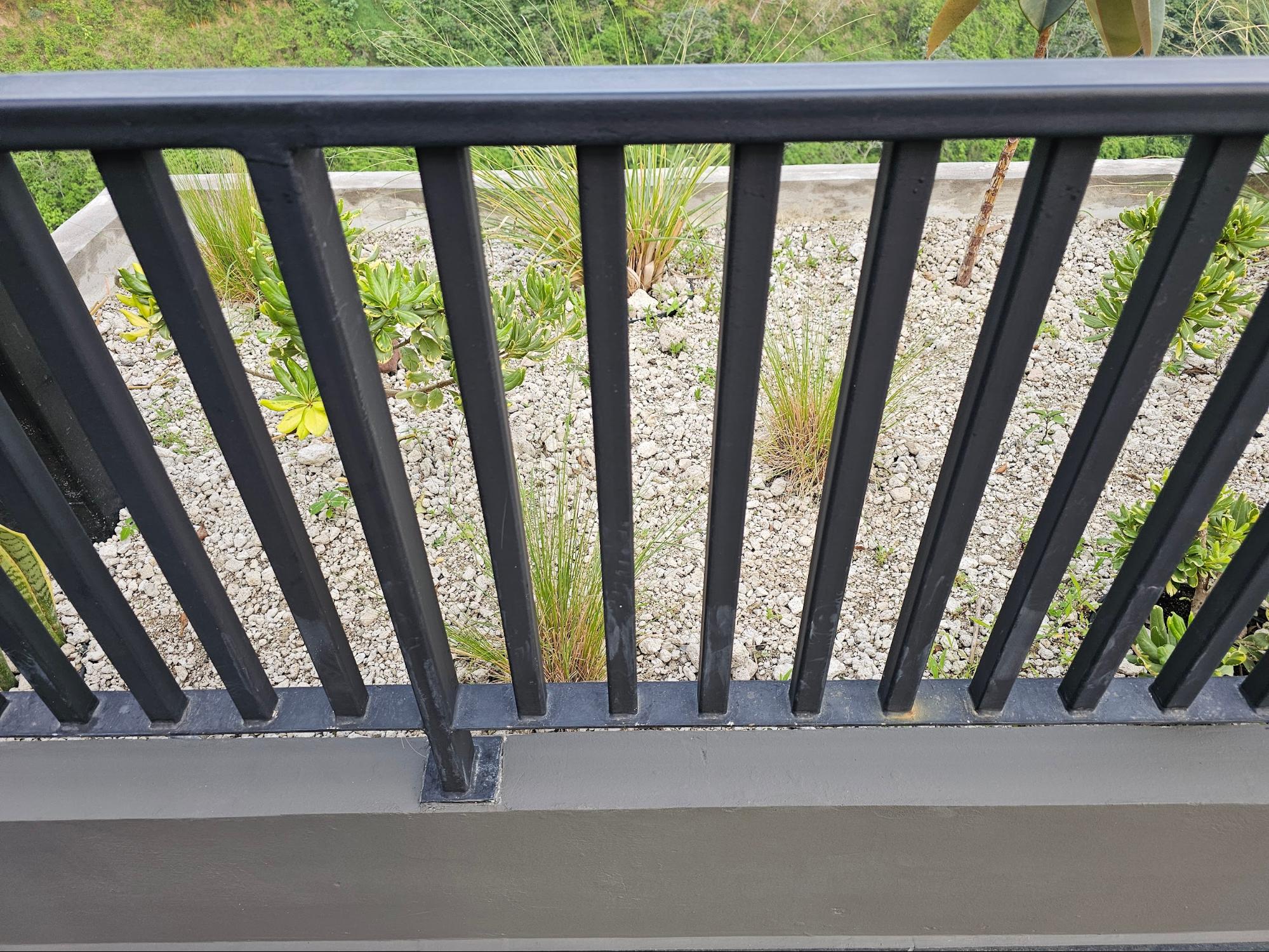
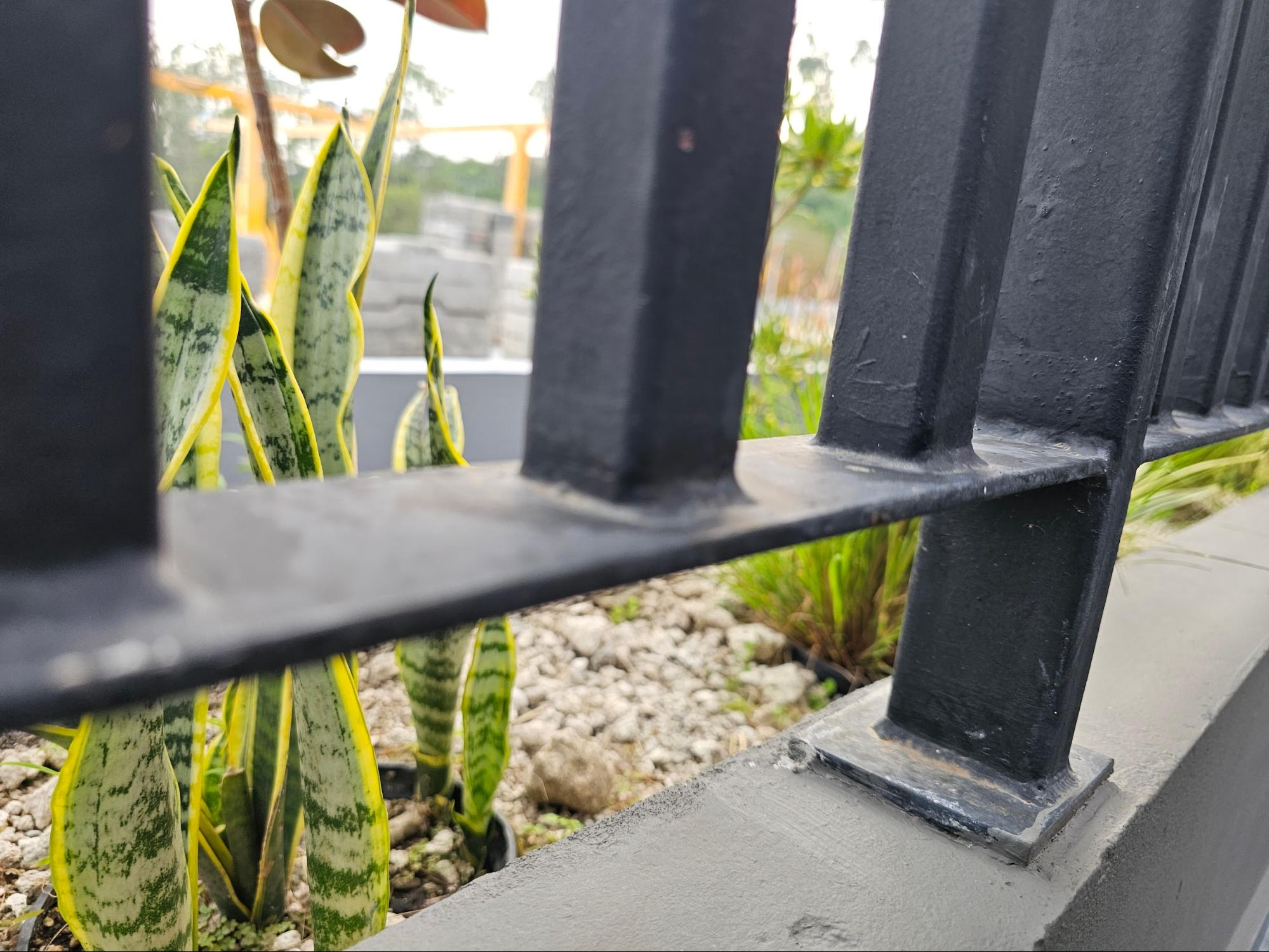
For the balustrade system, here, they have used a hollow tube instead of the more typical solid thinner half inch steel bars. This installation might work perfect from a functional perspective, but it actually might be lighter weight and lower cost. It’s not in keeping with historic installations but may even look better in the contemporary type of overall design.
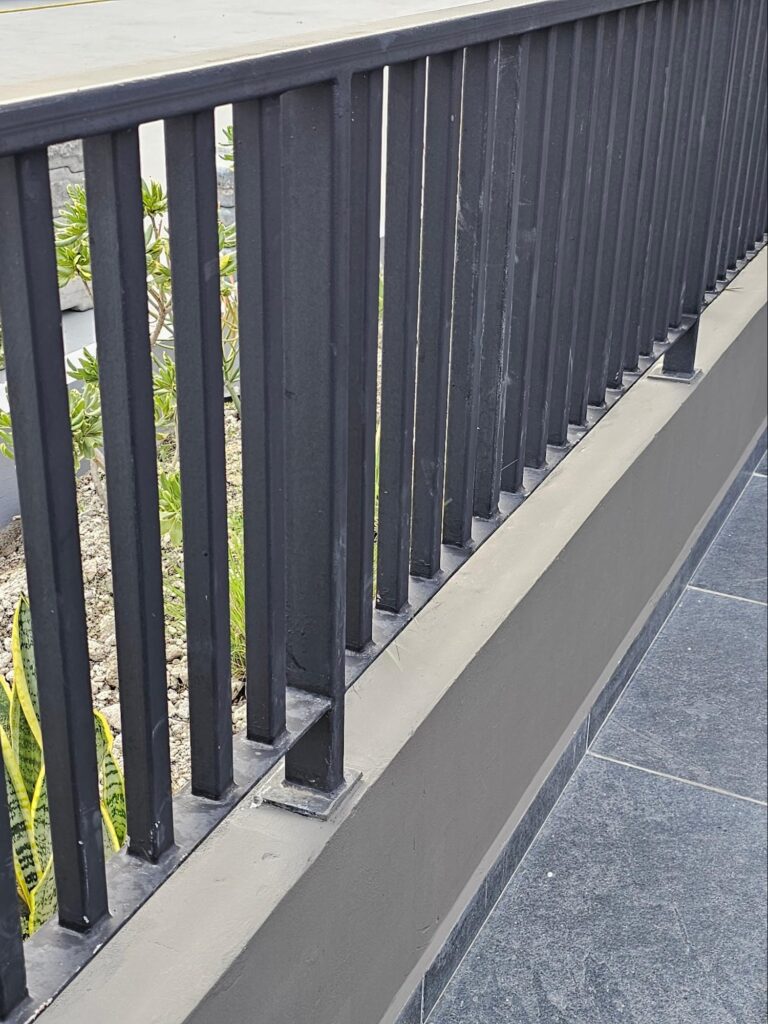
Often, in historic designs, guardrail posts are made with 3/4 inch solid steel. Here, they’ve used a 1 inch x 2 inch tube steel instead. In the historic parts of Washington DC, particularly for historic fences and guardrails and handrails at exterior stairways, it’s very common that the iron work is painted with a semi-gloss or satin black paint. We think a satin sheen general looks much better. After many years, historic iron work may have many layers of substrate paint coatings below the surface finish. Especially where substrate coats have partially flaked off, there might be a significant rough texture at the surface of the metal work.
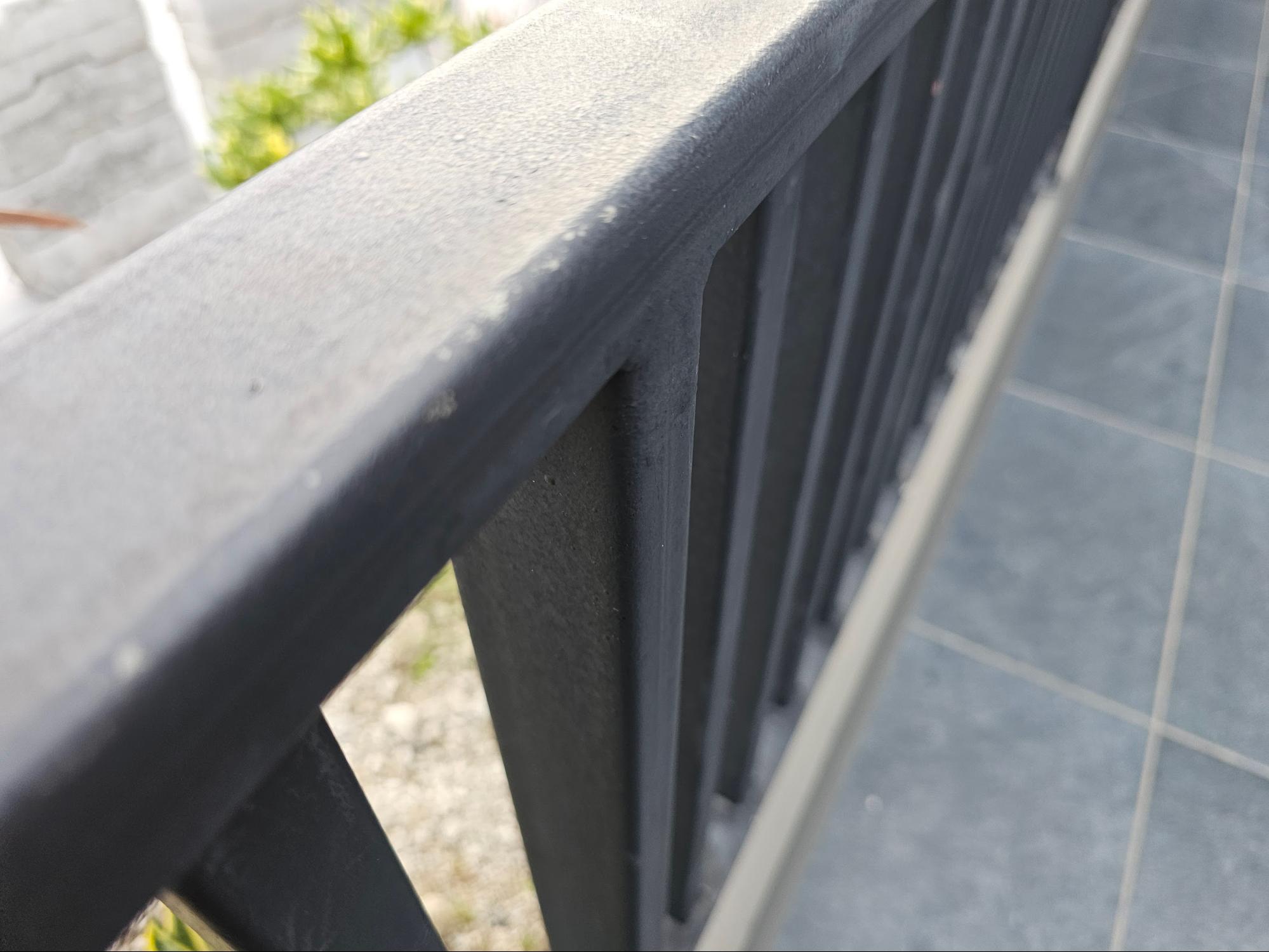
Paints and coatings with higher degree of sheen or gloss have a tendency to accentuate imperfections in the substrate of the syrface which is painted. In this case, if there are layers of old paint which are partially flaked or delaminated, the higher sheen paint will accentuate those imperfections. In other words, if the paint is glossier or shinier, it’ll essentially make it look like the rough texture is even worse. It shows off that bad condition. In comparison, lower sheen paints such as satin or flat paints have a tendency to hide those imperfections a lot better. Flat paint, for example, does a good job to hide imperfections in the substrate.
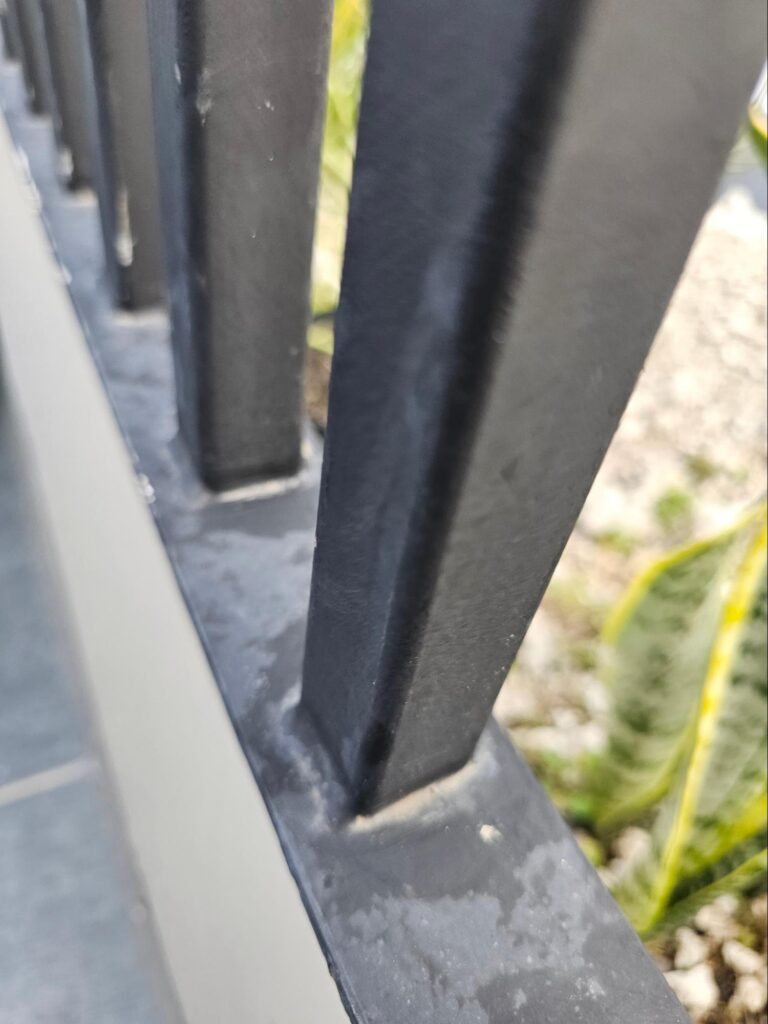
Understanding just this part of the concept of paint sheen and substrate texture accentuation, it sounds like a simple issue: less sheen looks better. That’s generally true, but there’s another element to be taken into consideration when deciding on the paint sheen. Particularly with older types of paints, higher gloss also was related to a higher degree of enamel, in the paint. In other words, higher sheen paints had a higher resistance to absorption of hydration.
They essentially were a little bit tougher and could last longer than low sheen paints. In fact, in just the past few decades, some of the paint technologies have changed and now flat paints are generally less water soluble after cure. A few decades ago, particularly with interior paints, flat paints were not cleanable. You couldn’t wipe them down with a wet cloth because the surface of the paint would literally dissolve in the presence of hydration and slight abrasion. Today, some of the chemical formulations have been changed so that even flat paints can be used in exterior applications.
Use a contractor who understands and cares about doing things right. Always, feel free to reach out to us here at Dupont Decks and Patios. We are happy to help with almost all steps of the deck building and design process. A backyard and outdoor space should make a significant, positive impact on both quality of life and home value. We can help with more than just decks, we also build patios, pergolas, ramadas, awnings, gazebos, arbors, and privacy fences.
Let us know about your ideas and talk to us if you have questions about possibilities. We are happy to participate in improving your outdoor space and quality of life! You can call us at (202) 774-9128. You can find us online at https://dupontdeckspatiosdc.com and you can email us there as well at https://dupontdeckspatiosdc.com/contact-us