Understanding Offset Deck Loadpaths at Posts
The loadpath for most decks is relatively simple. A quick reading through the blog section of our website can teach you a lot about the basics of simple load path construction. In most cases at a typical backyard type deck, the load path begins at the ground on a set concrete footings. From there there will generally be a pair or multiple vertical posts that support the deck above grade. The pressure and weight, often referred to in engineering as a load, is then distributed outward, horizontally to support the deck joist, in most cases.
The guardrail is often also connected to those posts and to those rim joists which span and distribute the load to the deck floor joist. Also, the guardrail will normally be supported by the rim joists and or the vertical posts. In most cases, vertical posts will be extended upwards to provide a strong structural support for force resistance against the guardrail.
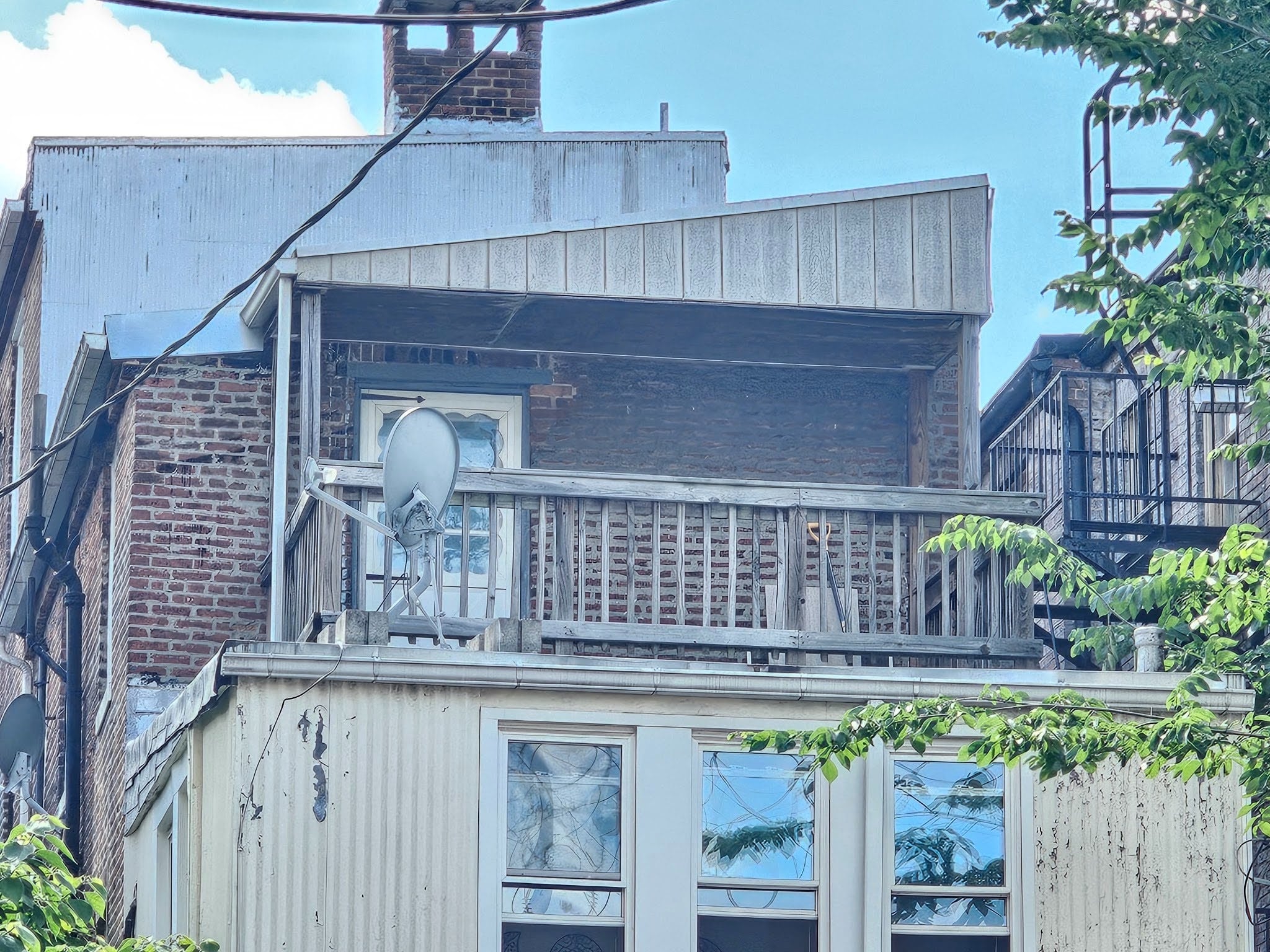
This setup may sound elaborate, but the configuration and arrangement that we describe here, above, is one of the most simple and common types of backyard or rear house decks. In the picture below, you can see a similar type of deck, but here, in this particular example, there is an offset between the edge of the deck and the structure of the support system below. If you look closely, you can see the edge of that deck only extends to within about 18 inches of the post and stops short.
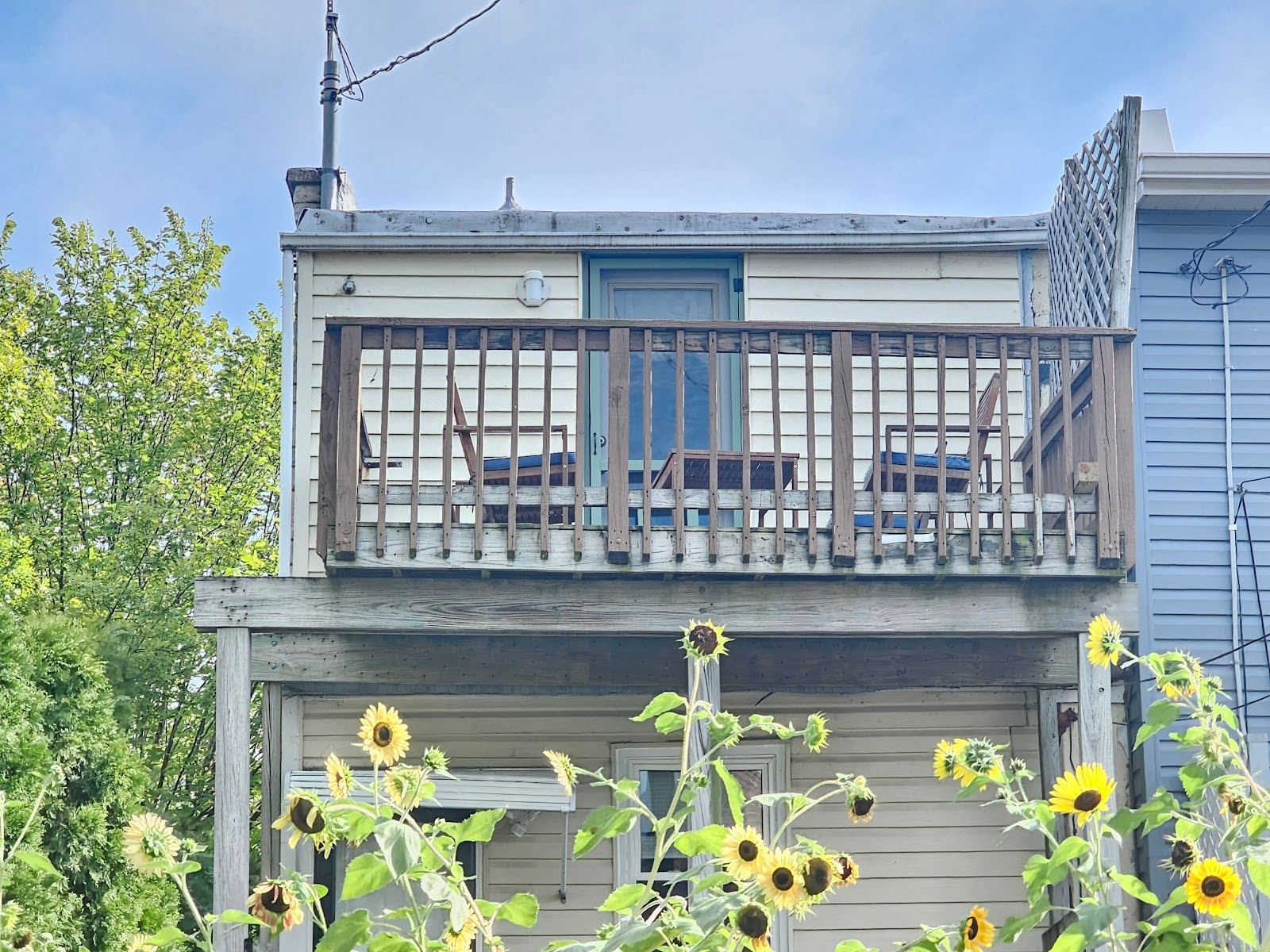
You can see a better view from the picture below. Here, you can see the same edge of the deck from a lower angle looking upwards. Other than this big difference, of the unique offset, most of the elements of the deck are relatively similar to what we would find in a more typical deck layout. Especially on the back of row homes, the most common type of layout is similar to this, where the deck extends across the rear wall of the building. Generally the projection away from the vertical rear facade of the building will be roughly 8 feet.
In some cases there are exceptions where decks will be much shorter and in some other cases they’ll be much longer to give a wider area of usage. We recommend most decks or balconies extend at least 6 feet. With less than 6 feet it’s a bit difficult to set up even a small cafe table and have a seating area on the deck. When including a seating area it’s optimal to have enough space to walk around that seating or table area conveniently without having to squeeze through a tight space between the edge of the table and the guardrail.
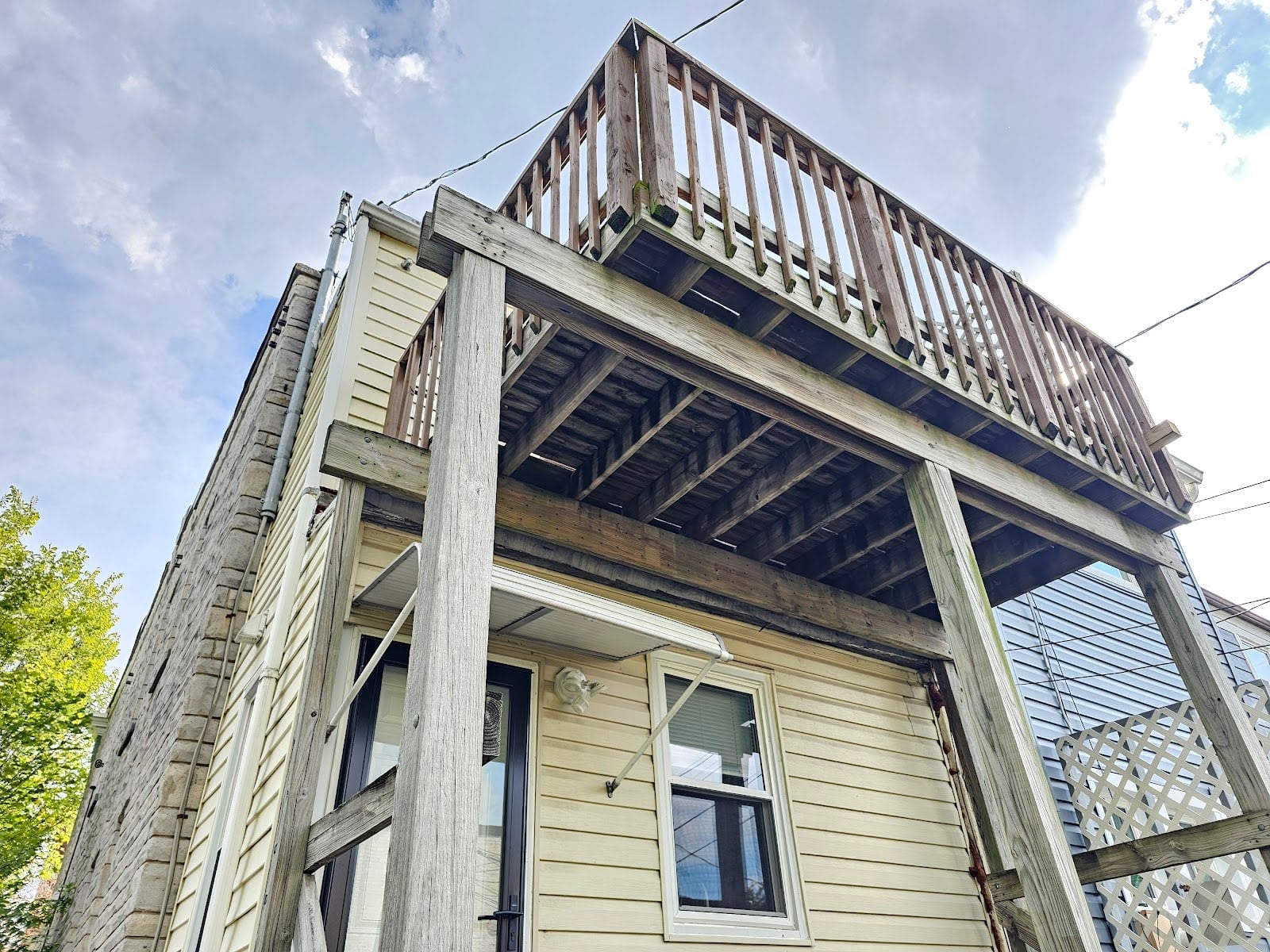
The particular offset doesn’t necessarily cause a problem with bearing capacity. It’s important to remember though that bearing capacity isn’t the only structural force important to consider in deck framing. (Resistance to lateral movement, uplift, connection failure, and deflection are also other important structural factors to consider outside of this discussion.) Essentially, there are five posts used to support the deck and connect to girders above. From a bearing perspective, the girders can support the individual floor joists of the deck itself.
The only detail that’s really different here is that the rim joist at the edge of the deck doesn’t line up on top of the girders themselves. Having that side rim joist line up does add some stability. One of the differences here though that would help with overall stability would be if the guardrail were to connect to a framing member closer to the posts, it would increase overall rigidity and stability.
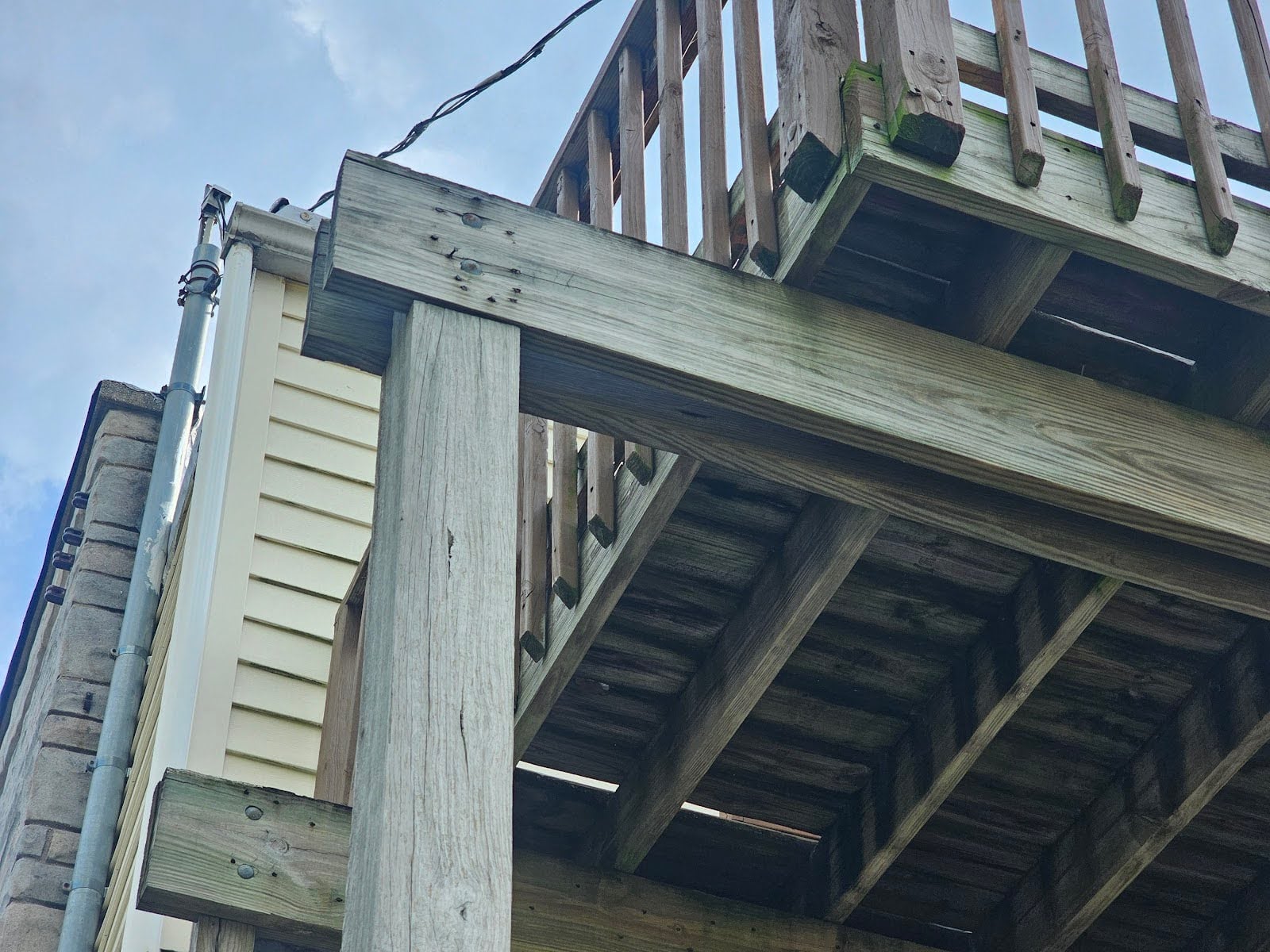
Here, you can see a closer view of that offset at the level of the deck rearmost girder. The guardrail is connected to the rim joist of the deck with a pair of 4×4 vertical posts at each of the two outside corners of the deck. Between those posts, there are also intermediary posts. In all of these cases, the posts are notched to create a small recess to connect to the rim joist.
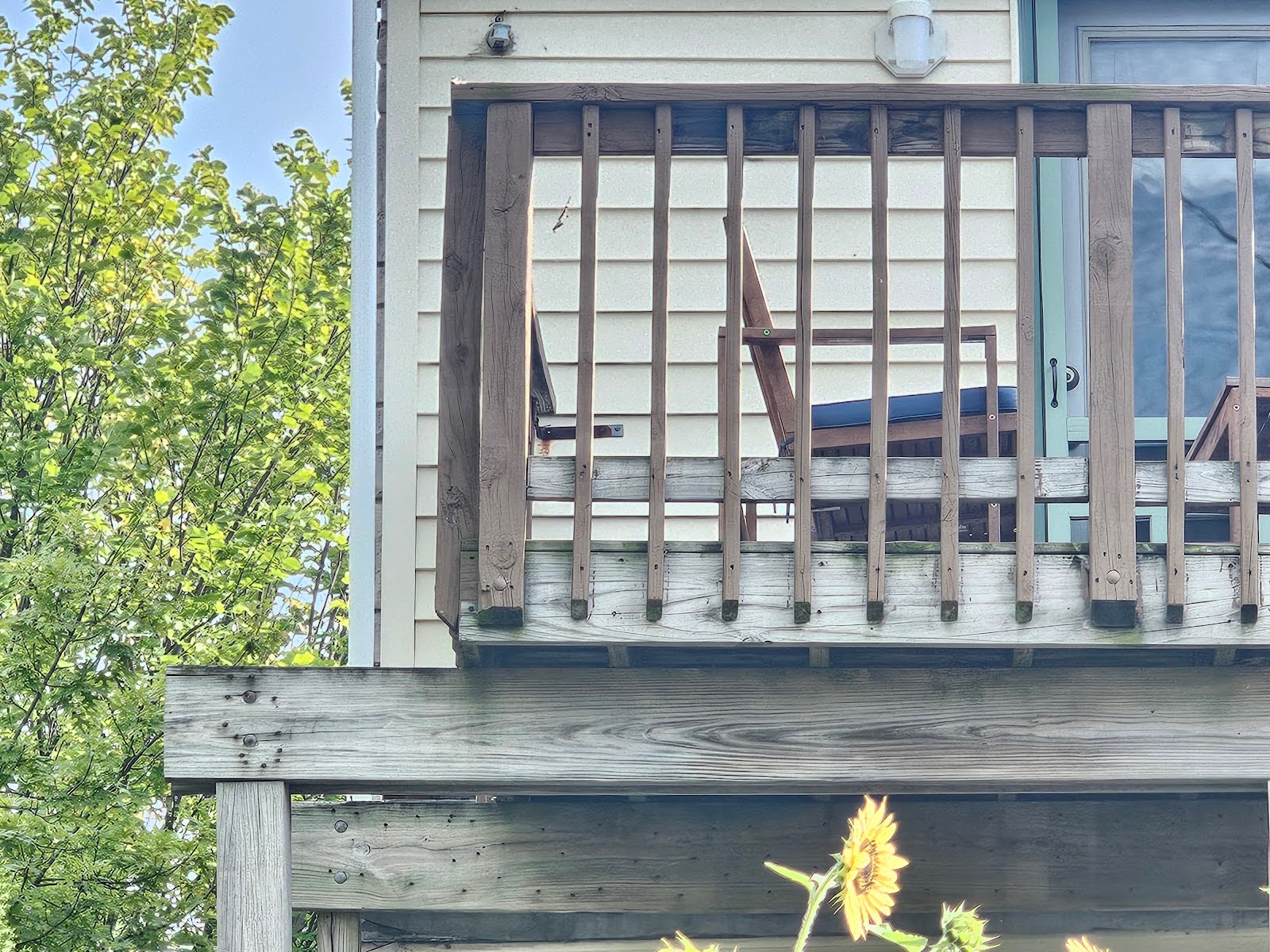
In this coming week, we’ll take a look at additional intermediary supports installed between the vertical post of the base of the deck. We will look at the notching into the top of the post and how the girder is created by being set into a double shouldering configuration at the top of each outside post. We will also look at the bolting used to secure the edges of the joist at the girder. It might not be emphasized but you can see in these pictures that this deck, since it uses a girder closer to the back of the building, is not set with a typical ledger board.
Use a contractor who understands and cares about doing things right. Always, feel free to reach out to us here at Dupont Decks and Patios. We are happy to help with almost all steps of the deck building and design process. A backyard and outdoor space should make a significant, positive impact on both quality of life and home value. We can help with more than just decks, we also build patios, pergolas, ramadas, awnings, gazebos, arbors, and privacy fences.
Let us know about your ideas and talk to us if you have questions about possibilities. We are happy to participate in improving your outdoor space and quality of life! You can call us at (202) 774-9128. You can find us online at https://dupontdeckspatiosdc.com/contact-us and you can email us there as well.