Most people choose decking material twice. Once in a showroom or a browser tab, on looks and price. Then again two years later, on a Saturday, with a sander.
The first decision is the one everybody researches. The second is the one that actually describes living with the deck, and it is decided by things that are hard to see in a sample board: how the material moves, how it holds heat, what it demands of the frame underneath, and what happens when one board gets damaged.
Here is what genuinely separates the three materials in use.
What the three actually are
Wood is lumber, usually pressure treated pine for the frame and often for the surface too, sometimes cedar or a hardwood on the walking surface. It’s the only one of the three that is a single material rather than a manufactured product.
Composite blends wood fiber with plastic. That blend is why it behaves unlike either parent material: it won’t splinter the way wood does, and it won’t rot, but it isn’t inert either. Composite comes capped or uncapped, meaning with or without a protective outer shell, and solid or hollow. Capped boards resist staining and fading better than uncapped ones. Hollow boards are lighter and sound different underfoot.
PVC has no wood in it at all. It’s fully synthetic, which is what makes it the most moisture-resistant of the three and the lightest to handle, and also what makes it the least convincing as wood at close range.
What actually differs, once it is built
Maintenance is the real dividing line. Wood needs cleaning, and then it needs refinishing: stain or sealer, stripped back and reapplied on a cycle, for as long as you own it. Composite and PVC need washing. That’s the difference, and it’s a difference in weekends rather than in product descriptions.
Heat. Some composite and PVC boards get warmer in direct sun than wood does, and color matters: darker boards absorb more. On a west-facing rear deck with no shade, this is worth raising before anyone picks a color, because nobody notices it in a showroom and everybody notices it barefoot in July.
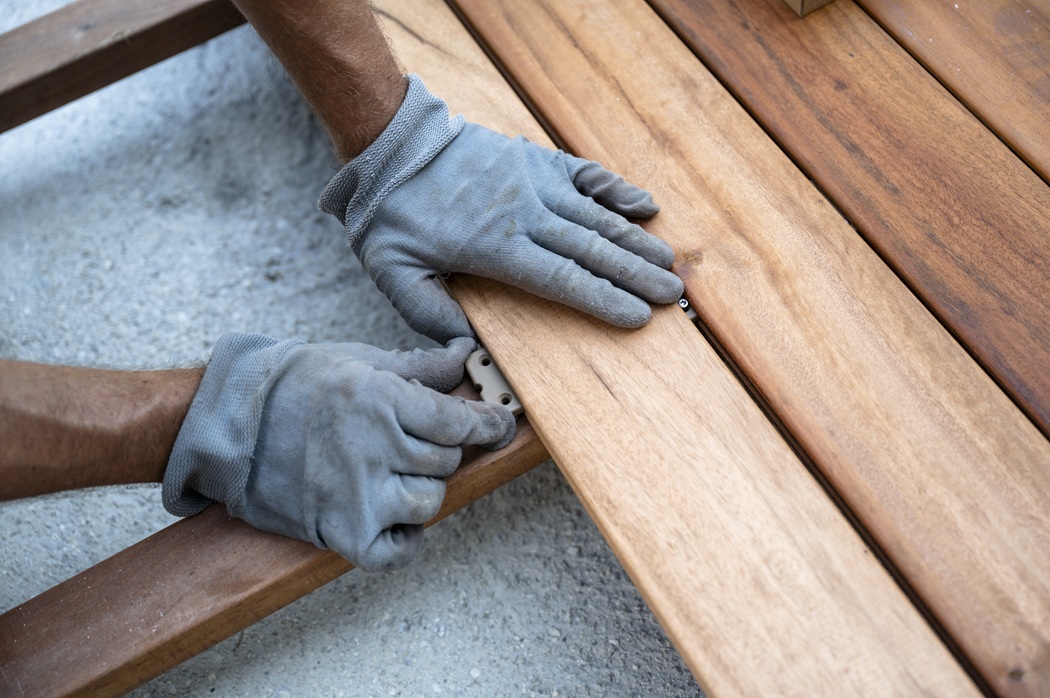
Movement. Wood moves with moisture. Synthetic boards move with temperature, expanding and contracting along their length through the seasons. Neither is a flaw, but they’re asking for different installation: gapping and fastening have to allow for the movement the material actually makes.
Repairs. A damaged wood board is replaced and refinished to match. A damaged composite or PVC board is replaced, and matching it is the harder problem, because the boards you are matching have weathered and the new one has not.
Appearance over time. Wood grays unless you intervene. Capped composite and PVC hold color far more stubbornly. Which of those you want is a genuine preference, not a ranking.
Washington, DC
Not sure whether your frame can take composite?
That answer sets the boundaries for everything else, so it is the one worth getting first.
The part that decides more projects than any of the above
If you’re re-decking an existing deck rather than building new, the frame underneath decides what is possible, and it decides before you’ve chosen a material.
Two things get checked. The first is condition: posts, beams, joists, the ledger where the deck meets the house, and the fasteners holding it together. Rot, insect damage or a compromised ledger means the frame is the project, and the surface material is a detail further down the list.
The second catches people out. Decking manufacturers specify how far apart the joists may be beneath their boards, and those requirements are often tighter than older decks were framed to. A frame that carried wood boards perfectly well for twenty years may need blocking or additional joists before composite can go down on it. That isn’t a reason to avoid composite. It’s a reason to find out before the material is ordered, because it changes the scope of the job.
While the frame is open is also the moment for the things that only happen once: joist tape over the top of the framing to keep water off it, and a decision about hidden fastener systems, which most composite lines are designed around.
What re-decking actually involves
The sequence is worth knowing, because it’s where the surprises live.
The old boards come off first, carefully if any of the framing is being kept. Then the frame gets inspected properly, which is the only point in the project where every joist, the ledger and the connections are visible at once. Anything that needs correcting is corrected now: extra joists, or blocking (short pieces fixed between the joists) if the spacing is wrong for the new boards, replacement of anything soft, and joist tape over the top edges.
Only then do the new boards go down. Railings, stairs and lighting come last, and they’re worth deciding on before the frame closes up, because running wiring or adding railing posts is far easier while the deck is open than after it is finished.
The two decisions people leave too late are fasteners and railings. Most composite lines are built around hidden fastener systems, which look better and change how the boards are spaced; face-screwed boards are quicker and more visible. Existing railings can sometimes stay if they’re sound, but with everything else already apart, this is the easiest moment to change them.
Can you do it yourself?
Partly, and the honest line is where it stops.
Swapping a surface on a frame that is genuinely sound is within reach of a confident DIY builder, particularly with hidden fasteners and a manufacturer’s instructions to follow. Plenty of people do it.
What isn’t a DIY job is the part before that: deciding whether the frame is sound, whether the ledger is safe, and whether the joist spacing meets the requirements for the boards you bought. Those are judgment calls with consequences, and they’re the reason a surface project turns into a structural one. If the frame is staying, have somebody who does this for a living look at it before the boards arrive.
Composite vs PVC, head to head
These two get compared a lot, because they look similar on a sample board and behave differently in place.
PVC is fully synthetic, so it’s the more moisture-tolerant of the two and noticeably lighter to carry and cut. Composite contains wood fiber, which is what lets it read as timber at close range, and capped composite closes most of the staining gap. PVC tends to move more with temperature, so gapping matters; composite tends to hold heat similarly but gets hotter in dark colors. On a shaded, damp, ground-hugging deck, PVC’s moisture tolerance is the deciding factor. On a deck you’ll look at from the kitchen window every day, appearance usually wins.
When each one is the right answer
Wood, when you want the look and the feel of real timber and you are genuinely willing to maintain it, or when the budget for the project has to go into the structure rather than the surface. A well-built wood deck isn’t a compromise. It’s a commitment to a maintenance cycle.
Composite, when the honest answer to “will you re-stain this every couple of years” is no. That’s the whole case for it, and the choice between capped and uncapped is where the real difference in longevity sits.
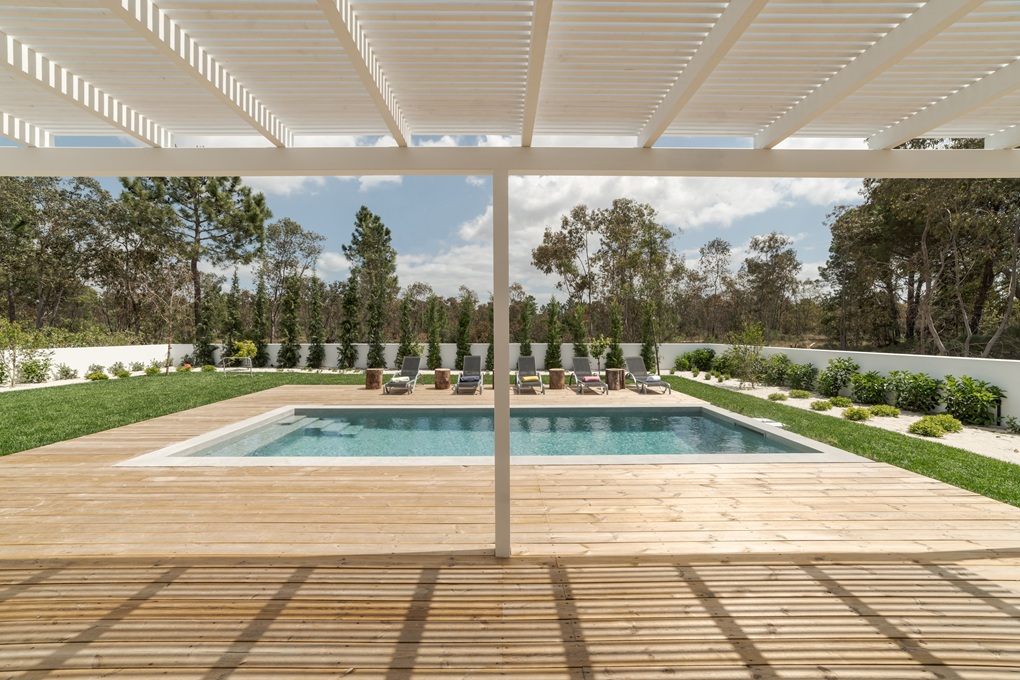
PVC, when moisture is the dominant problem: a deck that stays shaded and damp, a low deck close to the ground, a surface near a pool. It’s also the lightest, which matters more than people expect on a rooftop or a structure where load is a live question.
Weighing boards for a DC or Maryland deck? Call (202) 774-9128.
What a DC rear yard changes
Our four-season climate pushes on all three materials in the same direction: humid summers, freeze and thaw through the winter, and a wet spring. Anything that traps moisture against the frame is what you’re fighting, whichever surface you choose.
Rowhouse yards add two constraints. They’re small, so the deck is often close to the house and close to the ground, where airflow is poor and drying is slow, which argues for the more moisture-tolerant surfaces. And access is through the house or an alley, which makes delivery and waste removal a real part of the plan. If the yard is tight and the deck has to work hard, how it is laid out across levels will matter more than which board you picked.
Signs the boards are the problem
If you’re reading this because the deck looks tired rather than because you’ve decided to replace it, these are the things that usually mean the surface has reached the end: boards that splinter or feel soft underfoot, fasteners that keep backing out, cupping or warping across several boards, and patches that stay damp and dark long after the rest has dried.
Slip resistance belongs on that list too. A surface that has gone slick with age or algae is a safety problem rather than a cosmetic one, and it’s worth weighing when you choose what replaces it, since textured and grooved boards grip differently.
One of those on its own is a repair. Several of them together, across the deck, is a surface that has finished its working life, and that is the point at which the material question becomes live.
The question to settle first
Before material, settle this: is the frame staying?
If it is, the frame’s condition and its joist spacing set the boundaries, and the material choice happens inside them. If it isn’t, you’re building new, and the material is a free choice made on maintenance, heat and look.
Settle that first and a material decision stops being a framing surprise waiting to happen. It’s also the question worth putting to anyone quoting you for composite decking.
If you’re weighing a material for a deck in DC or the Maryland suburbs, the useful first conversation is about the frame, not the board. We can tell you whether yours is staying.
Dupont Decks & Patios builds decks, porches and patios across Washington, DC and the nearby Maryland suburbs.
Call (202) 774-9128Composite decking
Dupont Decks & Patios
1431 21st St NW, Washington, DC 20036
(202) 774-9128
Monday to Saturday, 8:00 AM to 5:00 PM
Serving Washington, DC including Capitol Hill, and Bethesda, Gaithersburg, Potomac and Rockville in Maryland.