This past week, we talked about how decks will often need to be built thin so that a vehicle can fit under the deck. Here, in this particular example, you can see the backyard area is way too small to fit a vehicle. The rear access point to the basement is suppressed. Essentially it’s dug down a little bit below the adjacent grade. The context and corresponding elevation of the ground outside of the home is contingent upon several characteristics. To an extent, basements can even be excavated to achieve the code required head clearance height, even when they’re built too small. In historic times people didn’t always build basements with a plan of using them much.
Sometimes they just built them as a type of crawl space that was higher than a typical crawl space. They may have used them for a boiler and or a root cellar. In many cases though, they just had dirt floors and were never really intended to be finished as interior usable living space.
In fact, in many cases more recently, people have excavated their basements to make them deeper and have a full head height clearance of the ceiling. It’s a major investment and a ton of work. Often digging down, where the excavation goes below the elevation of the existing footings, will require underpinning. Underpinning itself is also a massive amount of work. It’s strenuous and heavy work, to put it in simple terms. Also, working here in the tight spaces, like alleyways, of Washington DC is difficult from a logistical perspective. The amount of import and export of materials in that type of work is massive.
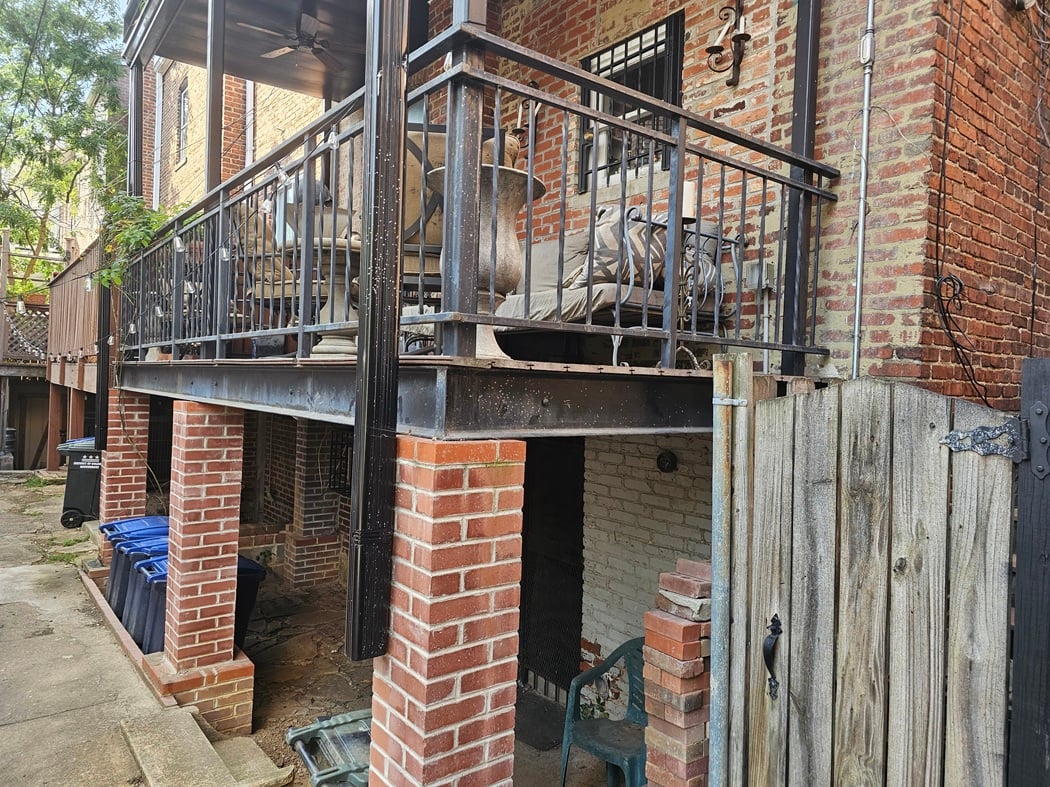
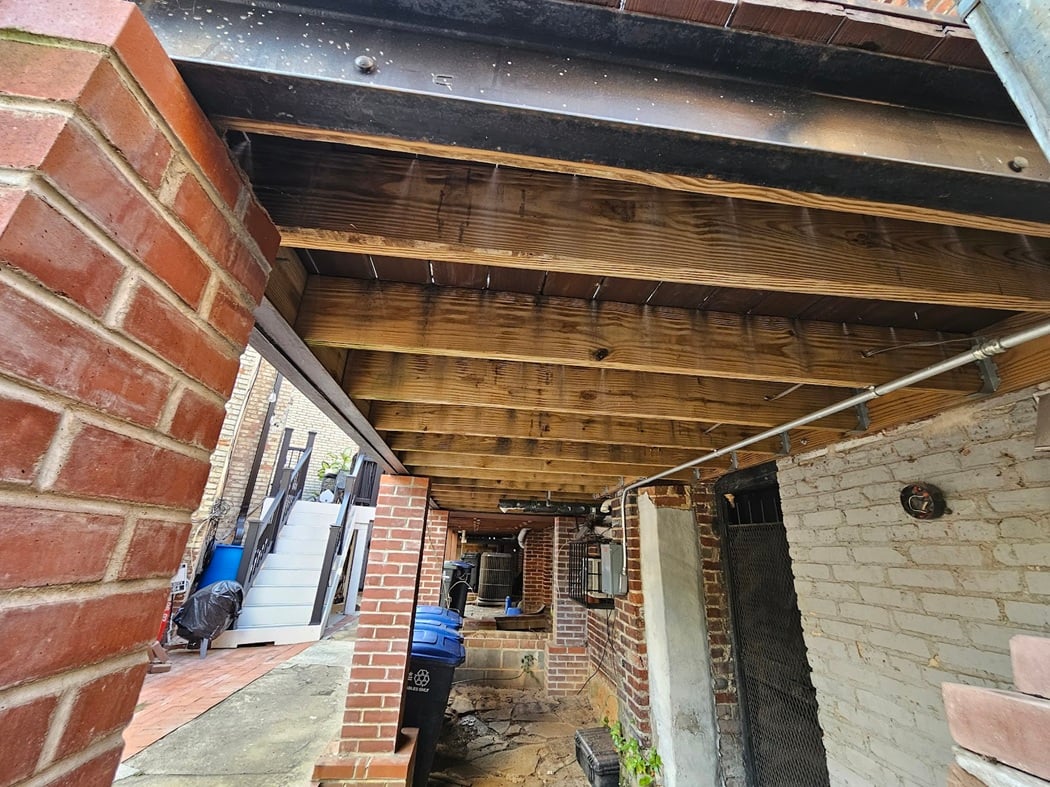
Even that kind of major scale of job is generally worth it though. Again, it comes back to the return on investment and here, adding more usable space to a DC row home pays a high return. Looking at the picture below, you can get a view of the amount of head height clearance under this deck. It’s a tight fit. Having a steel deck saves about 3 in of space. The strength yield from the steel is much higher, even when built thinner, in most cases.
Like many typical wood frame decks, this particular steel deck is bolted to the rear facade of the building. That allows for a ledger to have a bearing point on the existing building instead of having to use new additional posts down to their own footings. Adding new footings and posts, against the building, would also require an additional amount of excess material import and export. The footings for the brick columns that you can see in the photo below are very large. Just for the excavations themselves, there’s probably at least one large truck load of soil removal required.
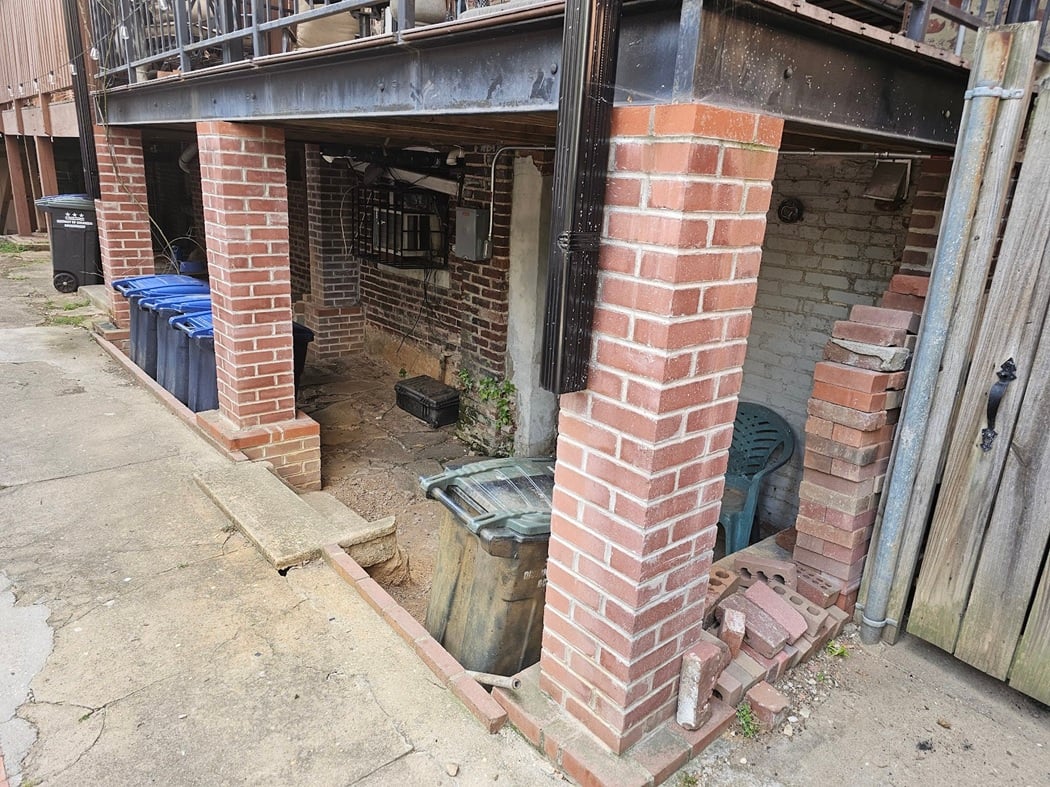
The corner of the steel deck frame bears directly on the outside corner post of the deck. Here, they have built 12-inch x 12-incj brick columns. Those columns enlarge to an 18-inch x 18-inch column base or pedestal. You could say that the enlarged or thickened area of brick is part of the footing itself. Technically there may be some accuracy to that. Really though, we look at the footing as the part that’s underground because we think these footings were built with concrete, not brick masonry. The base of the columns themselves are set on top of those footings.
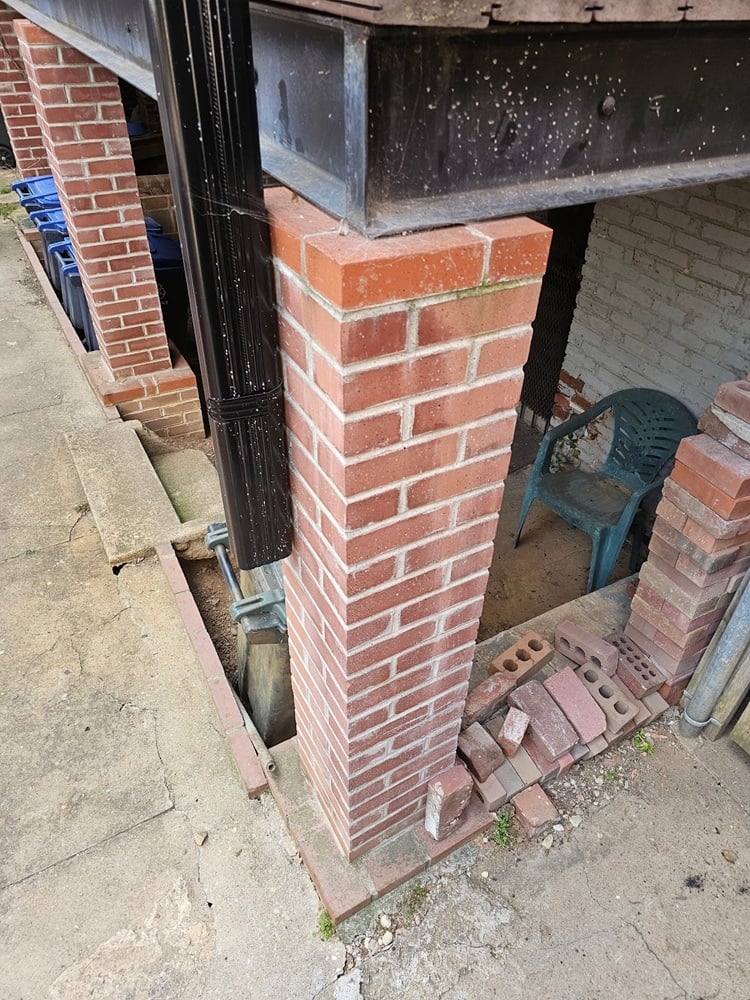
Where the I-beams meet on top of the column at a miter joint, they should also be bolted down into the top of the column. It’s hard to imagine something solid and heavy like steel and brick might be pulled upwards from wind. However, there are requirements in the building code that require structural continuity and attachment to resist uplift.
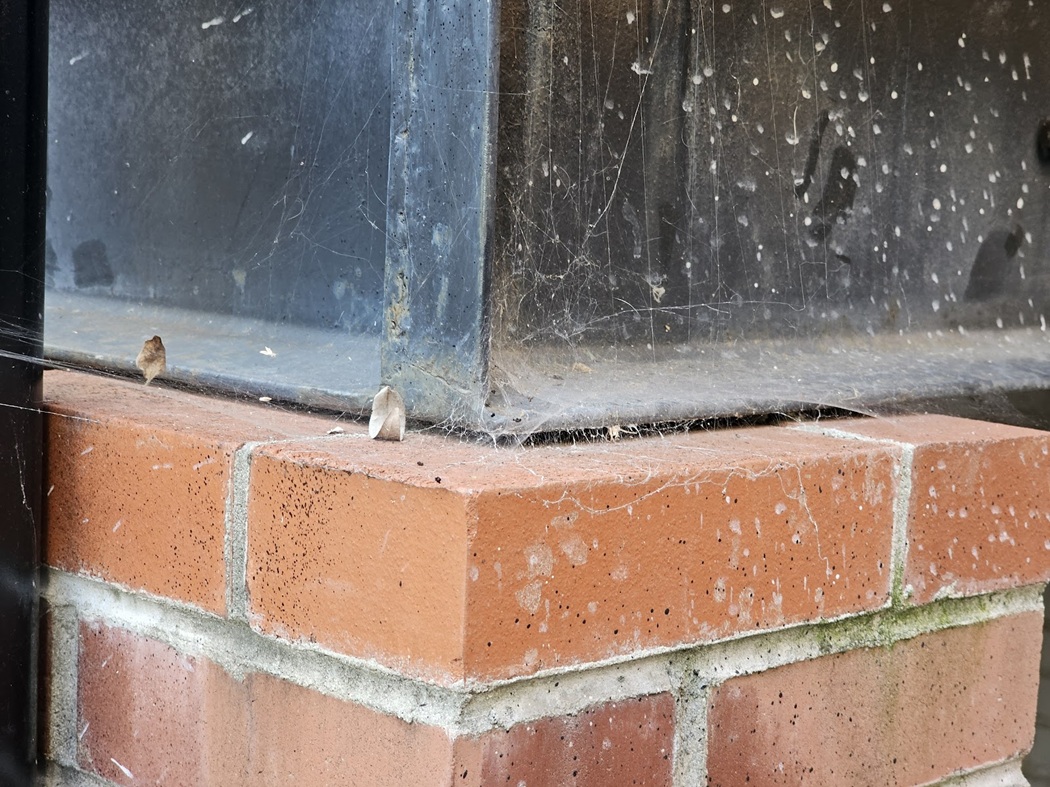
There are multiple different profiles or types of configurations of steel beams. Here, I-beams have been used. Other types of materials would suffice in other cases though. Steel C-channels and even tube steel could also work to create the framework of the deck itself.

And even though the deck is built out of a steel frame, they have used intermediary wood joists to fasten the and connect the floor decking. It’s possible that, at the original time of construction of this deck, it was covered with a sheet metal or diamond plate type walking surface. The interior elements may have also been created with a light gauge steel. The original elements had, at at a later point, become deteriorated and then later had been removed.
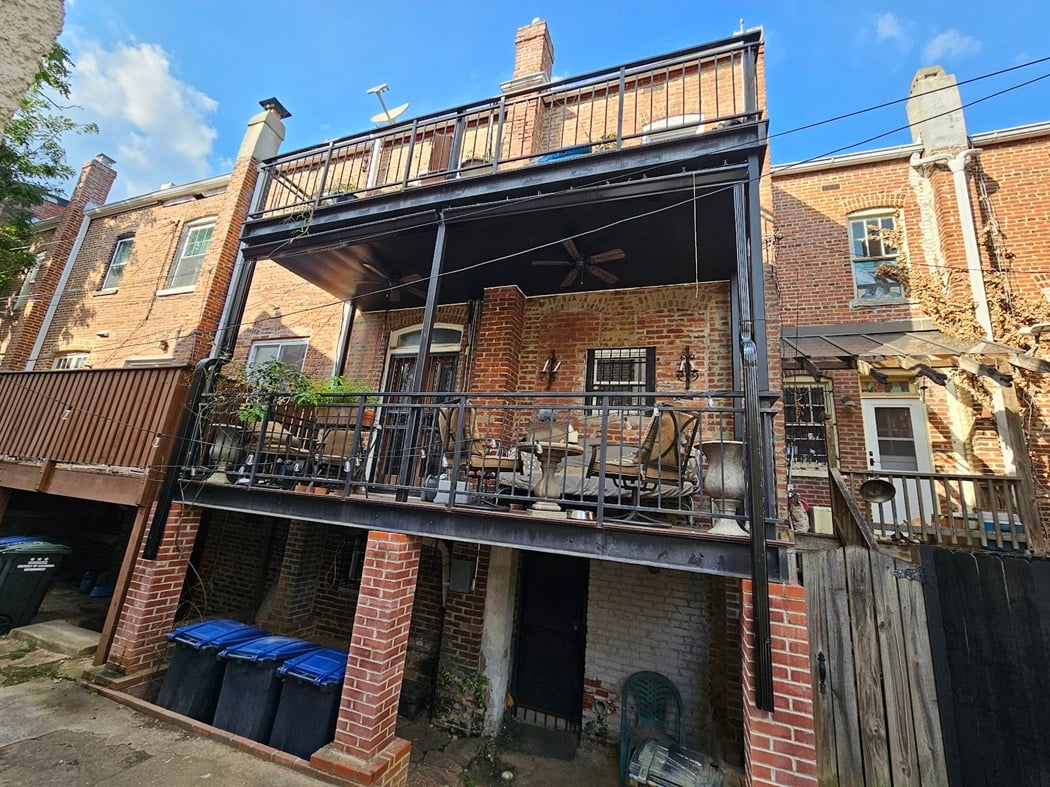
Since the backyard is so shallow, it’s worthwhile to use an elaborate deck like this to maximize it to its potential. Without a double-decker deck here, you would just have a tiny landing outside of the basement back door. This deck construction basically turns what would be a single level of space into three levels of useful space.
Use a contractor who understands and cares about doing things right. Always, feel free to reach out to us here at Dupont Decks and Patios. We are happy to help with almost all steps of the deck building and design process. A backyard and outdoor space should make a significant, positive impact on both quality of life and home value. We can help with more than just decks, we also build patios, pergolas, ramadas, awnings, gazebos, arbors, and privacy fences.
Let us know about your ideas and talk to us if you have questions about possibilities. We are happy to participate in improving your outdoor space and quality of life! You can call us at (202) 774-9128. You can find us online at https://dupontdeckspatiosdc.com and you can email us there as well at https://dupontdeckspatiosdc.com/contact-us