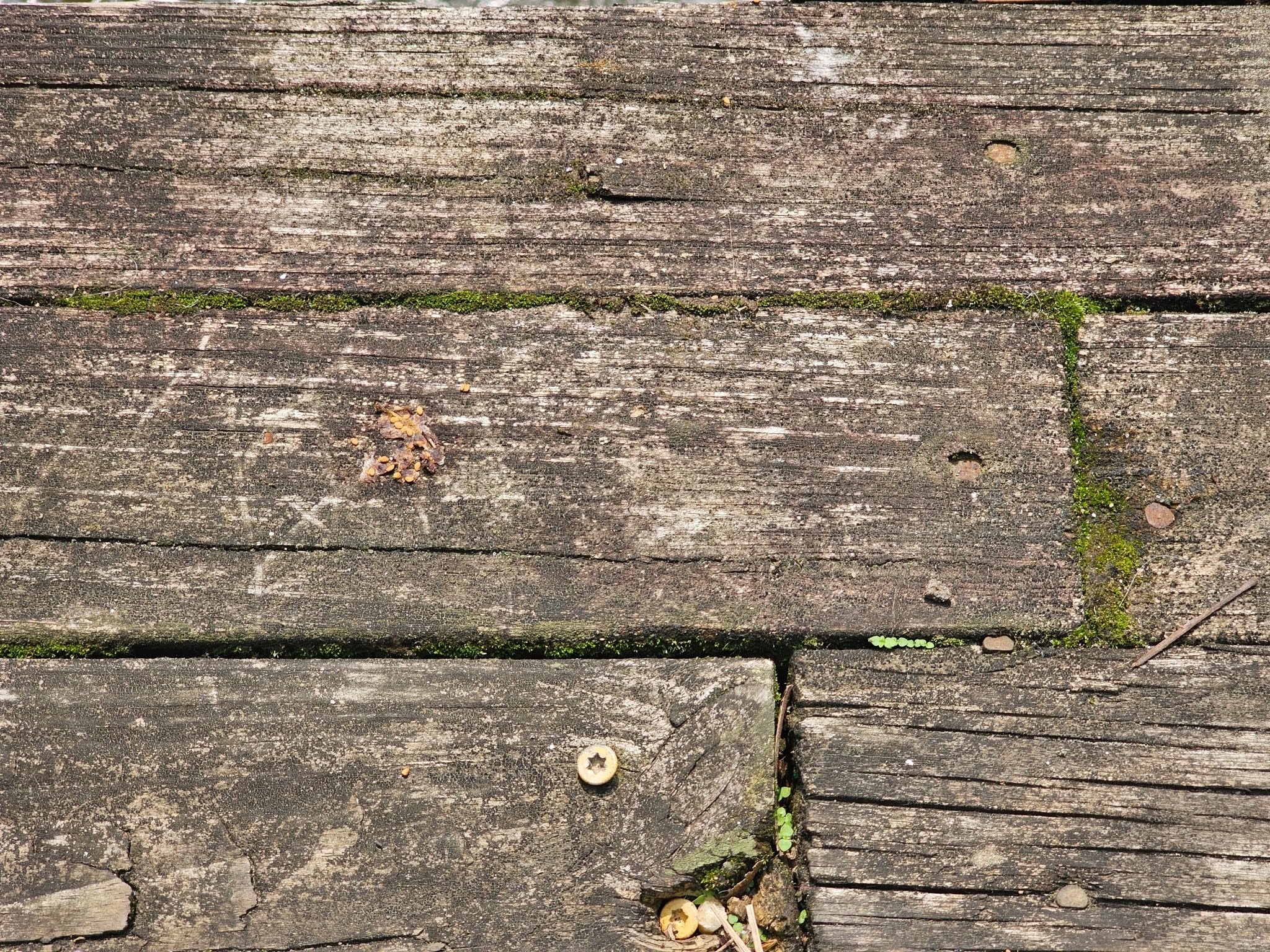
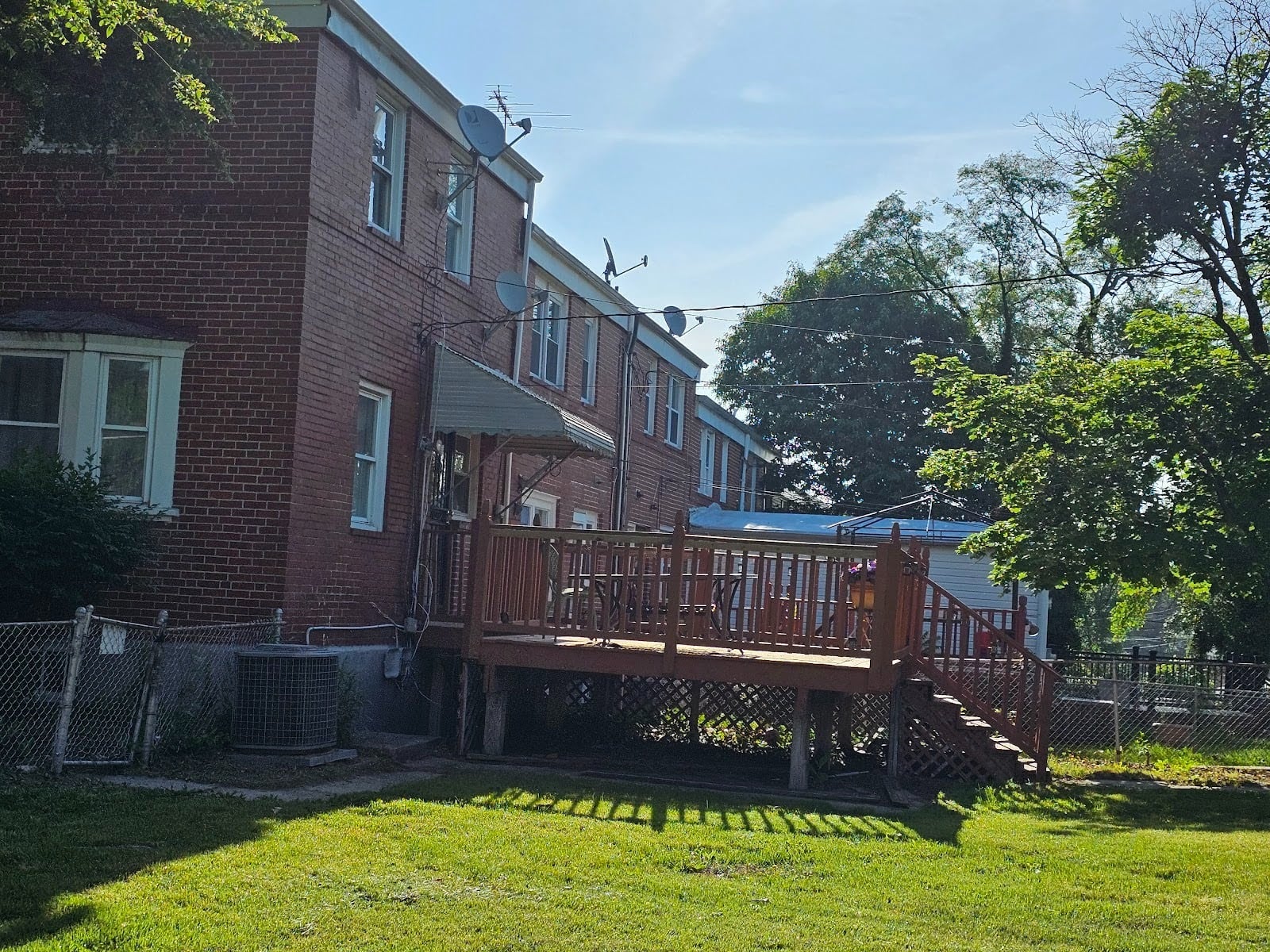
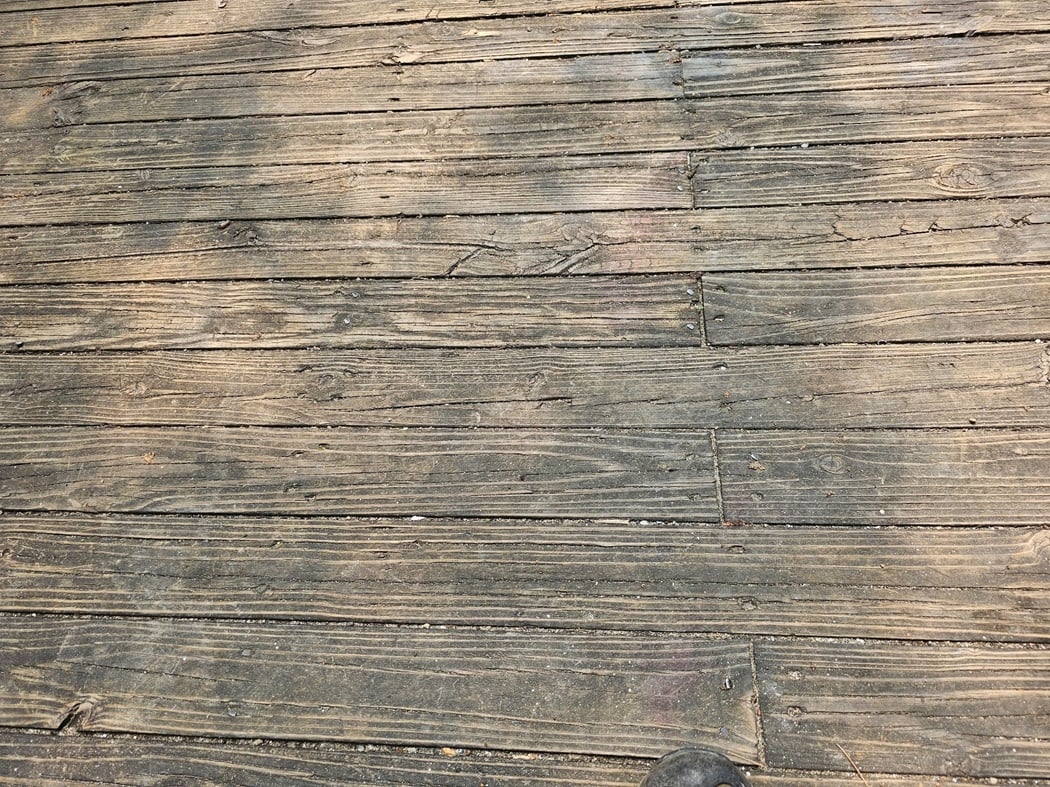
The first sign is usually underfoot. A board flexes when you cross it. A rail post shifts when you lean on it. There’s a patch near the house that stays damp for days after it rains, long after the rest of the deck has dried out. None of it tells you which of three jobs you’re looking at: an afternoon’s repair, a new surface, or a new deck.
There are three real options, and they aren’t interchangeable. A repair fixes an isolated problem on an otherwise sound deck. Resurfacing replaces the walking surface, and usually the railings, while keeping the existing frame. Replacement rebuilds the structure itself. Which one you need is decided by the frame underneath, not by how the deck looks from the kitchen window.
Why the frame decides, and the boards don’t
Decking boards are the part you see, and they’re the part that weathers first. Sun, rain and foot traffic all land on them. So the surface almost always looks worse than the structure, which is why a deck can look past saving when it has years left in it, and why a tidy-looking deck can be the one with the real problem.
The frame is what carries the load. It’s the ledger that ties the deck to the house, the posts and footings that hold it off the ground, and the beams and joists that span between them. Those pieces fail slowly, quietly, and usually out of sight. A weathered surface over a sound frame is the easiest job on this list. Good boards over a failing ledger is the one that matters.
What gets checked, and in what order
The order matters, because each step can end the conversation. There’s no point choosing new decking if the first check fails.
1. The ledger, where the deck meets the house. This is the connection that holds one edge of the deck against the building, and it’s the one that does the most damage when it goes wrong. Water is the usual culprit: it gets behind the ledger where flashing is missing or has failed, then sits against the framing and the house. Look for staining or rot on the siding directly below the deck, a spongy feeling when you walk the strip nearest the house, or gaps opening between the deck and the wall. Our write-up on deck ledger boards goes through what that connection is doing in detail.
2. Posts and footings. Check where the posts meet the ground. Wood in contact with soil holds moisture, and steel post bases rust from the bottom edge up. Push on a post: real movement at the base is a structural finding, not a cosmetic one. If a footing has settled or shifted, nothing you do to the surface will change how the deck feels.
3. Beams and joists. From underneath, look along the joists for sagging between supports, splits running out from nail holes, and dark soft patches where water has been sitting. Check the hangers too. Metal connectors with missing or backed-out fasteners are common, and they matter more than they look.
4. The walking surface, railings and stairs. Now the visible part. Cupped or splintering boards, fastener heads lifting above the boards, a rail post you can rock with one hand, a stair tread that flexes. On their own, these are the most fixable problems on the deck.
Washington, DC
Not sure whether it’s the surface or the structure?
That’s the question that decides the whole project, and it’s worth answering before anything else.
What the first heavy rain tells you
Water decides most of these questions, so the most useful inspection happens right after a downpour rather than on a dry afternoon.
Walk the deck while it’s still wet and look at where the water goes. Water sitting in puddles usually means it has nowhere to drain: gaps between the boards silted up with debris, or framing laid with no fall across it. Boards that have cupped, curling up along their edges, are telling you something different. That’s a moisture difference between the top face and the underside, which points at conditions below the deck rather than on top of it. Then get underneath. Look for the drips that keep going long after the rain stops, which is water that has found somewhere to sit rather than somewhere to run. Check the ground under the deck too: soil that stays dark and soft under the framing is how post bases and joist ends rot from the outside in.
Trapped water matters more here than the puddles suggest, because a DC winter freezes and thaws it repeatedly through the season, and every cycle works on the same joints, splits and fastener holes.
Skirting and lattice make this worse than people expect. They close in the space under a low deck, cut the airflow that would otherwise dry it, and hide the very connections you’d want to see. If there’s skirting on a deck you’re assessing, the inspection means taking a panel off.
Wood boring insects, and what they leave behind
Rot is the common failure, but it isn’t the only one. Two turn up most often, and they leave different evidence because they arrive for different reasons.
Carpenter bees go for bare, unpainted softwood, and they prefer it dry. The signature is a neat round hole drilled up into the underside of a rail, a fascia board or a joist, with coarse sawdust on the ground below it. Termites come the other way, up through soil contact and damp wood, and leave mud tubes on piers and posts rather than clean holes.
Either way the question is the same: where is the damage, not which insect made it. Damage confined to a rail is a repair. Damage in a joist, a beam or the ledger is a structural finding, because those members are carrying load.
What to photograph before you call anyone
You’ll get a straighter answer, faster, if you bring evidence rather than a description. Four photographs cover most of it: the strip where the deck meets the house, taken close; the base of one post where it meets the ground or its footing; the underside of the framing, taken with a flash; and anything that looks wrong from below. If a board is soft, press it with a thumb and photograph the dent.
It’s a five-minute job, and it’s the difference between a conversation about what might be happening and a conversation about what is.
When resurfacing is the right call
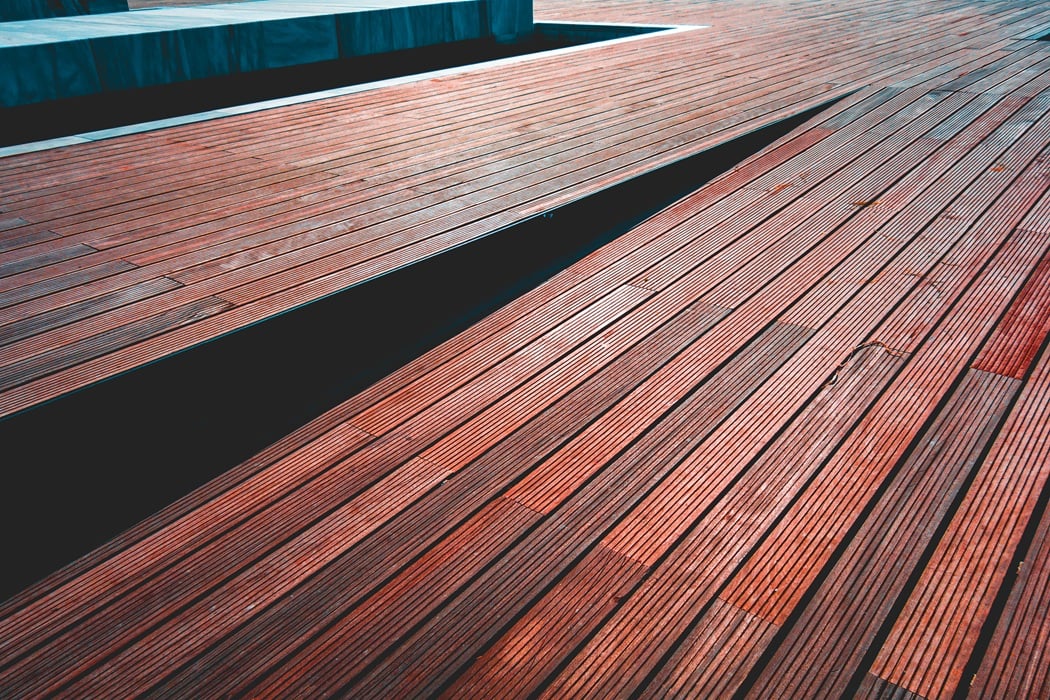
Resurfacing makes sense when the checks above come back clean and the damage is genuinely on top. That usually means the frame is sound and dry, the posts and footings are stable, and what’s tired is the decking, the railings, or both.
It’s also the right call when the deck’s layout still works for you. Deck resurfacing keeps the footprint, the stairs and the height where they are, so if the shape of the deck suits the house and the way you use it, there’s no reason to rebuild the same outline. It’s the natural moment to change decking material as well, since the surface is coming off anyway.
Resurfacing is usually the cheaper route, because the structure is reused and you’re buying and installing the surface only. It stops being the cheaper route the moment the frame needs real work, since you pay for repairs underneath a new surface and then pay again when the next thing gives.
When replacement is the honest answer
Deck replacement is the answer when the structure is the problem. Specifically:
- The ledger is rotted, poorly attached, or was never flashed, and the damage has reached the house framing.
- Footings have moved, or posts are rotted where they meet the ground.
- Joists or beams are soft, split or sagging across more than an isolated spot.
- The deck moves under load, side to side or front to back, which points to bracing and connections rather than boards.
- You’re repairing something different every season, which usually means the repairs are chasing a cause nobody has addressed.
There’s one more, and it isn’t structural: the deck no longer fits how you use the space. If the layout is wrong, resurfacing preserves the exact thing you want to change.
Found something under the deck you don’t like the look of? Call (202) 774-9128.
When a repair really is enough
Not every problem is a project. A few damaged boards, one section of loose railing, a joist hanger missing fasteners, a stair tread that needs replacing. On a deck that passes the structural checks, these are repairs, and treating them as anything more is spending money you don’t need to spend.
The distinction worth holding on to is between a symptom and a cause. Replacing three soft boards is a repair. Replacing three soft boards that went soft because water is being trapped against the frame is a repair that will come back.
What’s different on a DC rowhouse
Rowhouse decks add a consideration most guidance skips. On many rowhouses the rear deck is part of how you get out of the upper floors of the building, which means the stairs serving it are doing a job beyond convenience, and they can’t be treated as a purely cosmetic part of the project.
Low rear decks bring their own version of the problem. The closer the framing sits to the ground, the less it dries, and the harder it is to inspect the very connections that decide this question. On a low deck, the checks above take longer and matter more.
Frequently asked questions
Can you resurface a deck that has a bad frame?
No. Resurfacing keeps the existing structure and replaces what sits on top of it, so a frame problem stays exactly where it was, now underneath a new surface.
Can I just flip my old deck boards over?
It’s tempting, because the underside looks newer. That’s the catch: the underside is the face that has been damp, the old fastener holes are still in the board, and a board that has cupped is still cupped, now facing the other way. It also does nothing for the frame, which is the thing that decides this question.
Does the answer change if I’m planning to sell?
The timeline changes what matters, not what’s found. A structural problem is a safety question either way, and it’s the kind of thing that surfaces in an inspection whether or not you meant to deal with it. If the deck is sound and simply dated, and you’re staying put, the layout carries more weight, because you’re the one living with it.
If you’ve walked your deck and you’re not sure whether what you found is a surface problem or a structural one, that’s the question worth answering first, because it decides everything else. We work on decks across Washington, DC and the nearby Maryland suburbs, and we can tell you which of the three this is.
Dupont Decks & Patios builds decks, porches and patios across Washington, DC and the nearby Maryland suburbs.
Call (202) 774-9128Deck replacement
Dupont Decks & Patios
1431 21st St NW, Washington, DC 20036
(202) 774-9128
Monday to Saturday, 8:00 AM to 5:00 PM
Serving Washington, DC including Capitol Hill, and Bethesda, Gaithersburg, Potomac and Rockville in Maryland.