Front Porch Fascias and Soffits: Essential Repairs and Maintenance Tips
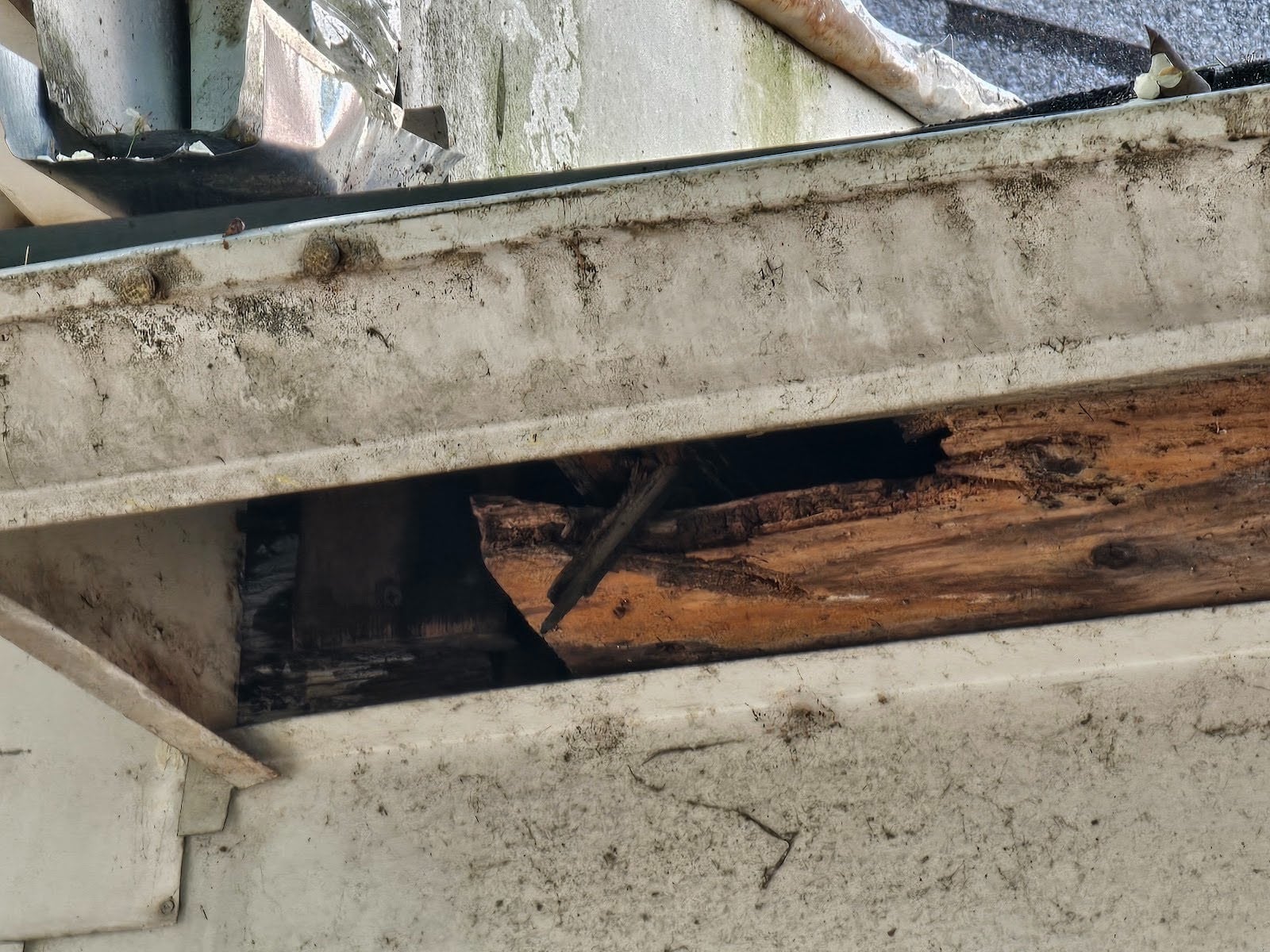
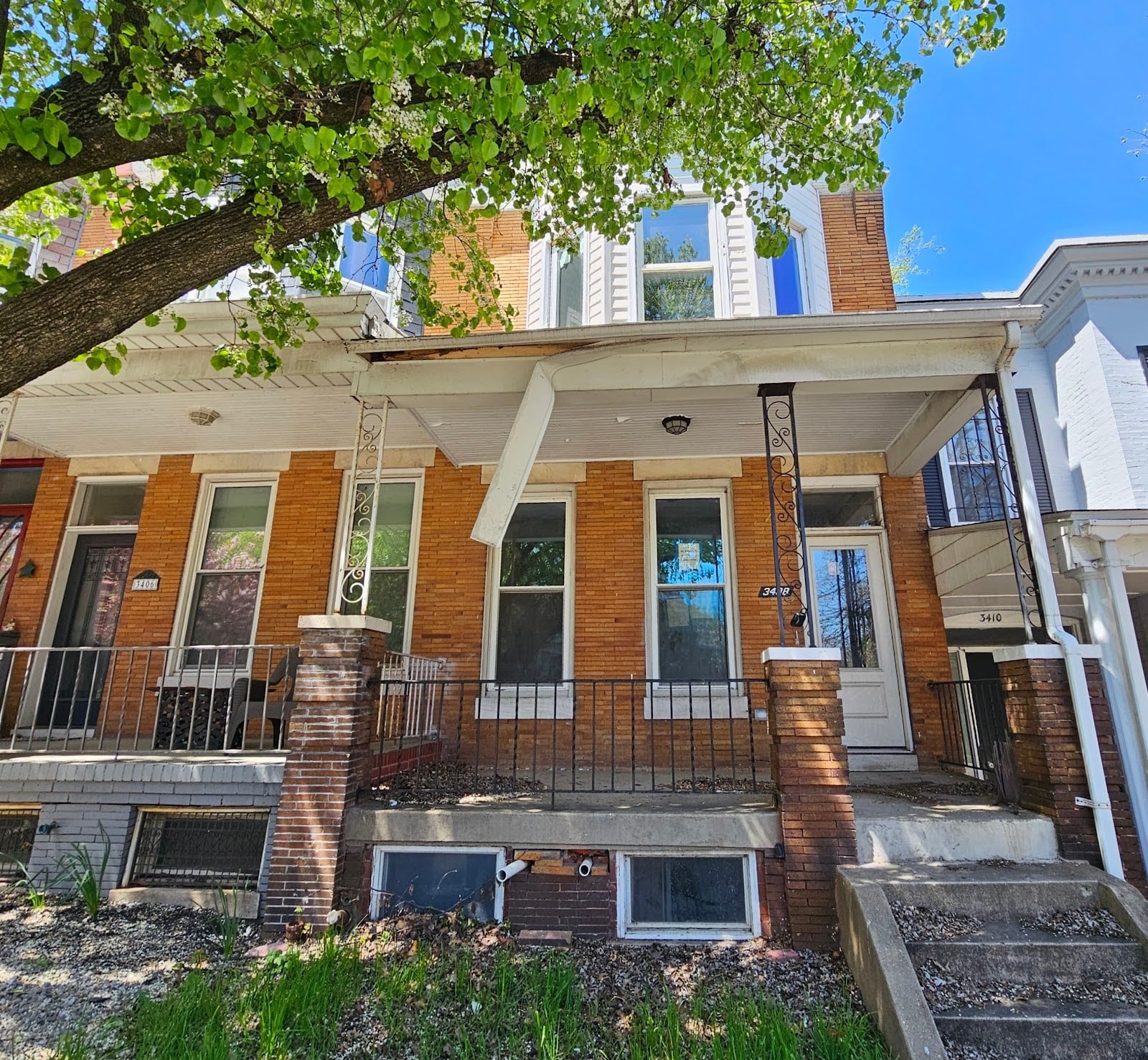
This past week, we started looking at pictures of this particular front porch. At the area near the front fascia and soffit, there is an area of severe deterioration where the soffit is essentially rotted apart. This happens to be coincident with the fascia and an even older remaining sheet metal pressed crown remains. This is like pressed tin, but we simply refer to it as sheet metal because the exact composition of the alloy is unknown to us. About 100 to 130 years ago, the common metals used were a little bit different. Today most sheet metal elements can be made with aluminums or galvanized steels. Over the decades though, these compositions have changed a bit.
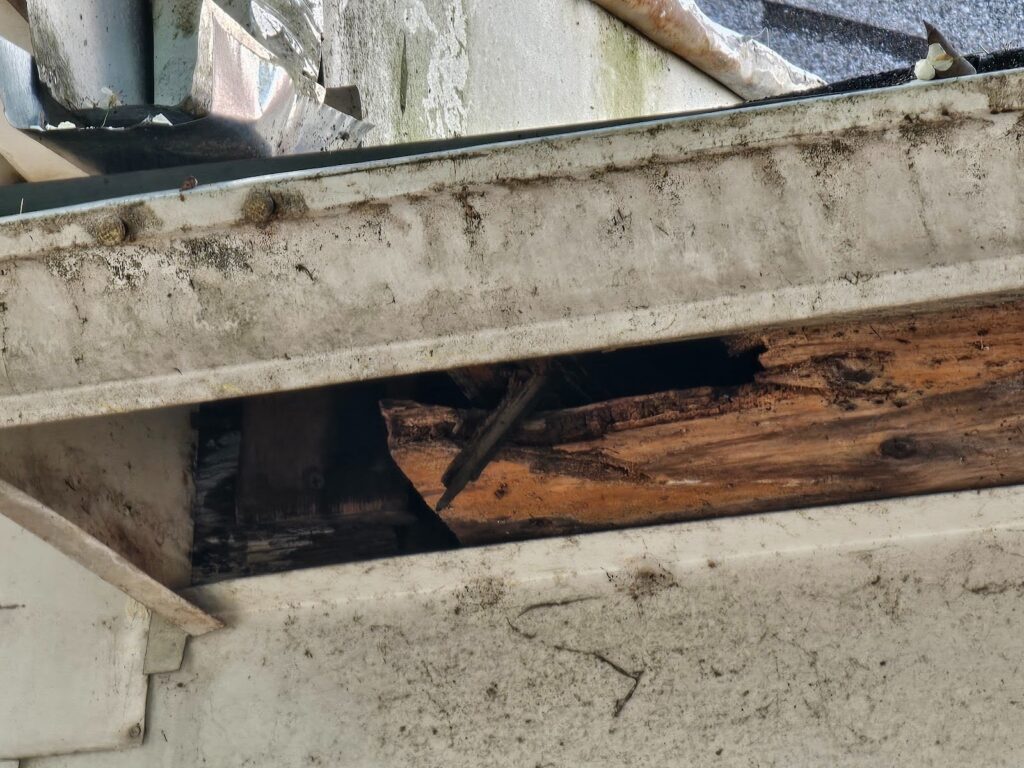
When you look at the picture below, which shows a little bit of a closer view, you can see there’s rotted wood up above the soffit board. Essentially, both in row home porch roofs and in most main roofs, particularly when there is an extension of the roof beyond the vertical facade of the wall, there will be a soffit.
Interestingly, the word soffit, in architectural lexicon, is used differently depending on the region of the country. Words used in construction often have a very interesting history and etymology. There are many words used in contemporary construction that have roots that go back directly to Middle English. The part about this that’s most interesting though is that many of these words been removed from typical usage, outside of the very trade specific architectural lingo.
Looking at this from a closer position, you can see there are the remains, a rotted portion of sub-soffit. That sub-soffit seems to have rotted. With a higher concentration of rot at the left hand side, expanding over to the right as the rot extended. Once the elements of this assembly are understood, the next logical question is to try to understand the source of the leakage, if looking at it from a professional you don’t know which one well I mean I’m sponsored by Lynn Nash I’ll see okay but I could be sponsored by rear review you don’t know which one well I mean I’m sponsored contractor’s perspective.
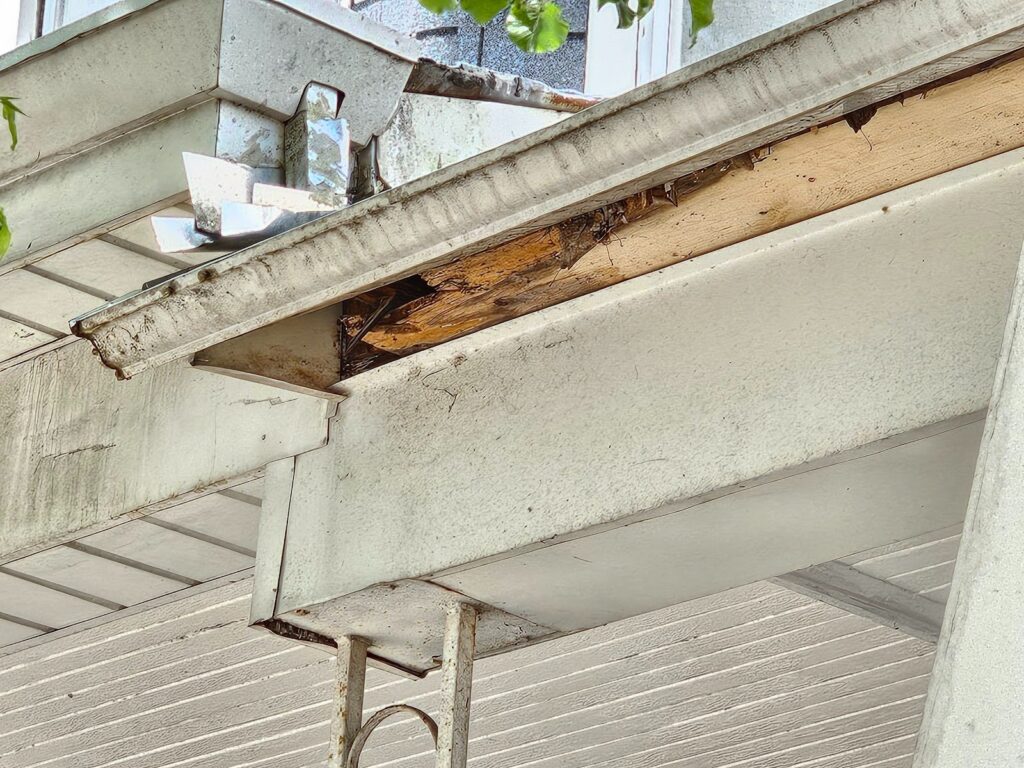
In this particular case, we didn’t take pictures of the roof above the front porch ceiling. it’s very likely though that in this particular case, the rot originates from a delamination in the seam of the front porch roof termination above. Leakage at those locations is very common and it happens to be coincident with the area of the beam, fascia, and soffit below. This area of damage and leakage happens to be at a confluence of a handful of tricky elements.
In this case, replacing the entirety of the run of soffit and fascia has an outsized financial impact. For example, you can’t just easily replace a portion of it without splicing new elements in at a scarf joint. However, in this particular case, it’s not always easy to place in a scarf joint because of the existing trim. Older elements may not be sized proportionately or identically to pieces that would be purchased or procured today.
Materials are built and or cut at different standards today than they did in the past. That can make it difficult to replace just a portion of an architectural trim, for example. Also in the case of the structural girder or beam, it’s also not always possible to repair just a portion. In most cases when you have a structural element like this, it works like a continuous chord that needs to be replaced continuously where there is rot or excessive damage.
There are many different examples of types of materials which can be used at front porch fascias and soffits. it’s not entirely different than the main house facial and soffit. In this particular example above, true and solid wood has been used, but as we can see it has rotted. Natural wood has its inherent limitations.
In the next picture below, a true wood is also been used but it looks like it’s finger joint wood. Finger joint wood is even cheaper and at least a bit lower quality than historic wood. It will deteriorate in an even shorter duration here. There has been an area of damage, likely from the same type of leak as the other porch we looked at above.
A cheap fix has been applied by installing a mesh to keep birds or rodents out of the roof. Birds and rodents are constantly looking for shelter and generally find these kinds of holes and damage in carpentry to be a perfect place for them to get into a building.
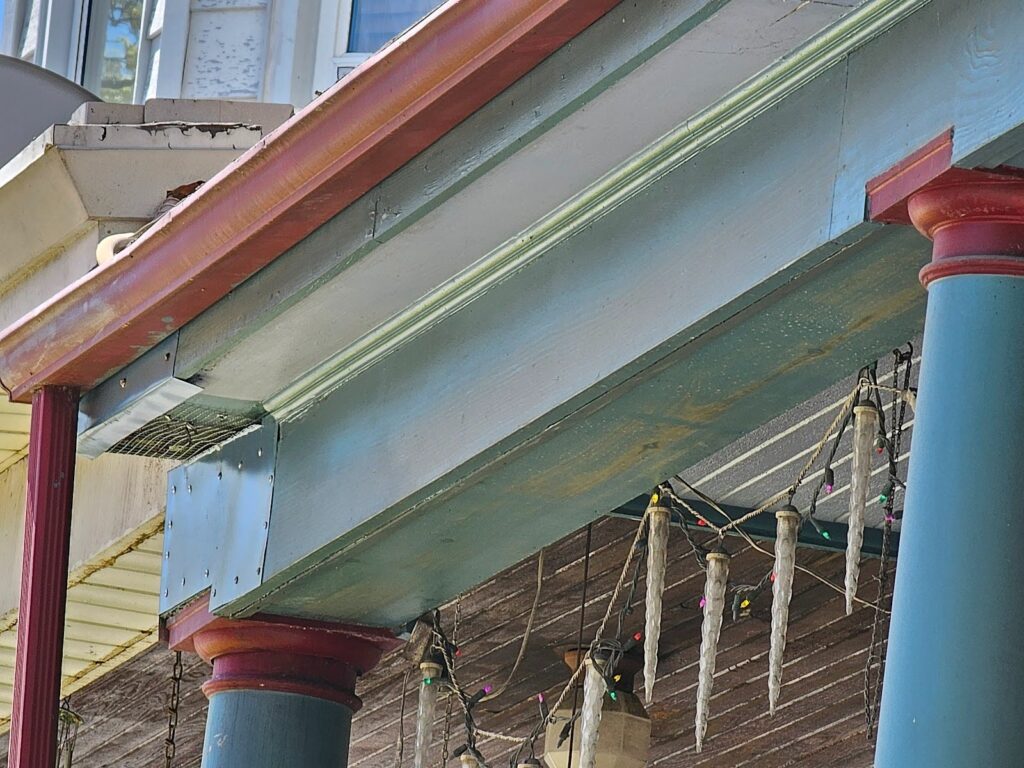
If you look closely at the picture above, they’ve gone and taken a sheet metal and overlaided on both sides of where an existing hole was created by rot. They didn’t replace the fascia board and this shortcut really saves a lot of money but it doesn’t look anywhere near as good, it simply looks like a cheap fix, something that should be intended to be temporary at best.
The sheet metal used in that particular example is interesting though. In many cases, people have taken the existing woodwork such as the fascia and trim and wrapped it with a sheet metal. The sheet metal does not look as good, but it’s being used as a projective jacket to keep moisture or precipitation off of the fascia and trim boards. We don’t recommend it. it’s very difficult to get an unbent light gauge sheet metal to sit flat, even when it’s nailed or fasting to a substrate fascia board.
In the picture below they’ve done something else. It happens to look a little bit like a board and batten runs across the horizontal surface of the soffit and the vertical surface of the fascia. it’s not an actual board and batten though. Instead it’s individual pieces of light gauge metal sheets.
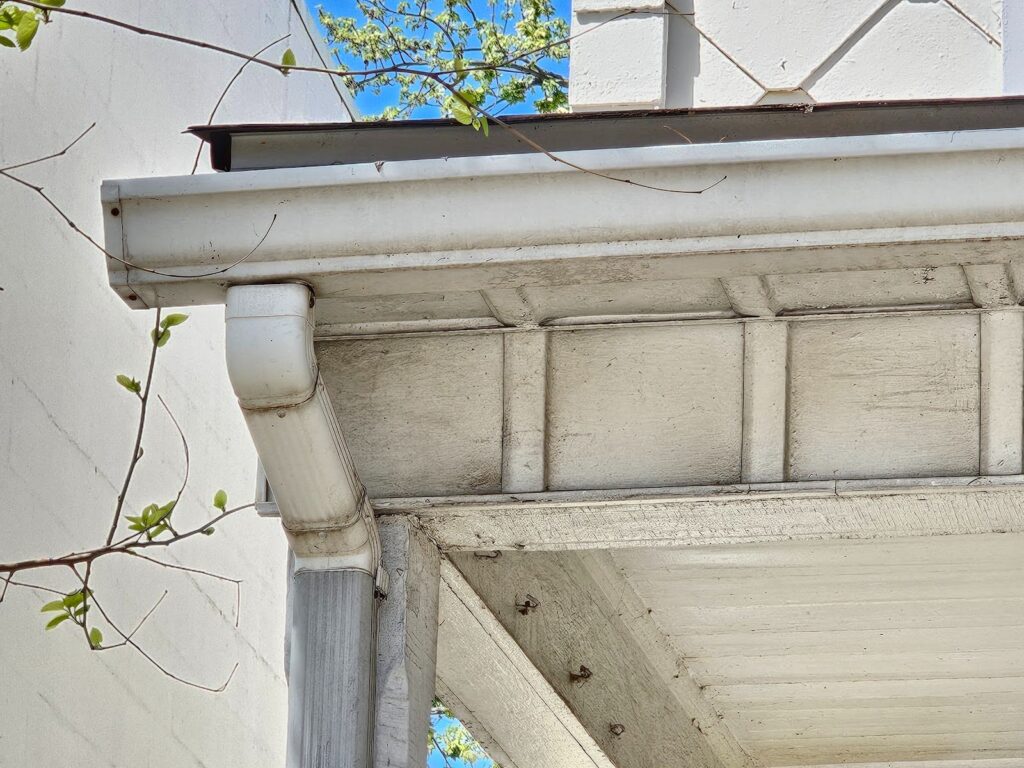
The advantage of this type of material is that it just has a higher resistance to moisture and precipitation. It doesn’t look better in most cases. but it can be a little bit cheaper and it can last a little bit longer, in certain contexts.
Use a contractor who understands and cares about doing things right. Always, feel free to reach out to us here at Dupont Decks and Patios. We are happy to help with almost all steps of the deck building and design process. A backyard and outdoor space should make a significant, positive impact on both quality of life and home value. We can help with more than just decks, we also build patios, pergolas, ramadas, awnings, gazebos, arbors, and privacy fences.
Let us know about your ideas and talk to us if you have questions about possibilities. We are happy to participate in improving your outdoor space and quality of life! You can call us at (202) 774-9128. You can reach out us at https://dupontdeckspatiosdc.com/contact-us