Designing a Low Deck for Sloped Yards: Part II
This past week, we began looking at and talking about specific elements of the deck shown in the pictures below. We mentioned a couple different aspects of this deck. We only mentioned the slope of the yard briefly. The slope of the yard is important because without an added retaining wall the deck is the only thing that really provides a flat surface. You don’t have to have a flat surface in a yard. But for it to be really useful, something that is flatter than the slope of this existing grade helps. It makes it easier to use the yard for walking, sitting, playing, and even for growing and planting.
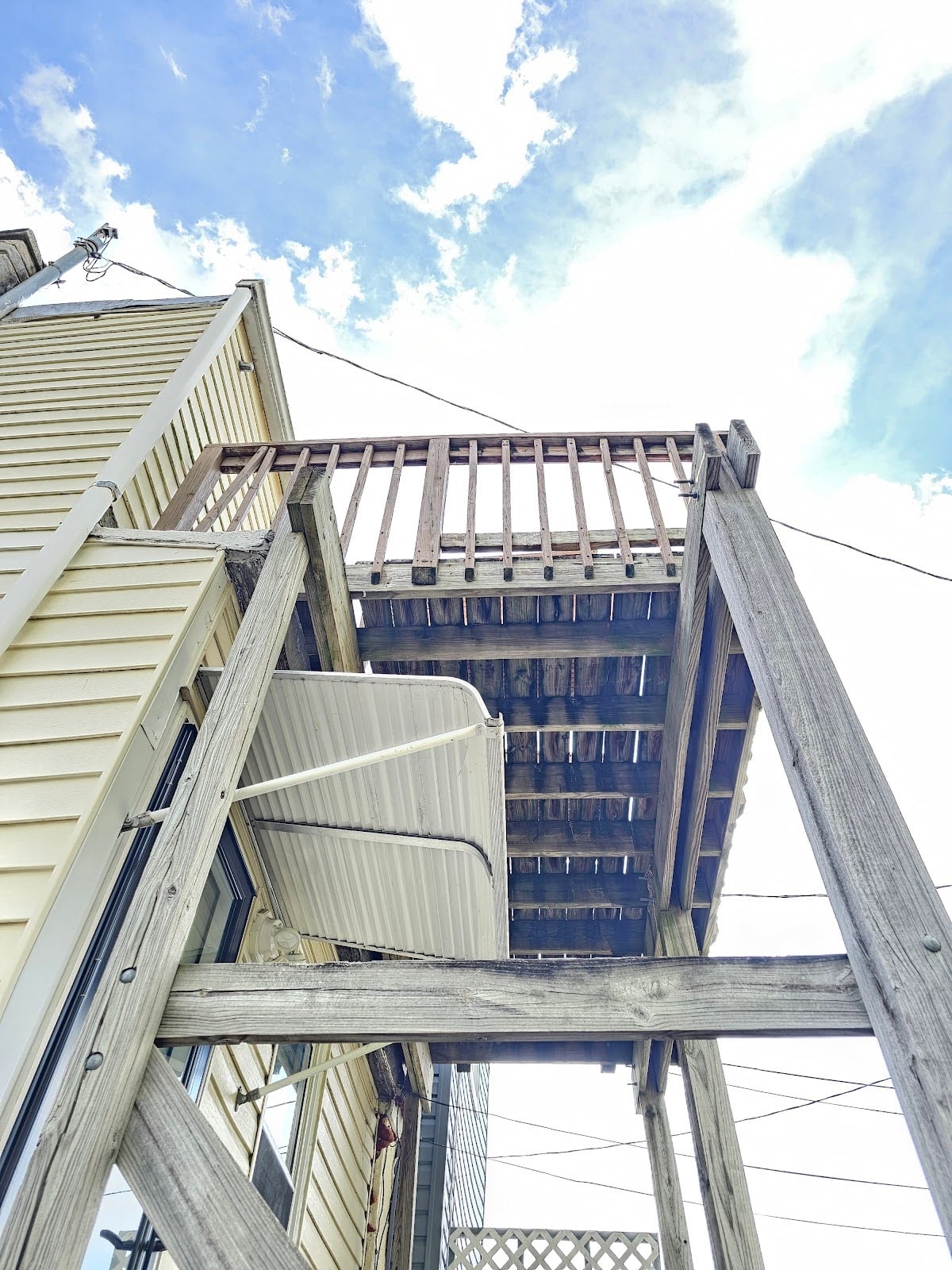
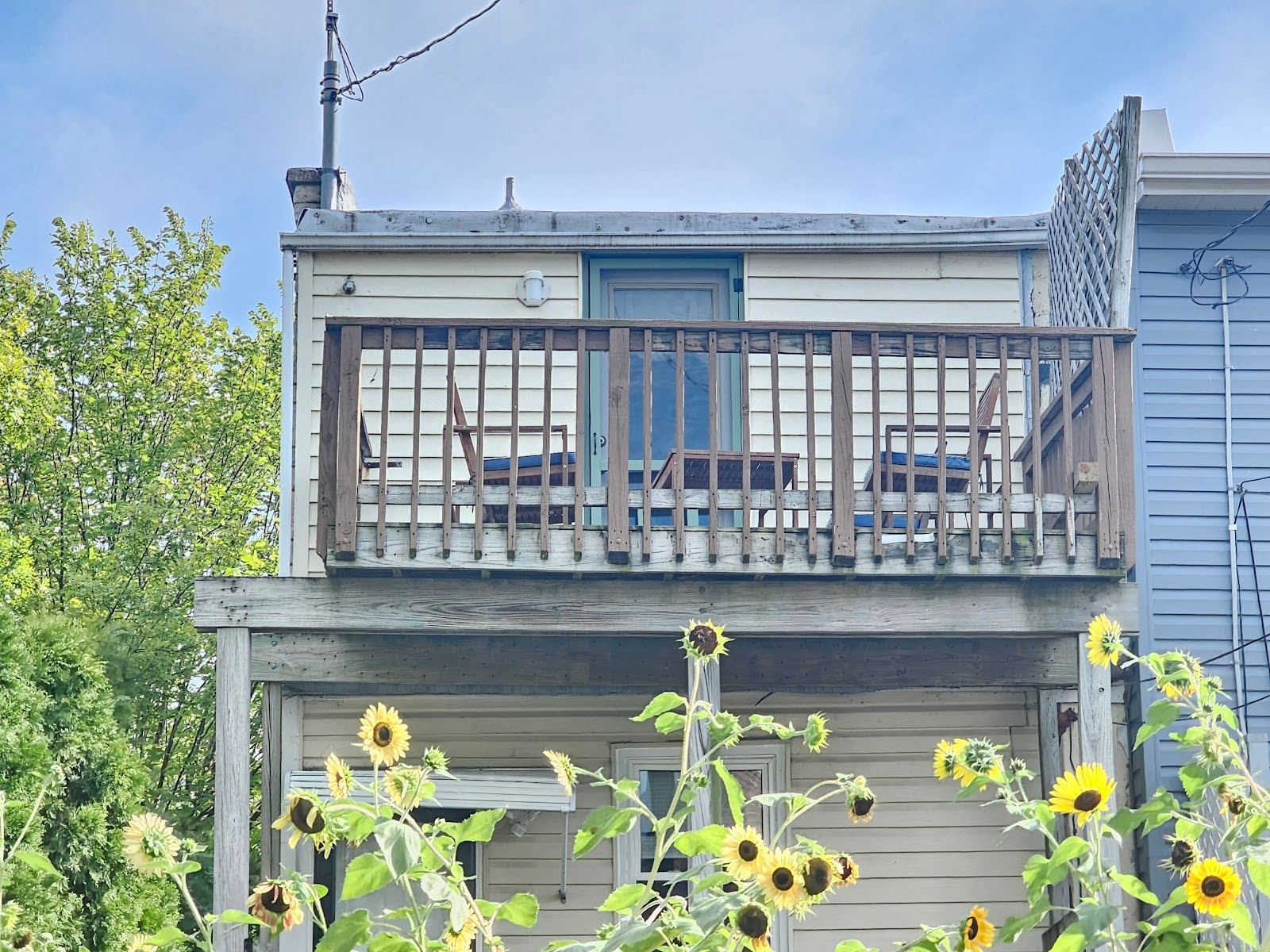
The end of the deck that’s close to the house is approximately 14 inches above the ground. The end of the deck that’s farthest away from the house is shown in the picture below. it’s about 4 ft above the ground. That difference, to go from about 14 in to 4 ft is significant. Meanwhile, with the deck here, it provides an almost flat surface that makes the space a lot more comfortable. Here in Washington DC, not every house or residence has outside space.
Some people are just locked inside the Concrete Jungle. When they step out of their house they’re in a common space where they’re in the heart of the city. By contrast, the people who do get the benefit of an outdoor space on their own property are really lucky.
This past week, we talked about how this particular deck was built with 4×4 posts instead of 4×6 posts. We strongly recommend 6×6 posts, in most cases. As we mentioned last week, 6×6 posts have a much stronger bearing capacity and also have the ability to be notched to nestle and create a stronger connection between the post and the girder or joist that it is supporting.
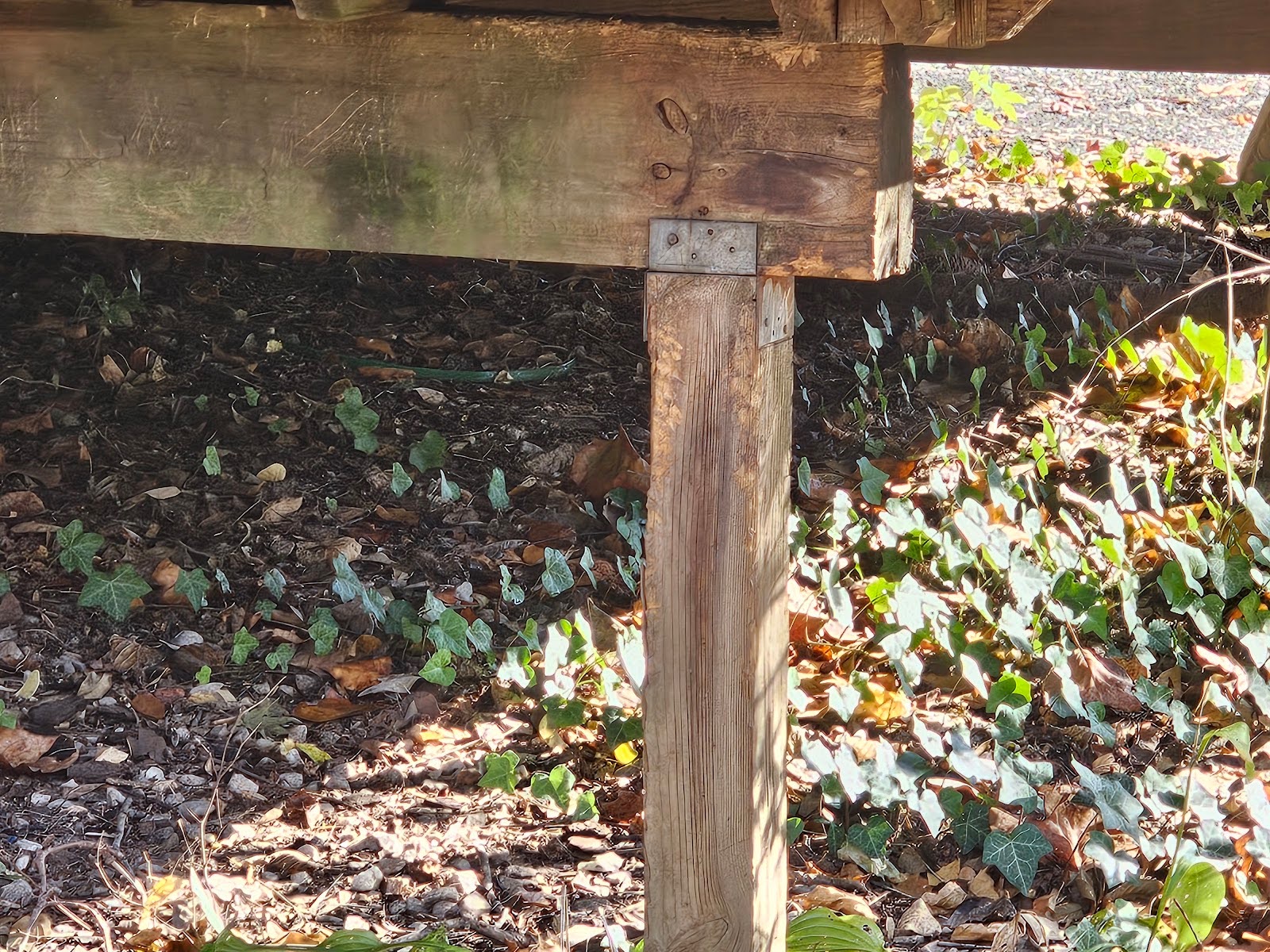
The pictures above and below show a closer view of an area where the posts have been connected to the girder above. This particular girder is made by joining a pair of 2×12 boards. When joined together with proper adhesive and fastening patterns, a double 2×12 is much stronger than even two times the strength of a single 2×12 board. The problem though is that when joined together the boards have a total real dimension net thickness of about 3 inches.
The 4×4 post is only about 3.5 in wide. This means that the post is only about a half inch wider than the joist above. There’s not enough space or thickness of the wood for the post to be shouldered or cut so that the boards can set in a crook of the post. Therein, the only way of connecting the boards is by fastening the joist on top of the post.
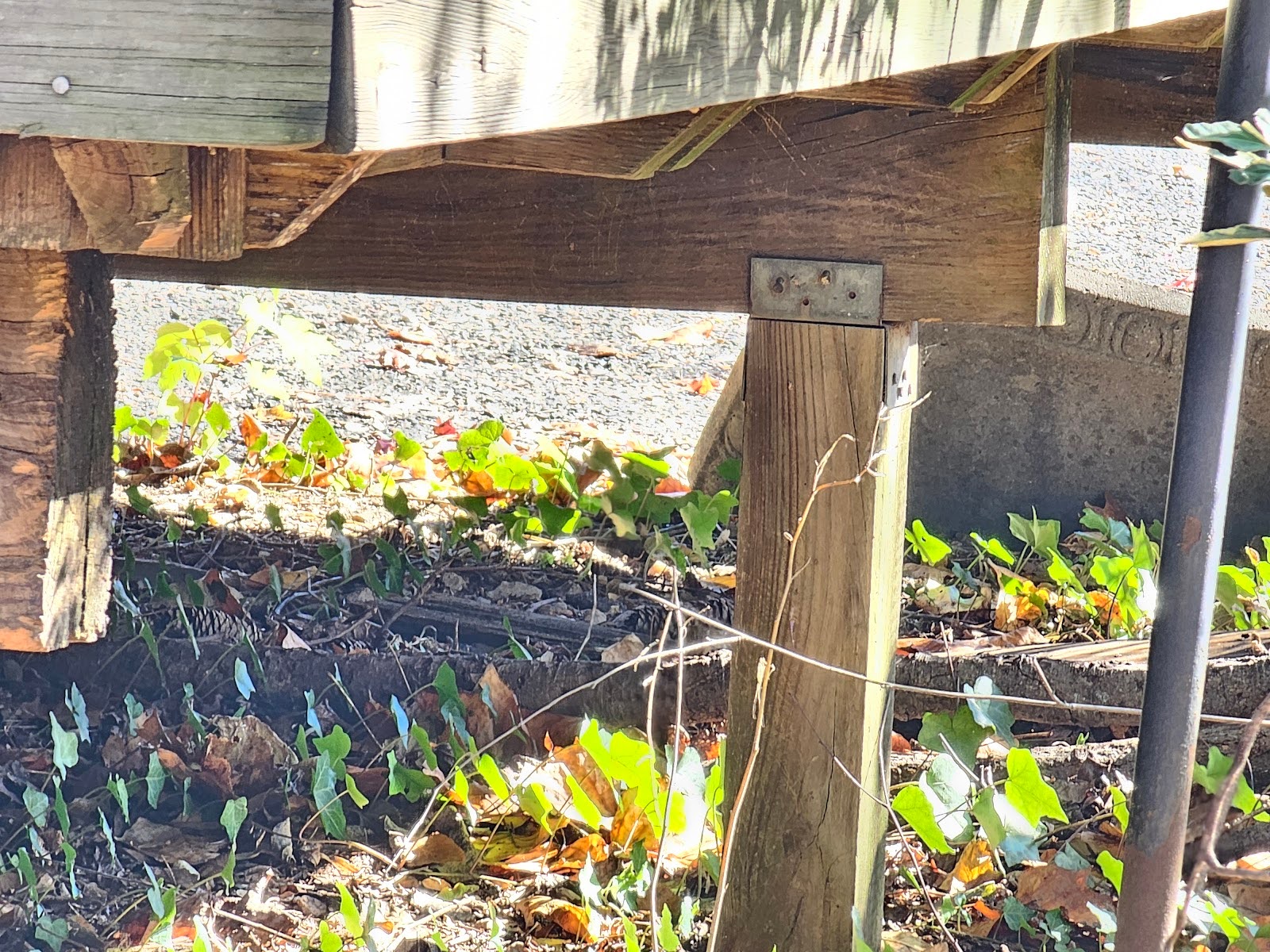
In this case, as you can see in the picture above, the joist is installed on top of the post but, without the hardware, a type of structural connector, used to connect between the post and the joist, in this configuration, is very weak. Weak connections like this lack both resistance to uplift and lateral stability. Heavy winds or any kind of lateral force can destabilize the deck joist or girder off of the bearing point, on top of the post.
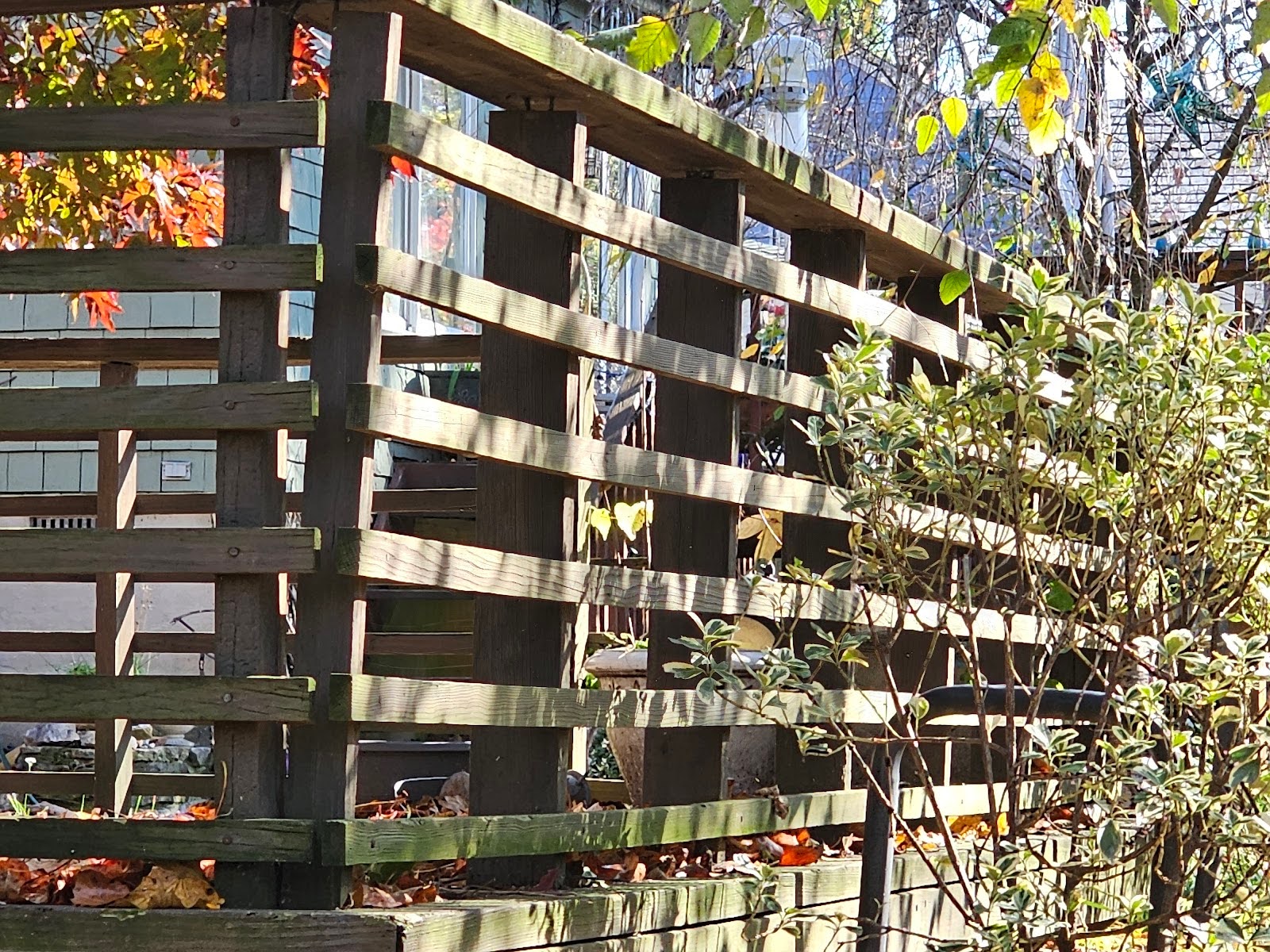
We also talked about the guardrail system. The aesthetic decisions are personal opinions, but many people really prefer this type of aesthetic over traditional 2×2 vertical pickets. The 2×2 vertical pickets are just boring looking. They’re so commonplace in tract home developments across the sprawling suburbs of the vast middle of the country, that they just look mundane. Here, in this case, with the horizontal type of guard elements, many people would say this is a welcome change.
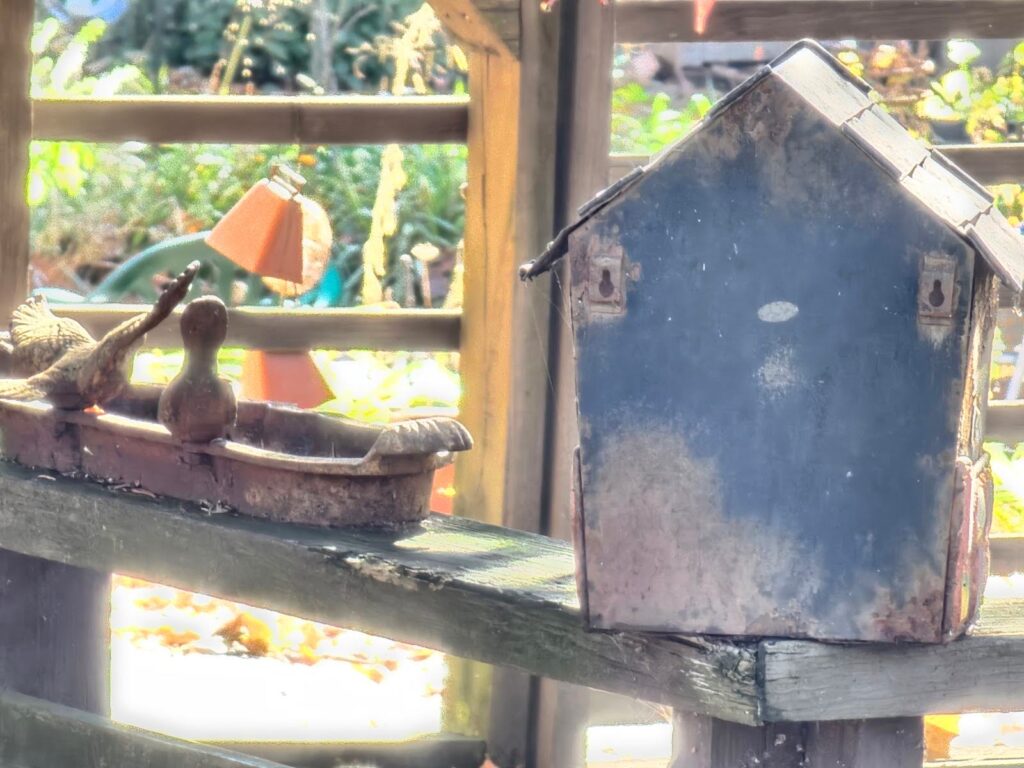
Decorative elements, again, come down to personal taste and opinion. We happen to like the decorative elements at the bench on the side of this deck. Other people may disagree. Here, they have a bird bath and an old bird house, set on the top of the bench.
Use a contractor who understands and cares about doing things right. Always, feel free to reach out to us here at Dupont Decks and Patios. We are happy to help with almost all steps of the deck building and design process. A backyard and outdoor space should make a significant, positive impact on both quality of life and home value. We can help with more than just decks, we also build patios, pergolas, ramadas, awnings, gazebos, arbors, and privacy fences.
Let us know about your ideas and talk to us if you have questions about possibilities. We are happy to participate in improving your outdoor space and quality of life! You can call us at (202) 774-9128. You can find us online at https://dupontdeckspatiosdc.com and you can email us there as well at https://dupontdeckspatiosdc.com/contact-us