Design Tips for Metal Handrails on Wood Decks
Here on our website we’ve looked at many different types and styles and configurations of backyard decks. Many of them were built with a dimensional lumber frame and covered with a walking deck surface which can be made from a variety of materials. Those materials can range from 5/4 pressure treated southern yellow pine , exotic hardwoods, and different types of composite boards.
Composite boards or made from synthetic materials and have high resistance to moisture and moderate to decent resistance to the deleterious effects of exposure to ultraviolet rays. Often, the guardrails around the perimeter of these decks and the handrails at the stairways and associated guards are built with dimensional lumber. Just like the frames, this dimensional lumber has a similar appearance in aesthetic. Here though, and the example shown in the photo below, the handrail and guardrails are built with steel.
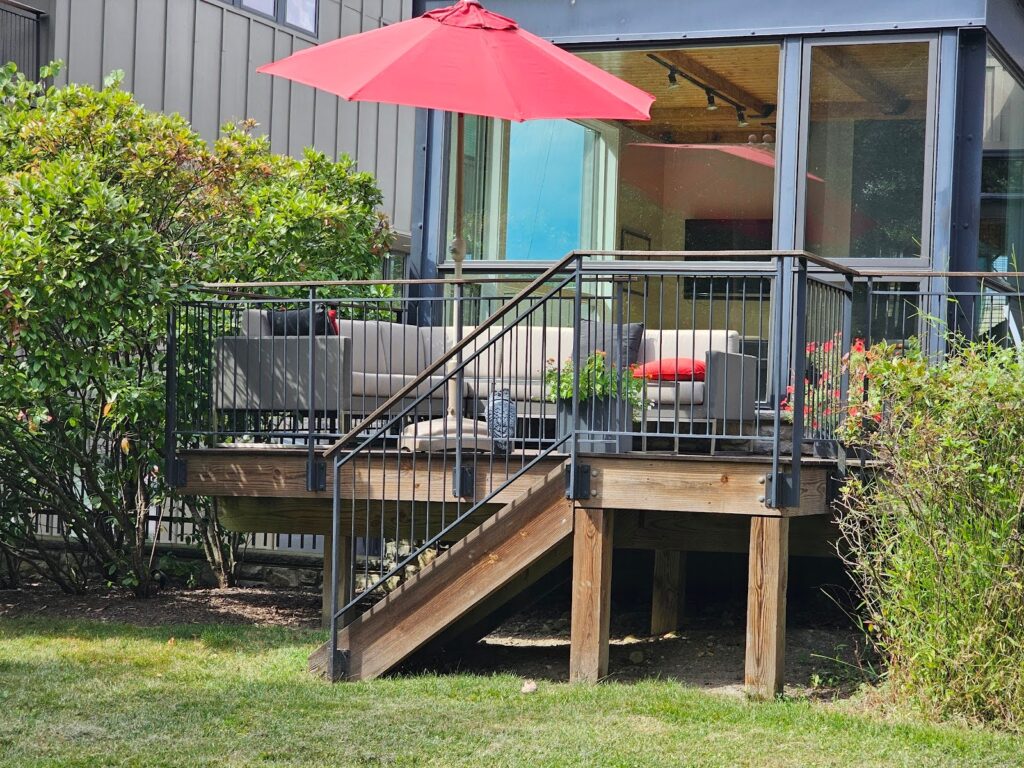
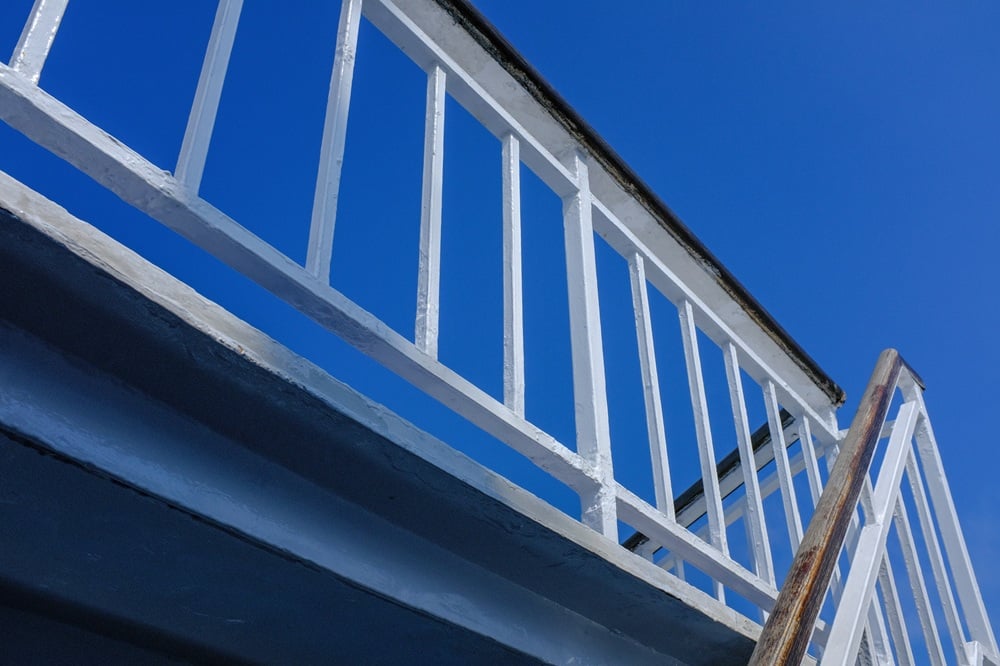
Although guardrails and handrails built with steel, like the ones shown here, are not common on most backyard decks, these materials are common here in Washington DC. Particularly with historic buildings, yard fences and front stairs and handrails and guard rails are often built with similar materials. Materials similar to this were used in historic times. In some cases, some of the most historic stairways are built with a mixture of wrought iron and cast iron, used here, in this example. Wrought iron is made from iron but it’s not the same as steel. Steel has a higher amount of carbon in the metal alloy.
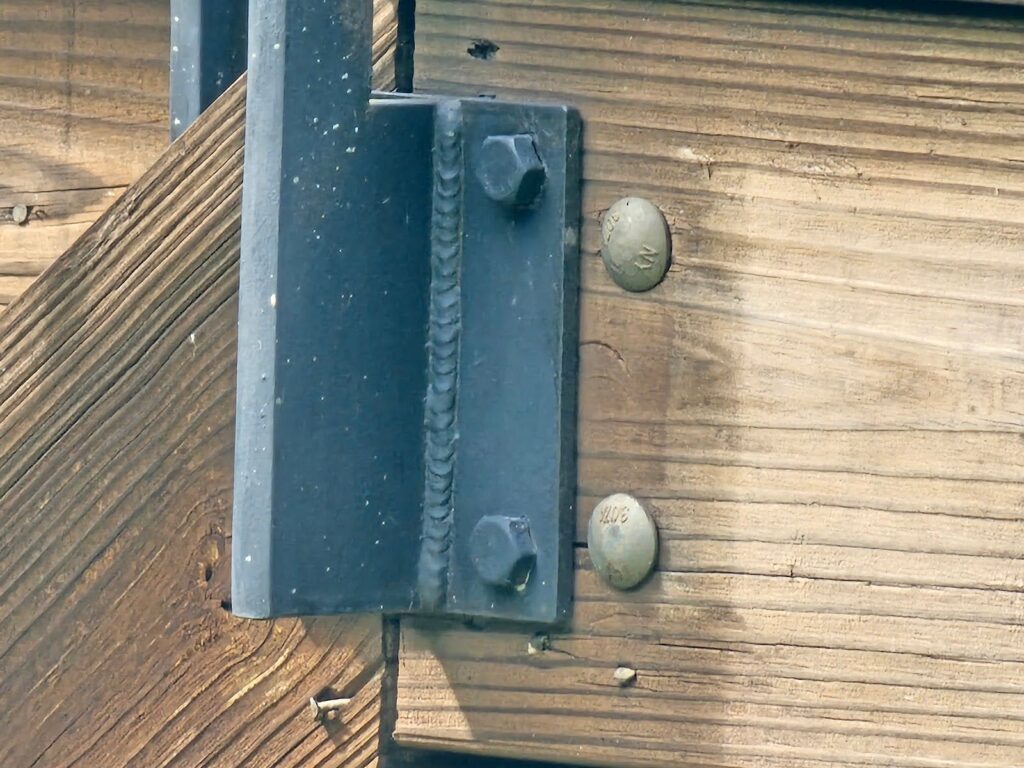
If you look close, the picture below, you can see that two different types of fasteners have been used. There’s one pair of each of them shown. The galvanized gray color fasteners are carriage bolts. Only a round portion of the head is exposed and this particular rounded head cannot be tightened or applied with a wrench.
In this particular case, flat plates are welded onto the bottoms of the guard rail post. The plates provide access to both sides of the post for additional stability. The post itself could be bored and have fasteners run directly through the thin post. However, the wider plate allows for greater stability because it spreads out the bolting locations. Having a wider distance is preferable when mounting to a wooden substrate because wood can split when multiple fasteners are positioned close to one another.
The wider spread and distance between the fasteners allows each of the fasteners to have its own isolated area of mounting within the grain of the wood framing. In this particular case though, at the opening in the deck, at the stairway, the post is installed at the end of the rim joist.
This positioning is basically unavoidable. When fasteners are installed near the end of a board though, they are at a weaker point in the board. At first, they may be strong, but as the wood deteriorates, the end grain is the area that deteriorates fastest. End grain of wood is more susceptible to water infiltration and therefore has a tendency to dry rot and weaken faster.
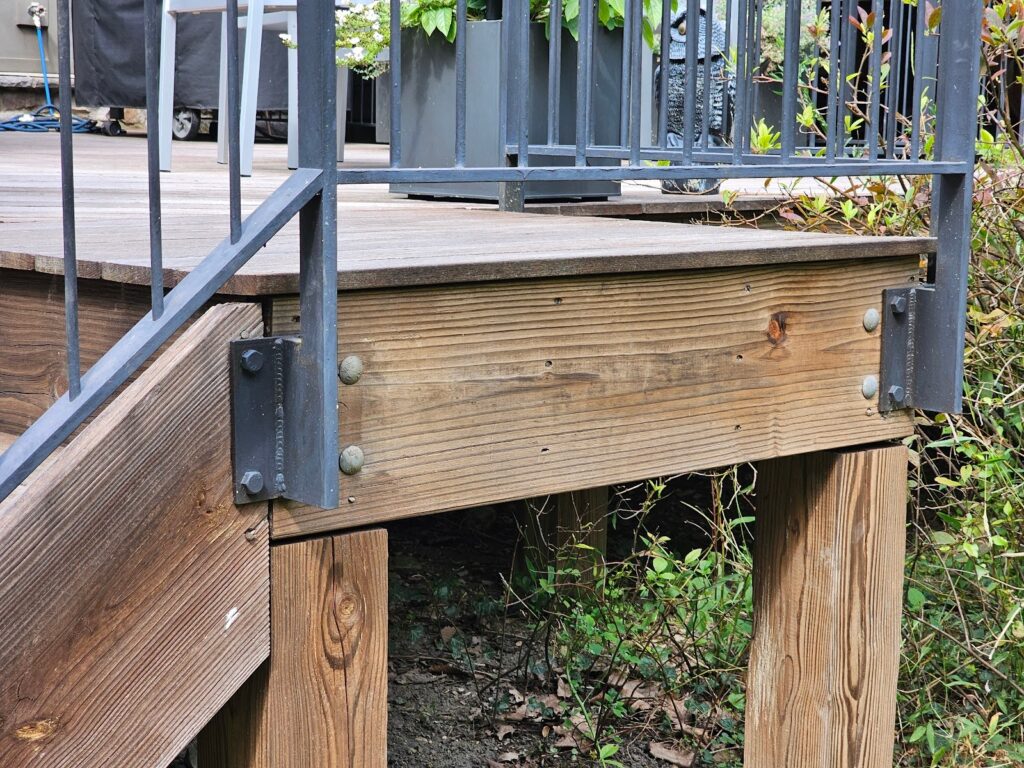
In the picture below, you can see the span across the deck at the side. The posts here are both installed at the ends. That isn’t optimal. The wider plate of mounting the guardrail post does help though.
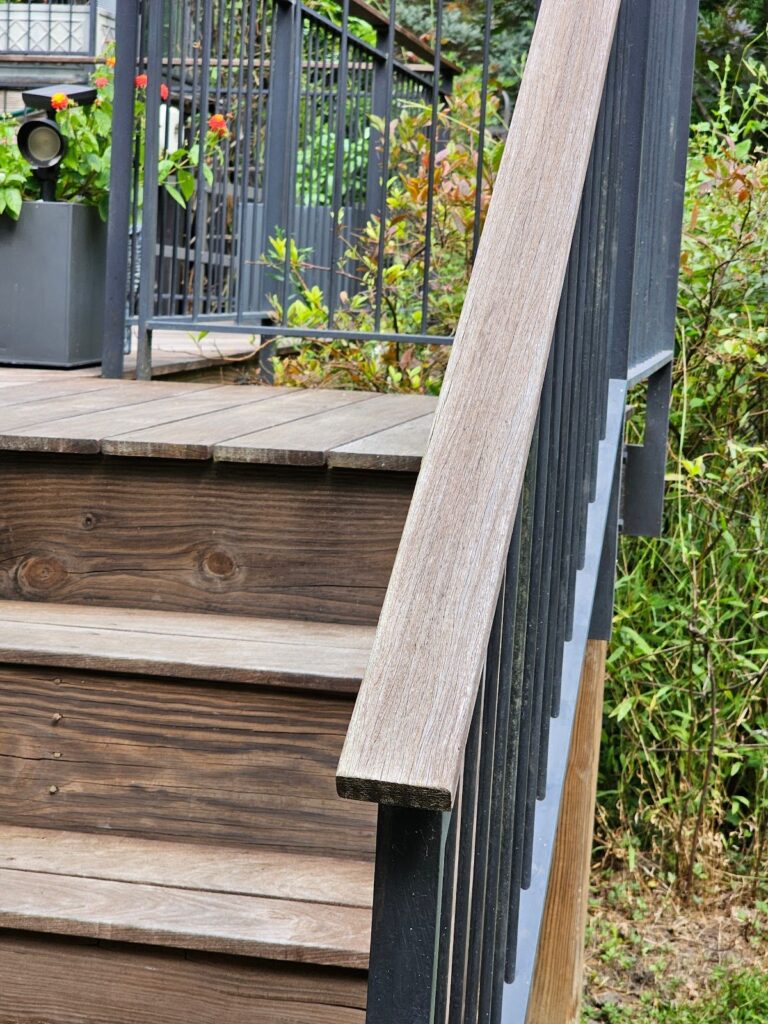
Although this particular design incorporates steel for the structure of the guardrail and handrail, the cap work top most element uses an exotic wood board. Even from a distance, you can tell that this wood is different than the native or local domestic yellow pine. Some of the lumber materials here in America may actually be harvested and shipped in from Canada, but this native Southern yellow pine mostly is grown here directly without coming or being processed from abroad.
Currently, as we are in a trade war, these details matter because the sourcing locations affect pricing significantly. At the time of writing this article in November 2025 the price for pressure treated something yellow pine is about $538 per 1000 board foot there’s approximately 5.33 board feet per typical 2×4 at 8 foot length. It actually costs more once it’s processed and shipped to distributors and sold. Considering the current trade war and the reverberations that ripple throughout the market, that price is not exceptionally high.
That explanation about pressure treated Southern yellow pine applies to the framing of the deck itself. Southern yellow pine can also be used as the walking surface of the deck. Here, instead, an exotic wood has been used at some locations, though. The exotic wood is different. Generally, exotic woods are way more expensive than low cost native Southern yellow pine. One of the big differences though is that several types of exotic woods are more durable and do not require the same chemical treatments to be resistant to deterioration in an exterior application.
Use a contractor who understands and cares about doing things right. Always, feel free to reach out to us here at Dupont Decks and Patios. We are happy to help with almost all steps of the deck building and design process. A backyard and outdoor space should make a significant, positive impact on both quality of life and home value. We can help with more than just decks, we also build patios, pergolas, ramadas, awnings, gazebos, arbors, and privacy fences.
Let us know about your ideas and talk to us if you have questions about possibilities. We are happy to participate in improving your outdoor space and quality of life! You can call us at (202) 774-9128. You can find us online at https://dupontdeckspatiosdc.com and you can email us there as well at https://dupontdeckspatiosdc.com/contact-us