Common Issues with Metal Handrails on Wood Decks
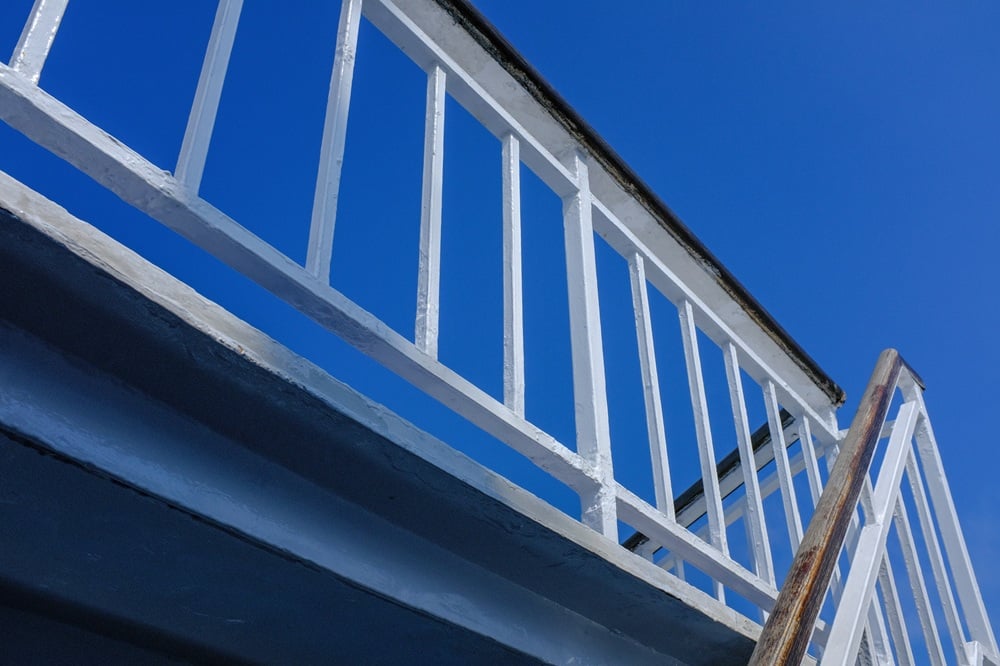
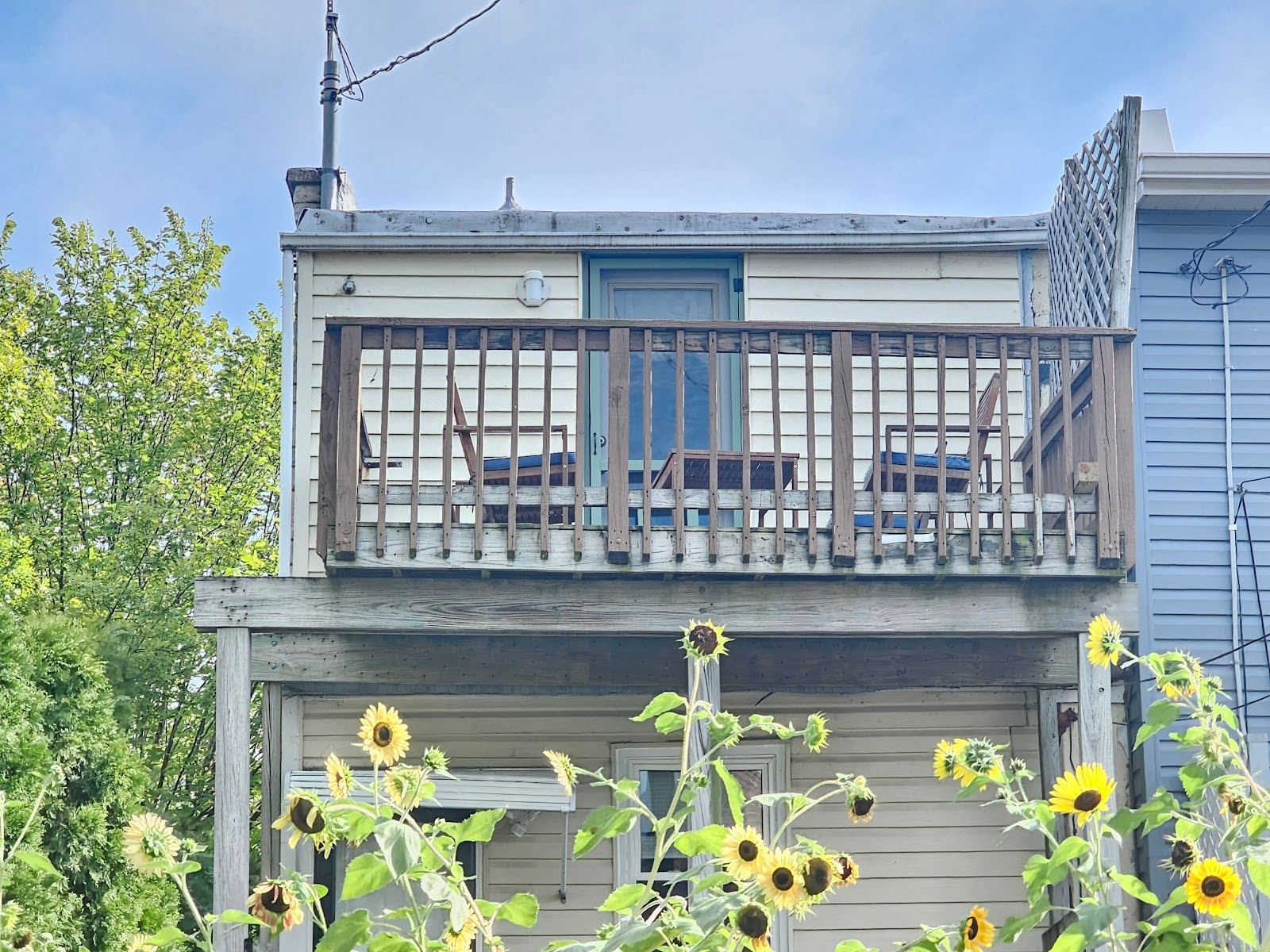
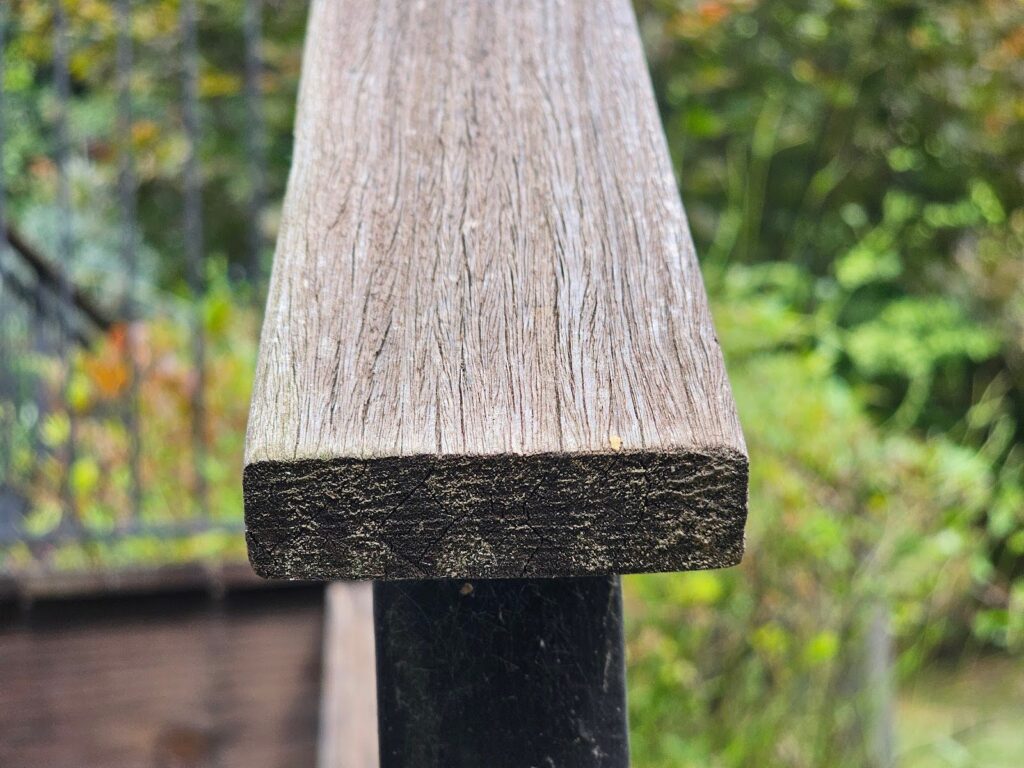
This past week, we took a look at a wood deck that uses a set of wteel handrails and guardrails. The top of this particular handrail and guardrail system though is capped with an exotic hardwood. We talked about the typical Southern yellow pine materials used in deck frame construction. Southern yellow pine is treated with a pressure applied chemical that prevents decay and accelerated deterioration. The chemicals basically infiltrate deeply into the wood grain, through the pressurized application.
Many types of the exotic hardwoods are naturally decomposition and insect resistant. They have chemicals that are natural in the wood that prevent accelerated decay. Cederol, for example, is naturally found in cypress and cedar woods. This particular chemical naturally repels insects and also acts as a moisture deterrent. Insects and animals that damage wood generally need the wood to have a moderately high moisture content so that the wood can break down easier. In this example, since this particular chemical both acts as insect repellent and deters moisture, the combined effect preserves the wood very well.
Some exotic woods also have high amounts of tannins which can act as an insect repellent. Quinones, for example, are naturally found in exotic teak woods. This family of chemicals repels termites. Without risk of termite damage, this wood is significantly more durable.
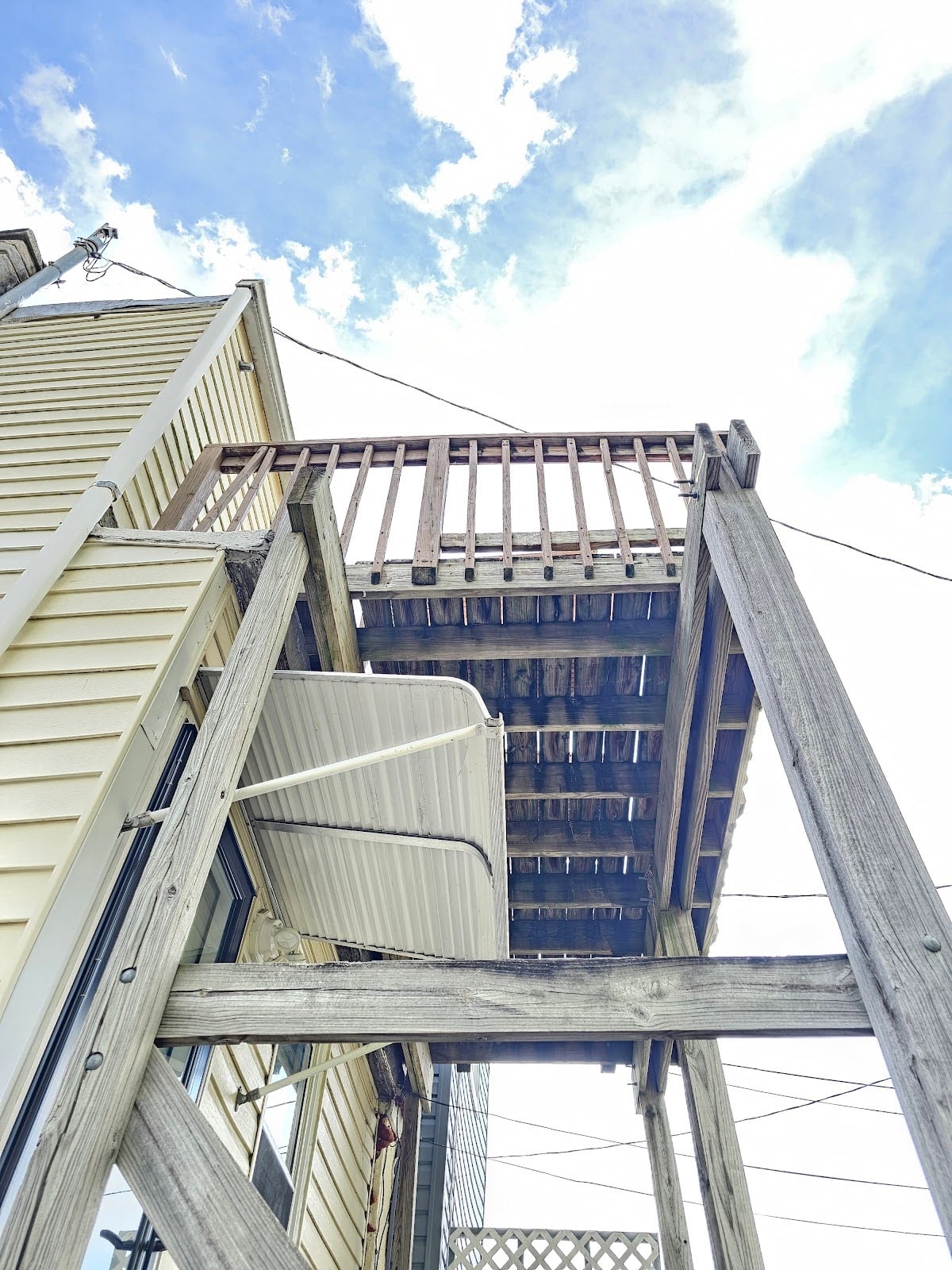
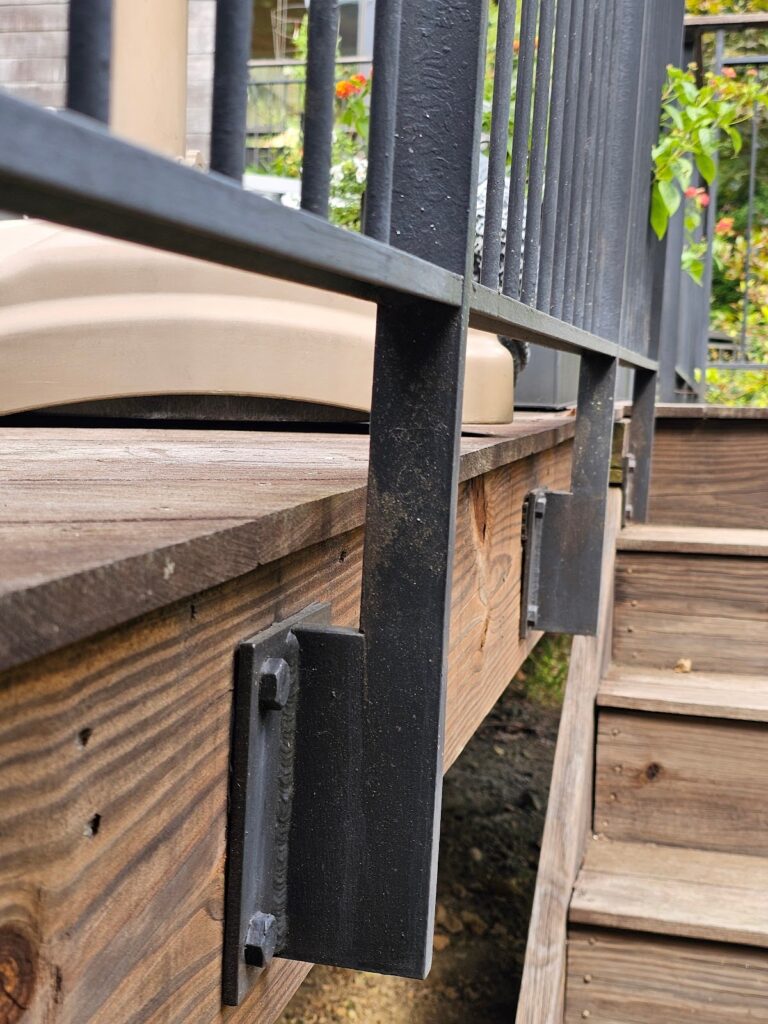
This past week, we shared a few examples of locations where the guardrail posts were mounted near the ends of a rim joist. Here, we show several examples of where the posts are mounted at a more intermediary or middle area of a rim joist. This particular configuration or mounting location is much stronger. This position is stronger because the grain, at both longitudinal sides of a mounting fastener, is continuous. Since the grain is continuous on both sides of the fastener, the grain is held tighter together by the adjacent elements of the grain. It is therefore stronger and more stable, even for longer periods of time.
If you look closely at the grain of the rim joist, you may notice the very thick and obvious differentiations or stripe-like lines of the grain in the board. Exotic hardwoods don’t have this significant differentiation. Here, in this Southern yellow pine board, the dark lines are referred to as summer grain and the light lines are referred to as spring grain. In the spring the wood grows fast but weaker, during the summer the grain is stronger and denser. This difference in cellular structure is the reason why there is a variation in the grain aesthetic. Exotic woods normally come from certain regions, like the Amazon rainforest.
The trees in that region grow relatively consistently throughout the year because the tropical areas don’t have distinct seasons of significant heat and sun versus cold and darkness. Plants generally grow better in warmer and sunnier climates. This makes the tropical regions of the world relatively good for plant growth, but you can tell the difference between a piece of wood that comes from a tree grown in a tropical area, versus a seasonal area like the United States
The stair risers are made from Southern yellow pine wood. The walking surface boards, by comparison, are made from exotic woods.
There’s a big difference in the aesthetic, when you look closely. You may also notice that some of the boards have been installed in a diagonal layout where they cross over multiple joists. The frame is stronger when the boards are laid in a diagonal configuration because the diagonal creates a layout of triangulation. Rectangular frames are generally weak in a lateral context. A shear force or lateral force can generally be described as a sideways type of application of force or pressure. Just like geometry drawn on a piece of paper, you can think about this structural difference in a really simple concept.
A rectangle, for example, can change shape and become an angled parallelogram without changing the length of the sides of the shape. A triangle, without changing the length of the sides, cannot change form. It works the same way with framing, where diagonals are used to create a layout of triangulation. It can just be a smart, stable form, even in this really simple way.
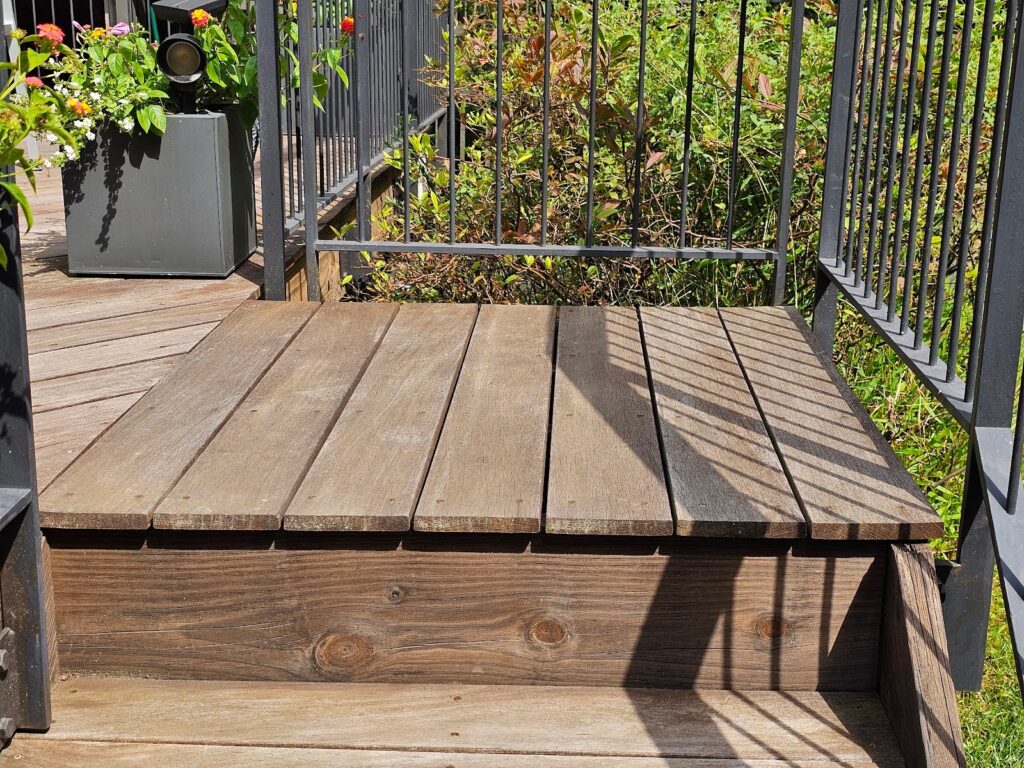
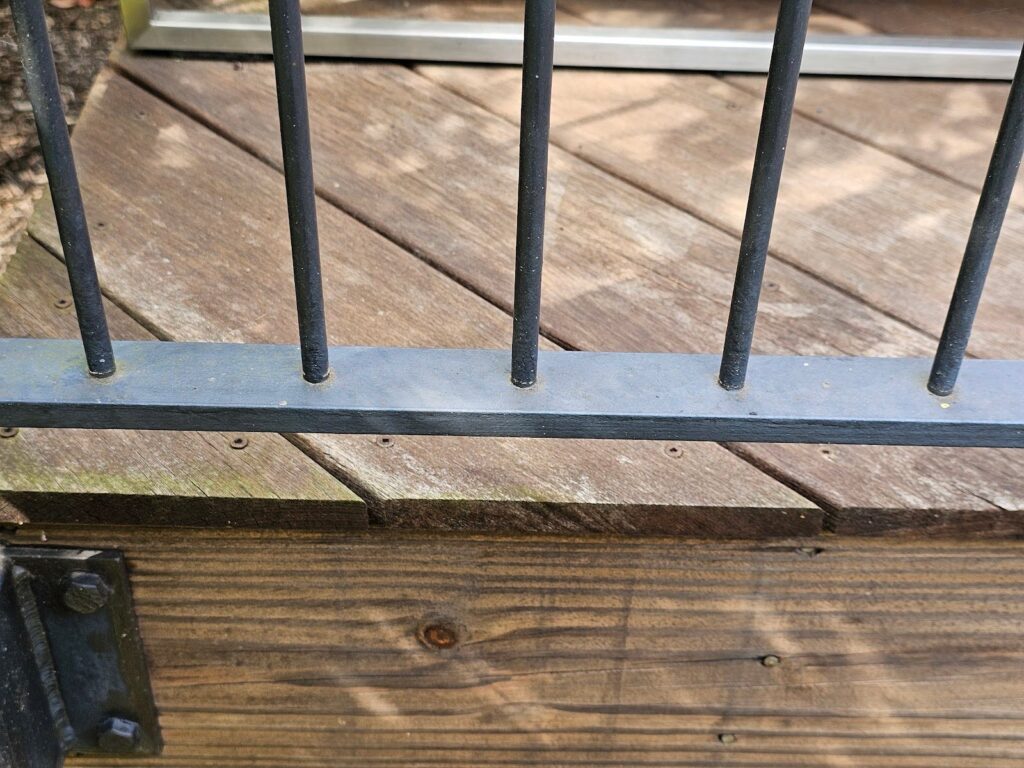
Even though this deck has been stained a relatively moderately light brown color, you can see the grain more clearly in the next picture below because it’s a closer view. The grain of this exotic hardwood, used as the walking surface, is very consistent across the face of the board.
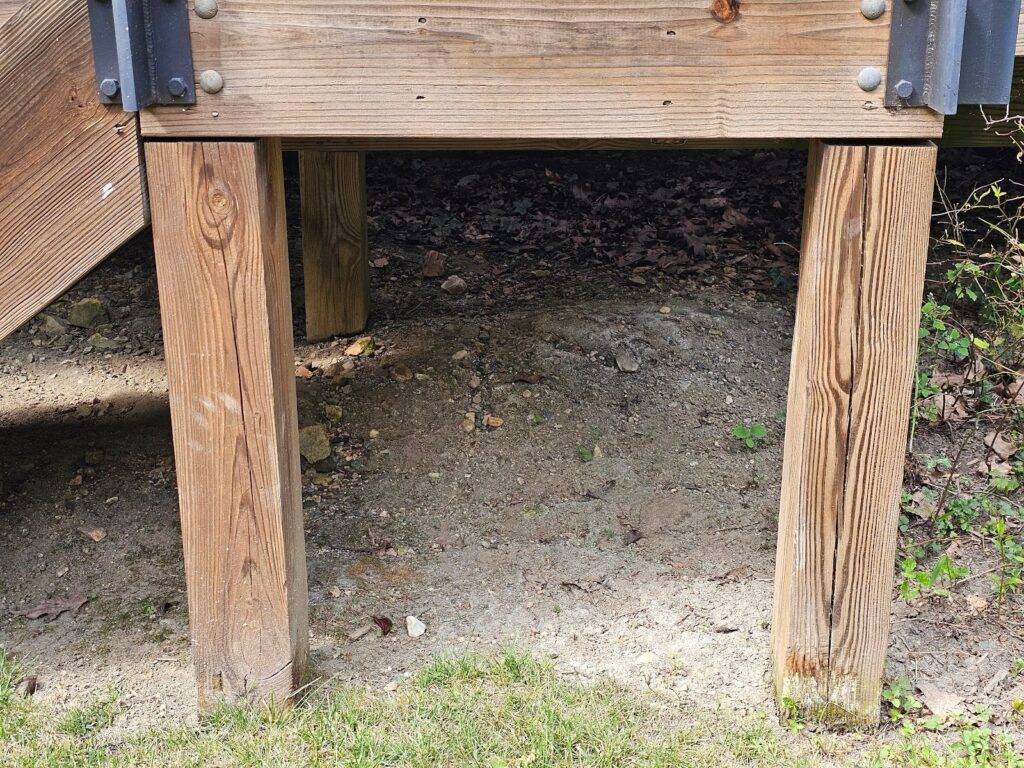
The next picture below shows where the rim joist of the edge of the deck is set on top of the deck posts. These deck posts are notched to create a shoulder location where the rim joist can be nestled inside of the space of the post. Essentially a horizontal platform is created that supports the horizontal positioning of the rim joist, but a portion of the post is also left to pass the edge of the joist vertically and provide a greater area of contact between the different boards.
Use a contractor who understands and cares about doing things right. Always, feel free to reach out to us here at Dupont Decks and Patios. We are happy to help with almost all steps of the deck building and design process. A backyard and outdoor space should make a significant, positive impact on both quality of life and home value. We can help with more than just decks, we also build patios, pergolas, ramadas, awnings, gazebos, arbors, and privacy fences.
Let us know about your ideas and talk to us if you have questions about possibilities. We are happy to participate in improving your outdoor space and quality of life! You can call us at (202) 774-9128. You can find us online at https://dupontdeckspatiosdc.com and you can email us there as well at https://dupontdeckspatiosdc.com/contact-us