Choosing the Right Synthetic Handrails and Guardrails for Decks
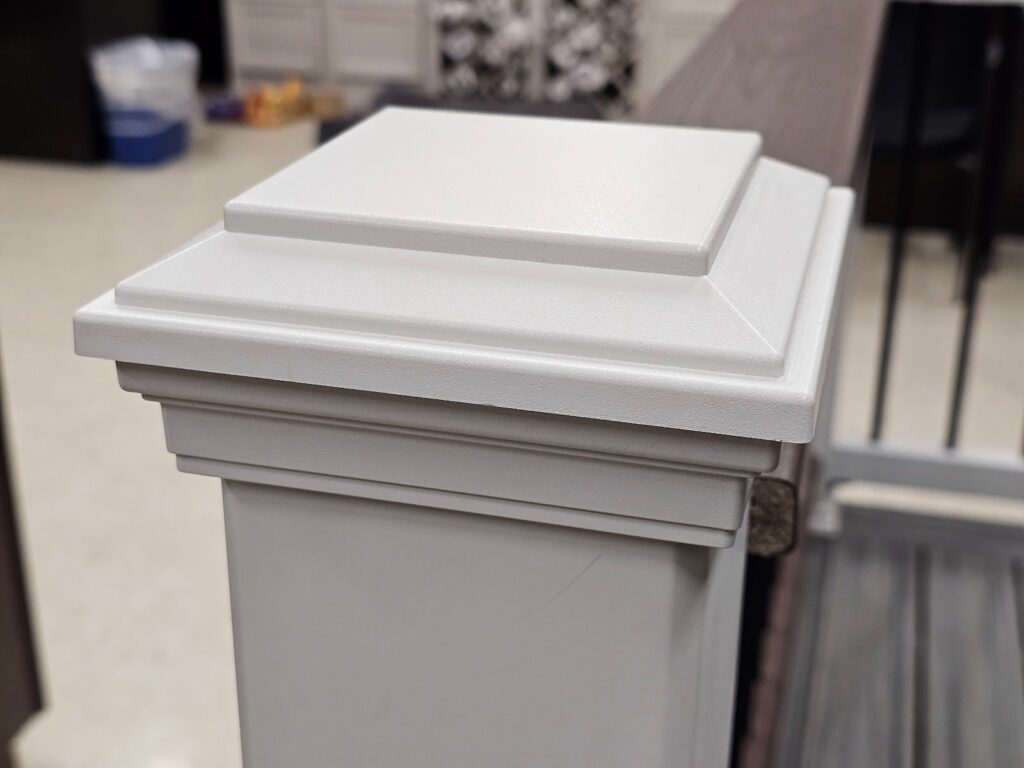
In a blog article this past week, we began looking at some examples of PVC and aluminum synthetic guardrails and handrails. Today we’re all going to look at some examples of decorative elements used in these applications. Particularly, we’re going to look at some of the post caps that are designed with aesthetic embellishments.
This past week, we also talked about the balusters. And the picture below, instead of using an actual set of pickets style balusters, they used a cable system. In many types of locations in configurations, the building code will require that spherical objects greater than 4 in in diameter will not be able to fit and pass through a section of a guardrail. When these requirements apply, we will generally install pickets or balusters with only 3.5 inches of space between them. Even though 3.5 inches is less than the maximum constraint, we prefer this as a default because it means that if any elements of the configuration require slight variation, we still likely stay well within the requirements.
A cabling system like this definitely has a more modern or contemporary visual aesthetic. In general, we like horizontal balustrade systems on deck guardrails. Sometimes the contemporary style looks good or compliments other elements of the architecture. As we mentioned, in the past though, sometimes there’s an inherent problem with horizontal guardrail systens because it can encourage children or babies to try to climb upwards which is dangerous.
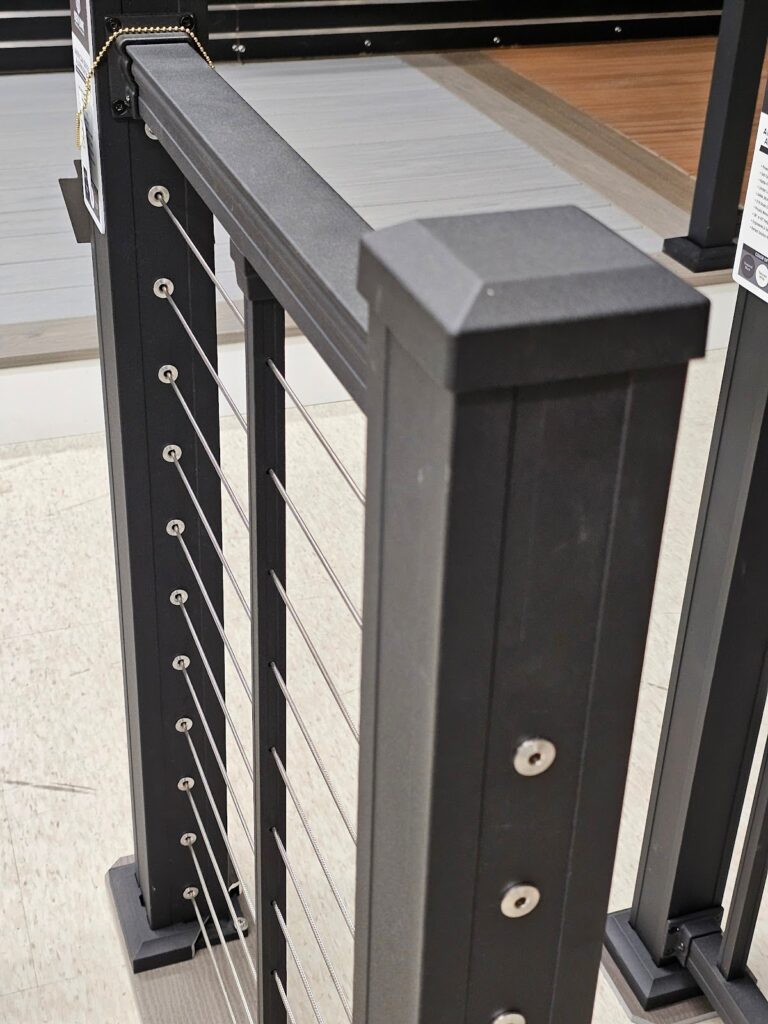
You look at the post caps in the pictures above and below, you can see this is a very simple type of overall design and aesthetic. It’s not overly elaborate and melds better with minimalist type architecture.
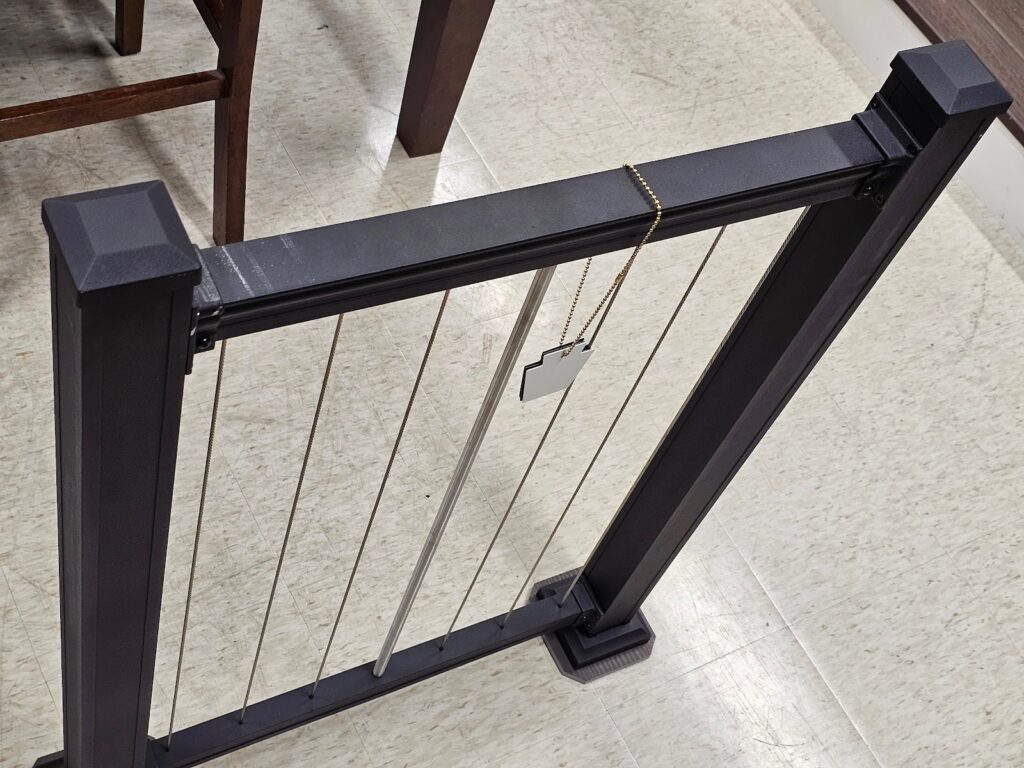
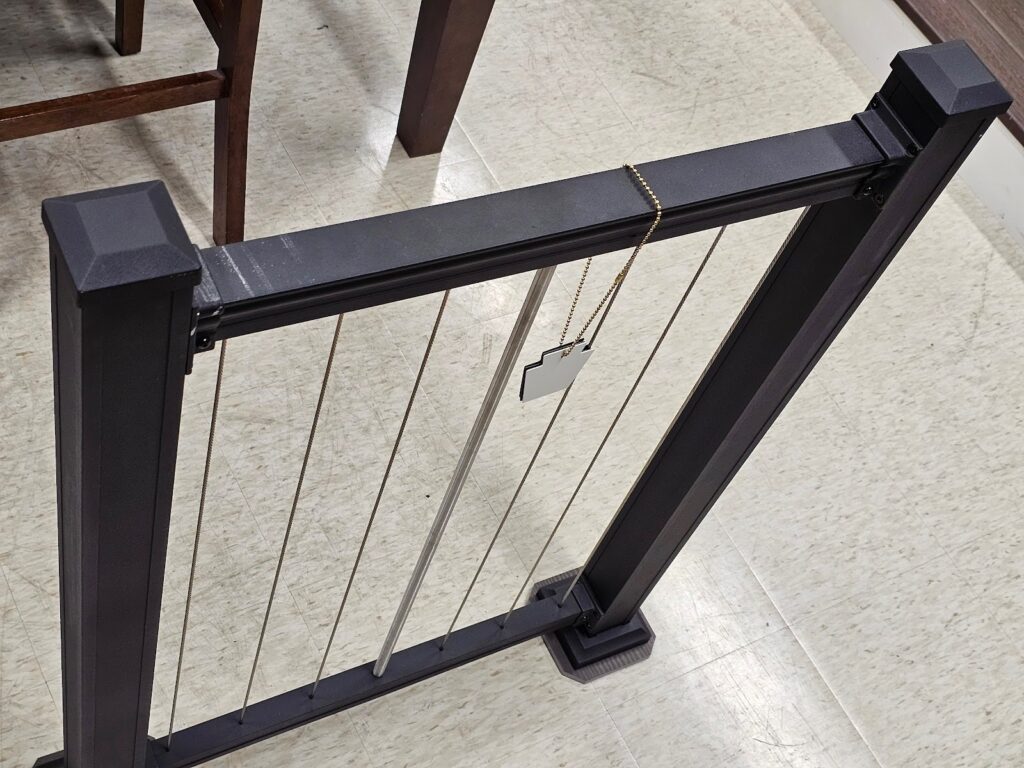
A much closer view of the post cap follows in the next picture below. Unlike the guardrail section with horizontal cables, this one also has cables for those cables run vertically. The visual aesthetic of the horizontal application may look better than the vertical, but from a safety perspective the vertical one prevents kids from trying to climb up as easily.
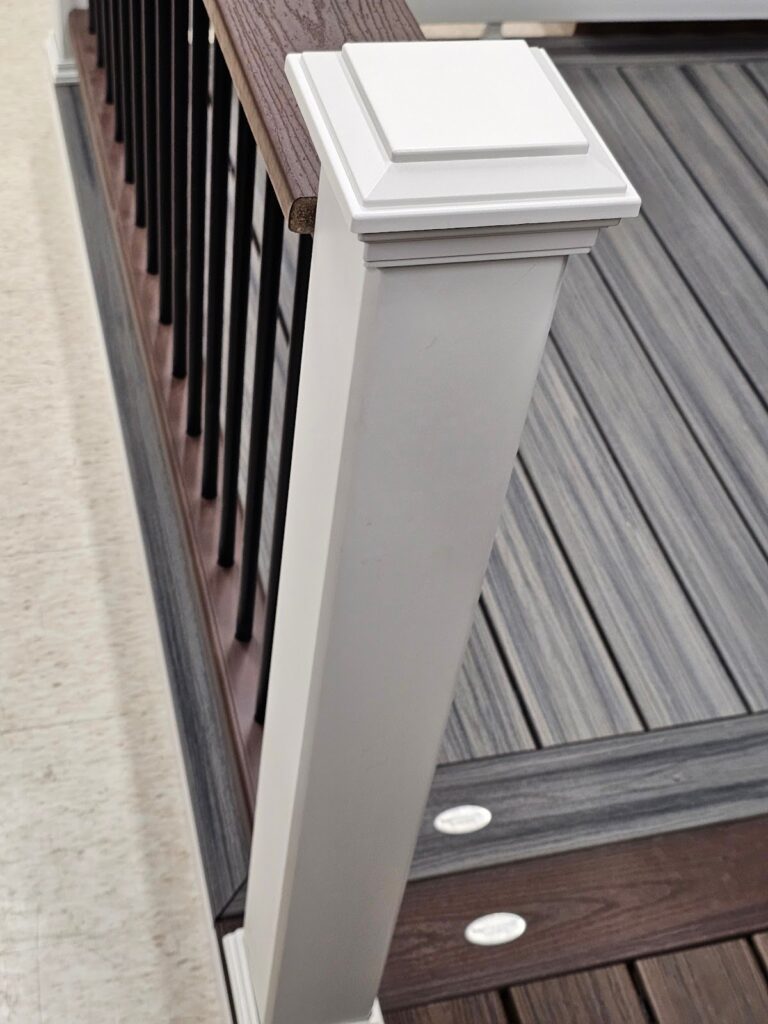
The next example shown below is a little bit different than the other two that we mentioned last week and in the sections above. On top of the guardrail and cap board is installed, made with composite wood. The post cap, is made to have a dark wood stain aesthetic, but it is actually a composite material.
Composite materials have some similarities to natural wood, but they also have some similarities to synthetic materials like PVC. Here, they look a little bit more natural, even though they don’t have a natural color.. The composite boards have an artificial grain on the surface and because of that generally look kind of fake or artificial. PVC and other synthetic materials also have an unnatural sheen.
Even with its shine, they still look different than semi-gloss paint. Often, wood materials are processed to look more consistent. In the case of cabinetry, veneers will often be used that have very fine fiber wood on the exterior of laminations. This wood then can be stained or painted and it looks like a near perfectly flat type material.
When painted though, you can still kind of tell the difference. There are often still small amounts of imperfections and or brush strokes. It won’t normally look bad, but manufactured materials stand out. Manufactured materials have near perfect consistency and do not show signs of natural composition.
Composite materials are made up of a mixture of two main classes of subcomponents. They have a degree or some proportion of wood fiber inside of the composite materials. They also include other materials like recycled PVC and polyethylene type materials. Even things like plastic shopping bags will sometimes be used as a recycled sub component of composite decking and or guardrail and handrail materials. The handrails and guardrails that we are talking about today will often look very similar to the composite decking materials.
When decks are built with composite materials, it’s mostly just the walking surface of the deck that’s actually built with composite materials. The frame and structure of the deck will more often be built with typical framing materials like pressure treated southern yellow pine.
In many cases, especially here in Washington DC, the substructure or frame of the deck may actually be built with steel elements. It is not highly common, but we see it once in a while. In many cases the decks of the past were built with an entirely different framework. Today, when they’re replaced, people often use pressure treated southern yellow pine as an alternative material but build it back on top of the old framing. Exotic hardwoods can also be used, but they’re very expensive. In most cases synthetic or composite materials are not used for the structural framing itself.
Use a contractor who understands and cares about doing things right. Always, feel free to reach out to us here at Dupont Decks and Patios. We are happy to help with almost all steps of the deck building and design process. A backyard and outdoor space should make a significant, positive impact on both quality of life and home value. We can help with more than just decks, we also build patios, pergolas, ramadas, awnings, gazebos, arbors, and privacy fences.
Let us know about your ideas and talk to us if you have questions about possibilities. We are happy to participate in improving your outdoor space and quality of life! You can call us at (202) 774-9128. You can find us online at https://dupontdeckspatiosdc.com and you can email us there as well at https://dupontdeckspatiosdc.com/contact-us