If you’re a Gaithersburg homeowner who uses your deck for weekend barbecues, quiet morning coffee, or letting the kids play outside, deck safety probably isn’t something you think about every day, and that’s understandable. The problem is that if your deck is 15 or 20 years old, small warning signs like soft boards, wobbly railings, or slightly shaky stairs can point to much bigger issues beneath.
Rotting framing, loose ledger boards, and rusted hardware often stay out of sight until something fails, and when it does, the risk of serious injury is real. That’s why Dupont Decks & Patios puts safety first. Their in-house team doesn’t just patch problems, they rebuild decks the right way, using modern materials, proper structural connections, and current building codes so your outdoor space looks great and feels solid, secure, and safe for everyone who steps onto it.
The Reality of Old Decks in Gaithersburg
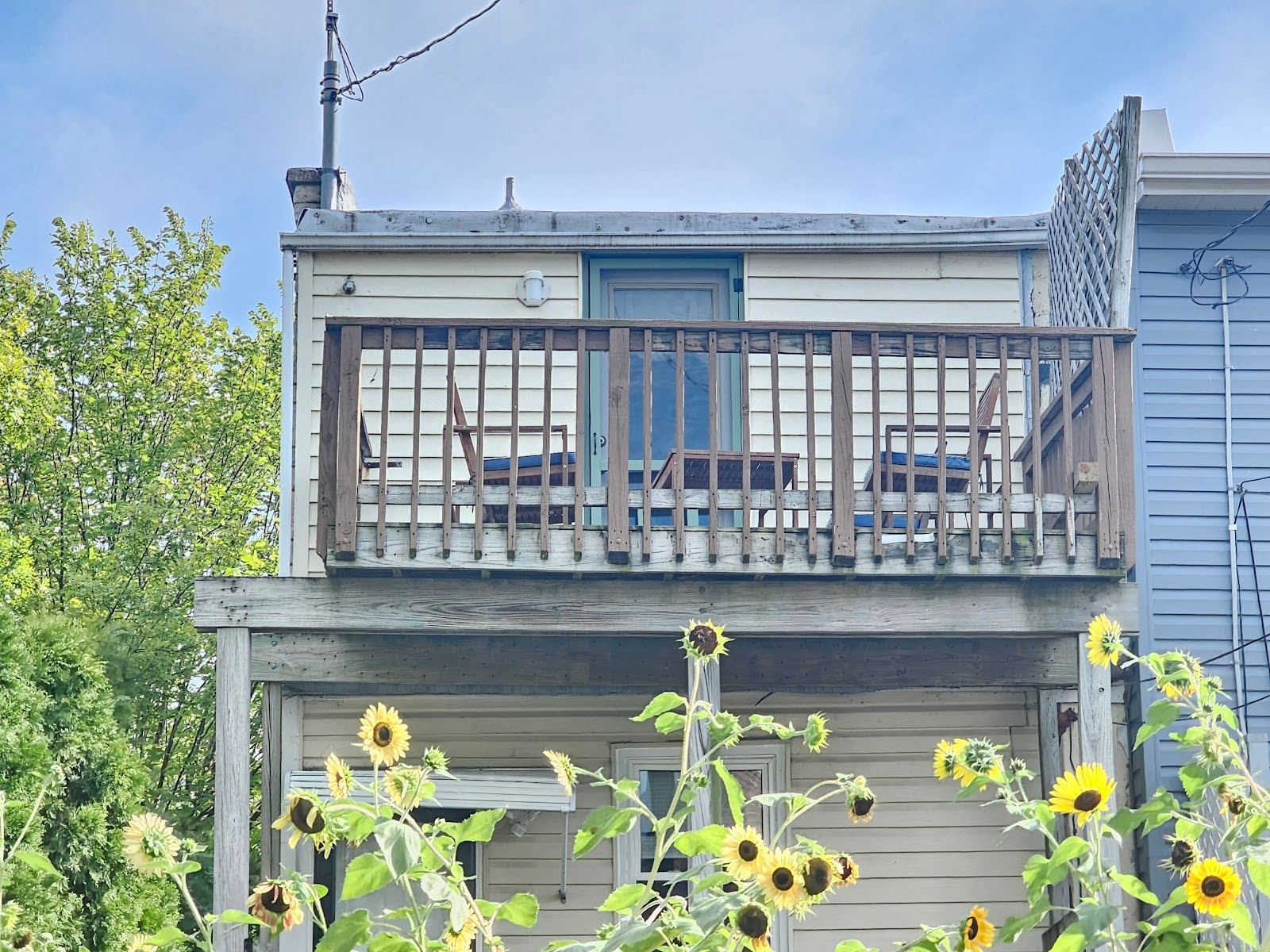
Most deck accidents don’t happen because a homeowner ignored something obvious. They happen because the deck looked fine. In Gaithersburg, decks are constantly exposed to moisture, humidity, heavy rain, and winter freeze-thaw cycles. Over time, that weather takes a toll on wood and hardware, especially on older decks built before today’s safety standards were common. Even well-maintained decks eventually reach a point where repairs stop being enough.
Many homeowners only realize how serious the problem is after a professional inspection, or worse, after a close call.
The Most Common Deck Safety Issues Homeowners Miss
Ledger Board Failure
- The ledger board is the part of the deck that attaches directly to your house, and it’s one of the most common causes of deck collapse. Older decks were often installed without proper flashing or modern fasteners, allowing water to seep in behind the board. Once rot sets in, the deck can slowly pull away from the home without warning.
Hidden Rot and Structural Decay
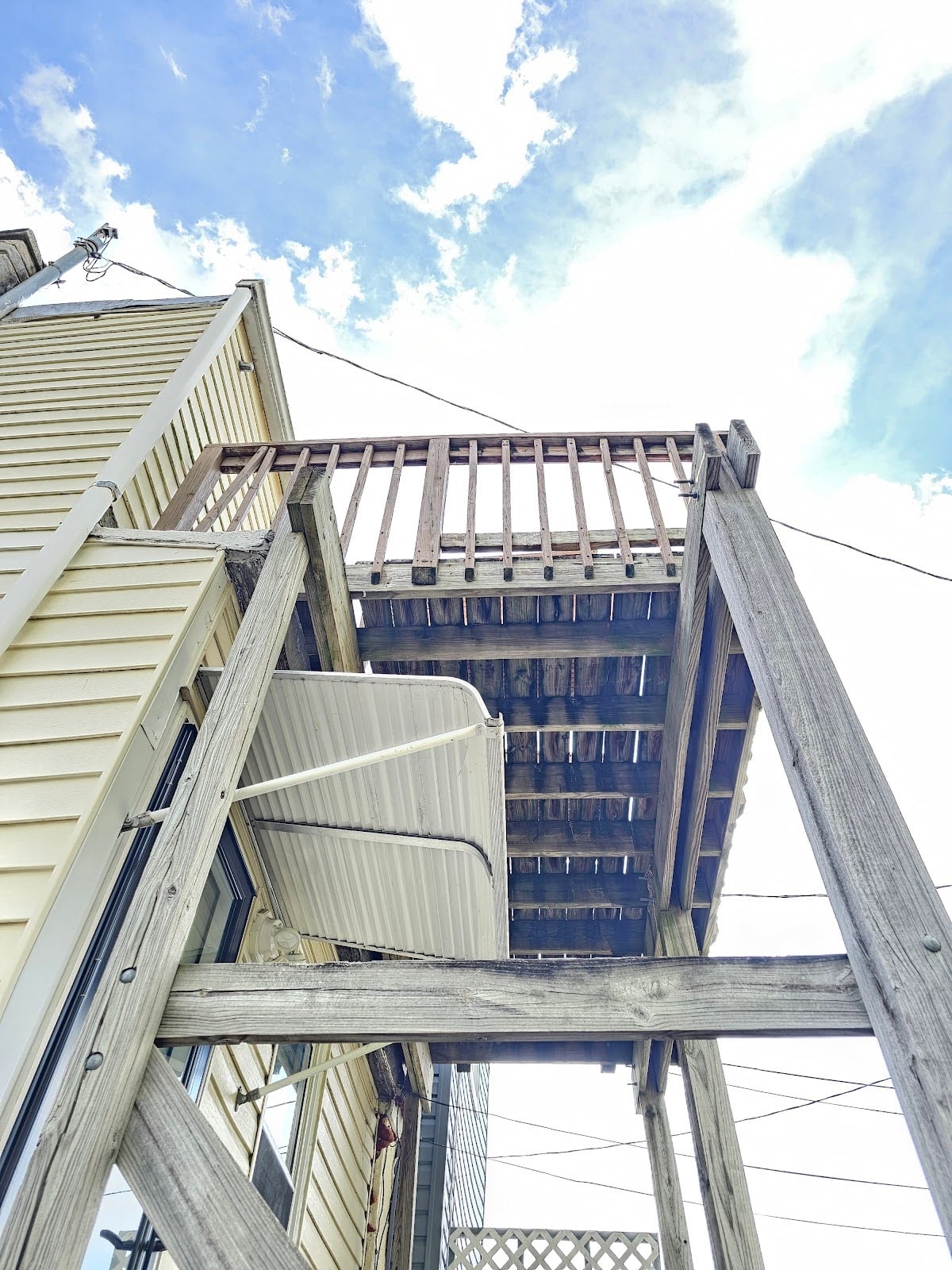
Surface boards don’t tell the whole story. Joists, beams, and posts underneath can be rotting while the deck safety still looks usable from above. In Maryland’s humid climate, that hidden decay spreads faster than most homeowners expect.
Loose Railings and Unstable Stairs
- If your railing shifts when leaned on or your stairs flex when you walk down them, that’s more than an inconvenience, it’s a safety hazard. Modern building codes require stronger connections and specific height and spacing standards that many older decks simply don’t meet.
Rusted Fasteners and Connectors
Over time, nails, screws, and metal connectors corrode. Once that happens, they lose their ability to properly hold the structure together. A deck can look sturdy while its fasteners quietly fail beneath it.
Is It Better to Repair or Replace a Deck?
This is one of the most common questions homeowners ask, and the honest answer depends on the deck’s age and condition.
When Repairs May Be Enough
If your deck is relatively new and the issues are limited to a few damaged boards or minor railing fixes, repairs can make sense.
When Replacement Is the Safer Choice
For decks that are 15–20 years old and exhibit multiple warning signs, full replacement is usually the smarter, safer option. Replacing the deck allows for new footings, proper ledger attachment, updated framing, modern hardware, and full compliance with current building codes. Trying to repair a structurally compromised deck often leads to repeated costs, and lingering safety concerns.
Common Questions Homeowners Ask About Deck Safety
When should a deck be replaced?
Most wood decks reach the end of their safe lifespan after about 20 years, especially in climates with heavy moisture and seasonal temperature swings.
How can I tell if deck boards need replacing?
Cracking, splintering, softness, or movement underfoot are all signs, but surface issues often indicate deeper structural problems.
Can I install new boards over an old deck frame?
Only if the framing underneath is still structurally sound and code-compliant, which is often not the case with older decks.
Why a New Deck Is About More Than Looks
Replacing an old deck isn’t just an aesthetic upgrade, it’s a safety decision. A new deck eliminates hidden structural risks, improves load capacity, reduces mold and mildew, and allows homeowners to upgrade to safer, low-maintenance materials like composite decking.
Most importantly, it gives you peace of mind knowing your deck is built to today’s standards, not yesterday’s shortcuts.
How Dupont Decks & Patios Helps Gaithersburg Homeowners Build Safer Decks
Dupont Decks & Patios approaches every project with safety as the foundation. Their team designs and builds decks specifically for local DC and Maryland conditions, handling everything from structural framing to code-compliant railings and stairs.
Whether your deck clearly needs replacement or you’re just unsure about its condition, having an expert take a look can make all the difference. Call Dupont Decks & Patios at (202) 774-9128 to talk through you
r deck replacement options in Gaithersburg and find out what makes the most sense for your home and family.