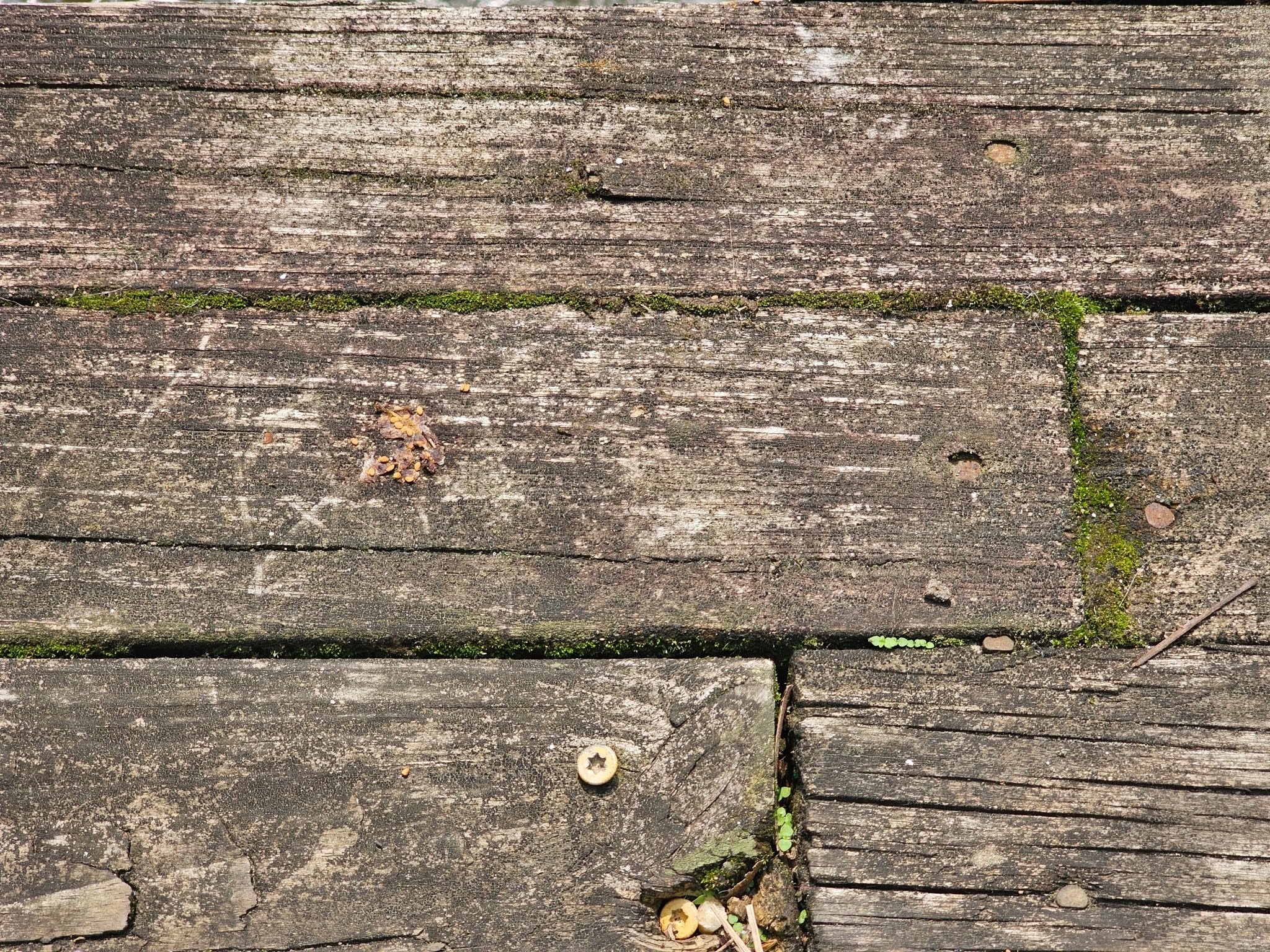
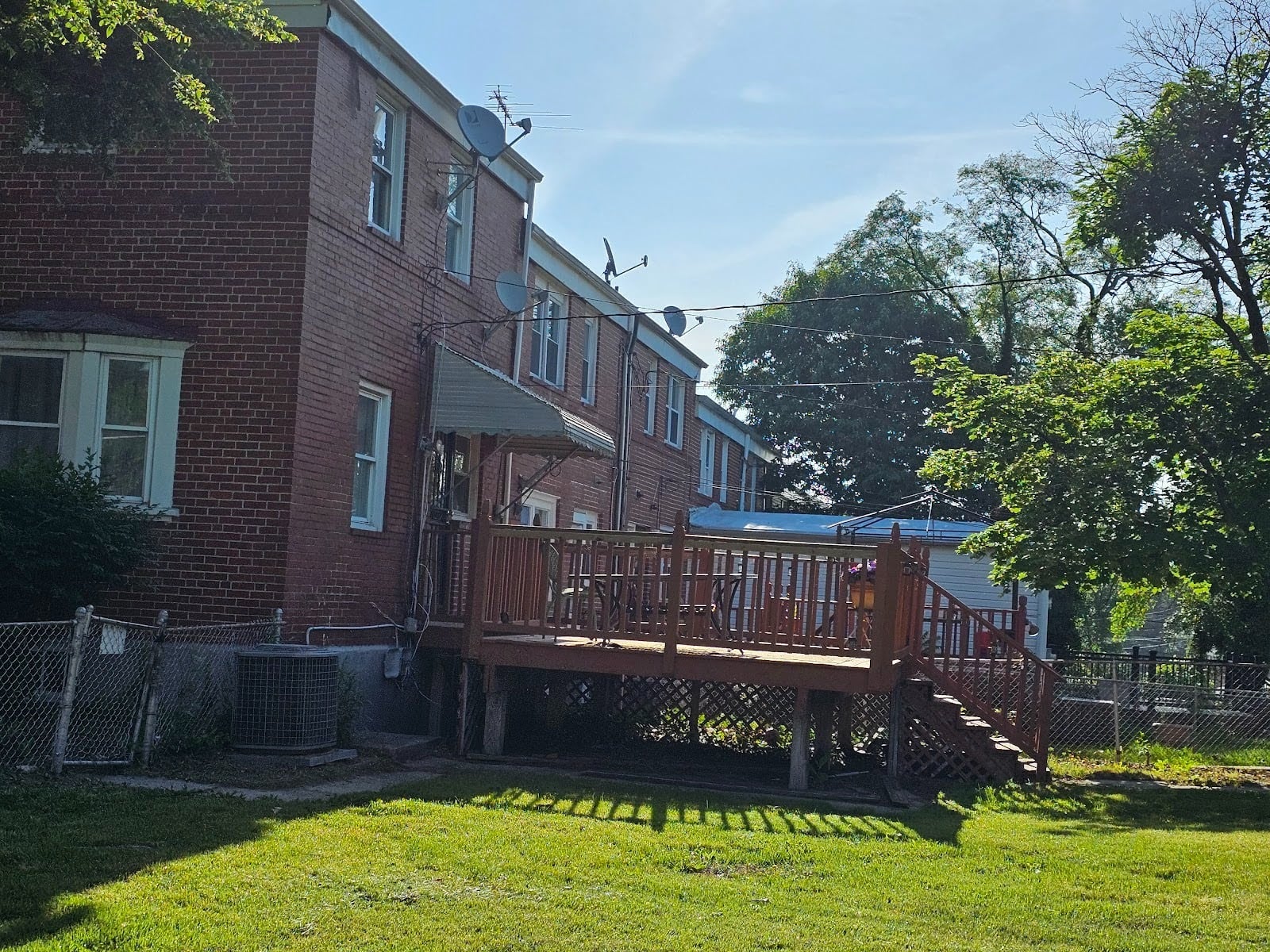
There are a handful of obvious reasons why wood decks need constant or reoccurring maintenance that includes staining and resealing. Stain is not absolutely necessary but it will help the wood resist the harmful effects of exposure to ultraviolet rays in typical sunlight. You can essentially apply a sealer that is almost perfectly clear. It might change the depth of the natural colors, depending on the sealer selected, but it doesn’t necessarily have to have a pigment or color like a stain. Essentially a stain can be applied separately, before sealing and then a sealer can be applied after the stain is applied. In contrast though, it’s also an option to apply sealers without stains or with minimal pigments.
Even stains that are called “natural” still have a bit of color and pigment inside of them. “Natural” is supposed to be not a distinct or different color, instead just a little bit of a darkening of the existing color. The pigment that’s in that stain will help block the ultraviolet rays which can otherwise accelerate the deterioration of the wood, though.
We generally recommend at least some color be applied to the exposed surface of wood decks, fences, guardrails, handrails, and even smaller elements like trellises and decorative constructs.
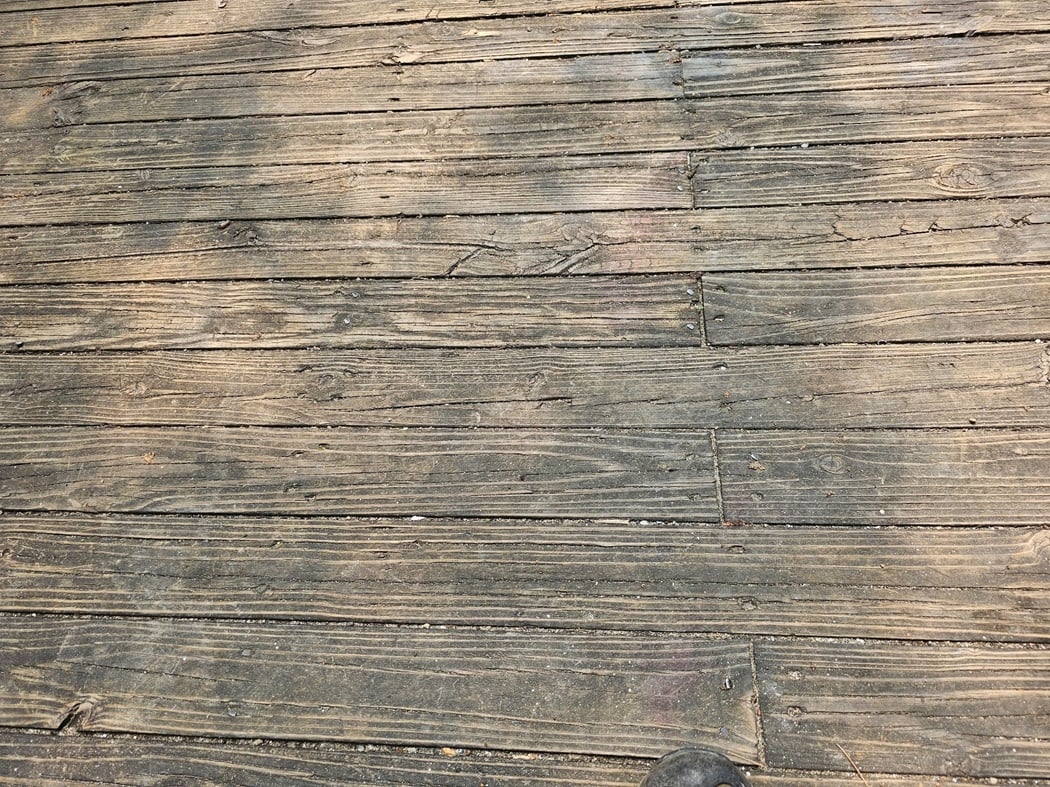
There are functional problems with this level of deterioration. You don’t always walk on your deck with bare feet but you shouldn’t be forced to wear shoes just to walk on it for the sake of safety. Here though when the deck deteriorates this much at the surface, two different types of problems begin to occur
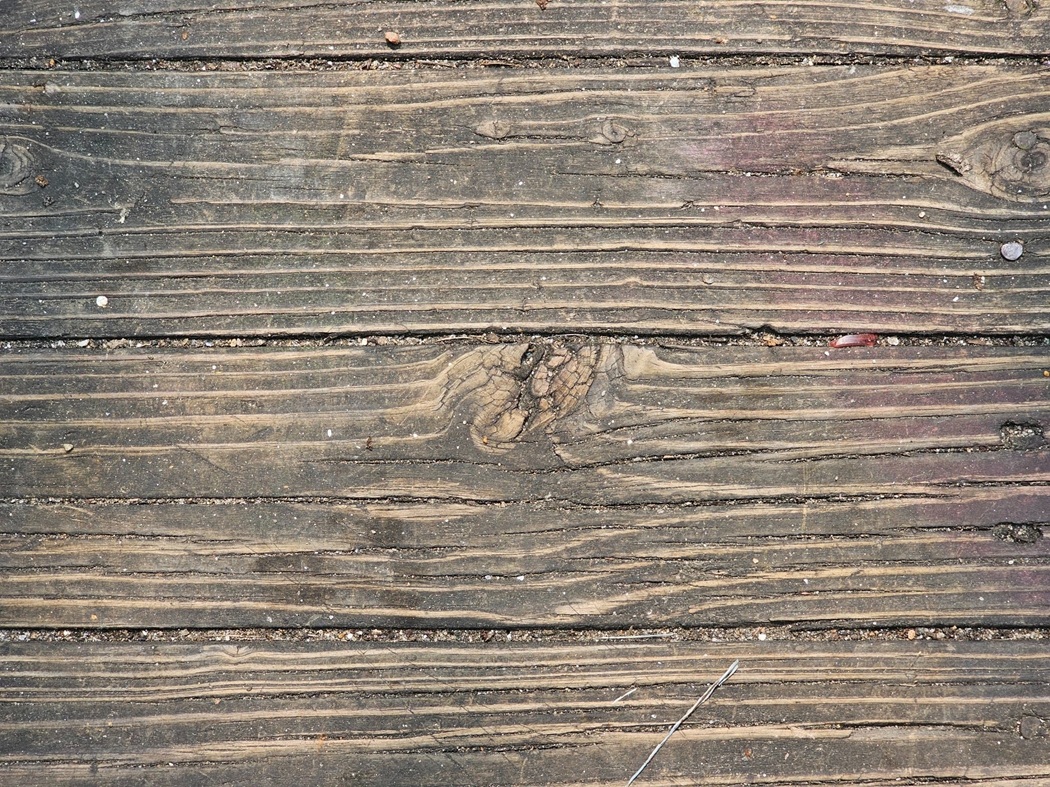
First, screw heads and nail heads begin to become exposed and will even become loose and pop up a bit. Not only could you stub your toe or cut your foot, even with shoes on, these protruding nail heads or screw heads can become a trip hazard. Also, when you look closely at the picture below, you may notice that the wood grain is significantly pronounced.
It’s no longer smooth. Instead, each little grain area has channels that run between the different parts of the wood fiber. This leads to splintering. If you do walk out there with bare feet, you’re likely to get splinters. You shouldn’t really be getting a lot of splinters in a deck that’s well maintained. Maintenance primarily, first, includes resealing and staining every couple of summer seasons.
Really anytime between the spring through the fall is okay to apply stain and sealers. We generally recommend the stain and sealers be applied at least every few years. When the maintenance is done proactively, the deck really never has an opportunity to fall into disrepair.
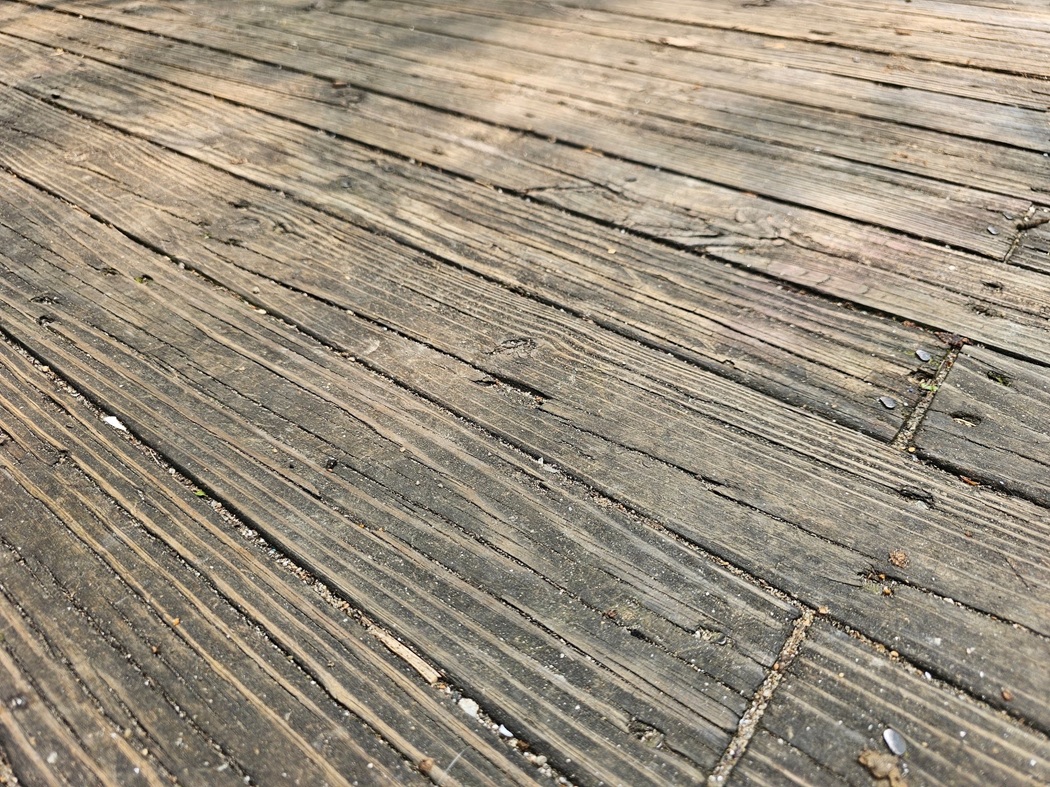
You may notice in the picture below, some of the areas of recesses and deterioration are concentrated around knots in the boards. Typical pressure treated southern yellow pine has knots. Clear wood, particularly where rift sawn or quarter sawn, will have fewer knots exposed at the surface. Here though, both at the areas of knots in the boards and at areas where there are spaces of separation between the annual rings of the wood, the deterioration has led to recesses and separation.
Those same areas now will hold more water at each successive precipitation event or rainfall. As more water enters, it protrudes deeper into the surface of the boards. As the water reaches down deeper into the wood it dries out slower. As it dries out slower, it has more time to expose the substrate surfaces of the wood to excessive amounts of moisture which lead to soaking in deeper to the wood fiber. All of this explanation is to say that once the deck boards begin to start deteriorating, they continue deteriorating, but at an even faster rate. The amount of deterioration becomes exponential.
It happens faster and deeper, worse and worse as it goes, the deterioration increases. It’s not just summative, it’s exponentially multiplicative.
In the coming week, we’ll look at additional photographs of even worse damage at this deck and at others that occurs from unmitigated exposure. This damage, as discussed, is both related to exposure to ultraviolet rays in typical sunlight but also to precipitation. Stains and sealers can help preserve the woods significantly. Here though, and these examples, sufficient proactive maintenance and upkeep has not been provided.
We recommend building and homeowners here in Washington DC use a contractor, like us, who understands and cares about quality, deck and patio longevity, and simply doing things right. Always, feel free to reach out to us here at Dupont Decks and Patios, you can give us a can or just drop us a line.
We are happy to help with almost all steps of the deck and patio building and design process. Let us know about your ideas and talk to us if you have questions about possibilities. You can call us at (202) 774-9128. You can find us online and you can email us there as well at https://dupontdeckspatiosdc.com/contact-us/