Modern Lightweight Pergola Framing Ideas – Part II
In a past blog, here on our website, we began looking at a particular lightweight pergola. We like this type of pergola because it provides some of the same benefits as a typical pergola but is made with lighter elements. It can be built on a smaller scale and used in typical DC spaces which don’t always have ample outdoor space. Because outdoor spaces are limited here in DC, even a bit of outdoor space is highly valued. We talked about how elements like outdoor decks and pergolas can really improve a home lifestyle. Living in a space that’s just indoors like a balcony-less apartment that lacks the at home access to beautiful outdoor space, is missing something.
Personally, we think living without access to outdoor spaces in a home is sad. We understand, millions of people throughout the world live in tiny spaces without access to the elements and nature, but if you can take even a tiny space and make it fit your lifestyle so that it improves your lifestyle, it’s worth it.
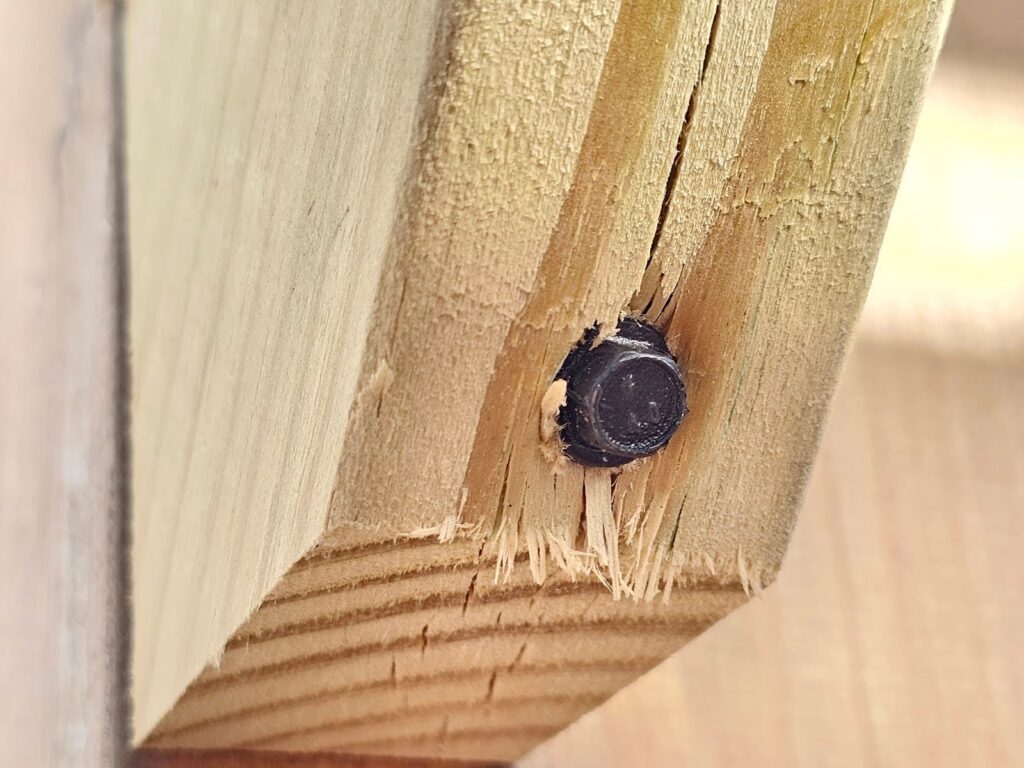
We talked about some of the structural properties of the frame, needed in order to resist structural forces of stress and deformation. The picture below shows not just a deck screw, but a structural deck screw that’s installed through the bottom of a corner brace. This screw is essentially connecting the corner of the brace to the post. At the other end of the same brace, the upper edge is connected to a beam. These types of structural fasteners are different from even regular deck screws.
Deck screws have a structural rating as well, but the rating for these screws is even higher so that it can make structural connections that join primary structural elements of a deck or pergola. This particular type of fastener is driven with a nut setter instead of a regular screw bit. Even most deck screws are driven using a hybrid type of square drive and Phillips type of driver point, in most cases. However, the nut setter type driver is used for even stronger types of torsion applications like this type of structural fastener. To drive a fastener deep into a wood element without pre-drilling, requires significant force and strength from the driving tool.
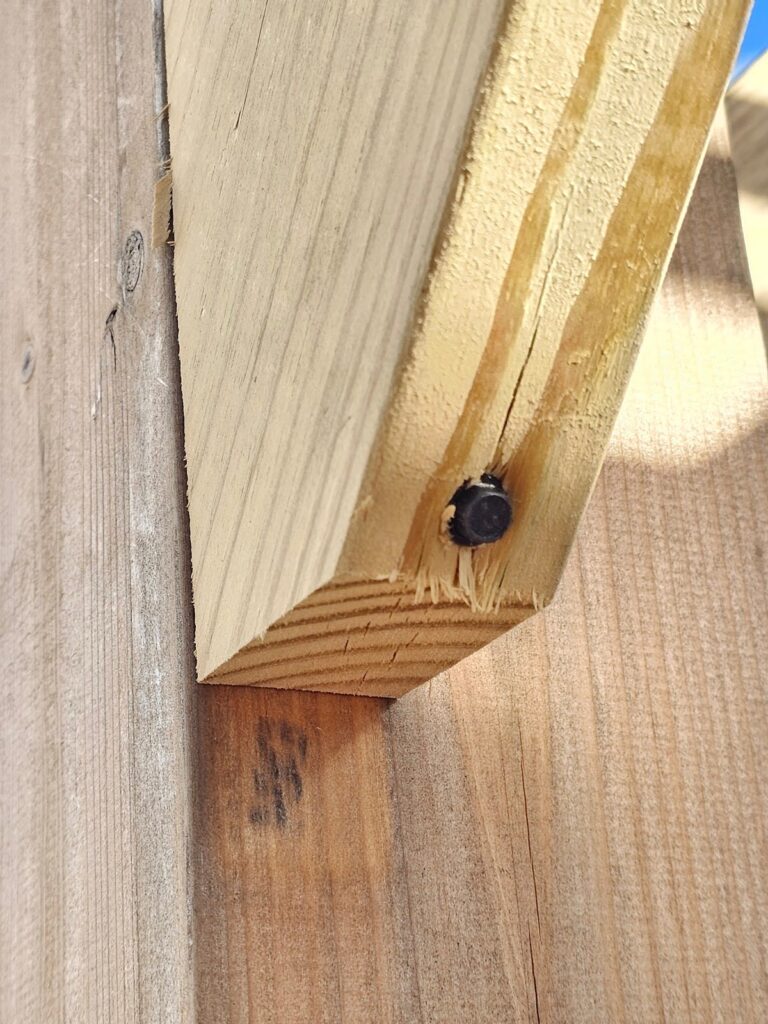
Because of the exceptional strength of these screws, as mentioned, they can be driven deeply into wood elements. We prefer installing them not so close to the edge of an area of end grain in a board, though. That’s a particularly weak spot for wood fiber. When it’s in the middle of a board, it has lengths of grain connected to one another for a longer area than just the point of penetration of the screw.
However, when the screw, nail, or any type of fastener is inserted near the end grain, it’s a weak spot and the wood might have a tendency to split. Splitting at this point weakens the connection significantly. In the picture below, you can see that even though the wood hasn’t completely split a crack is forming and over time it might split at this location.
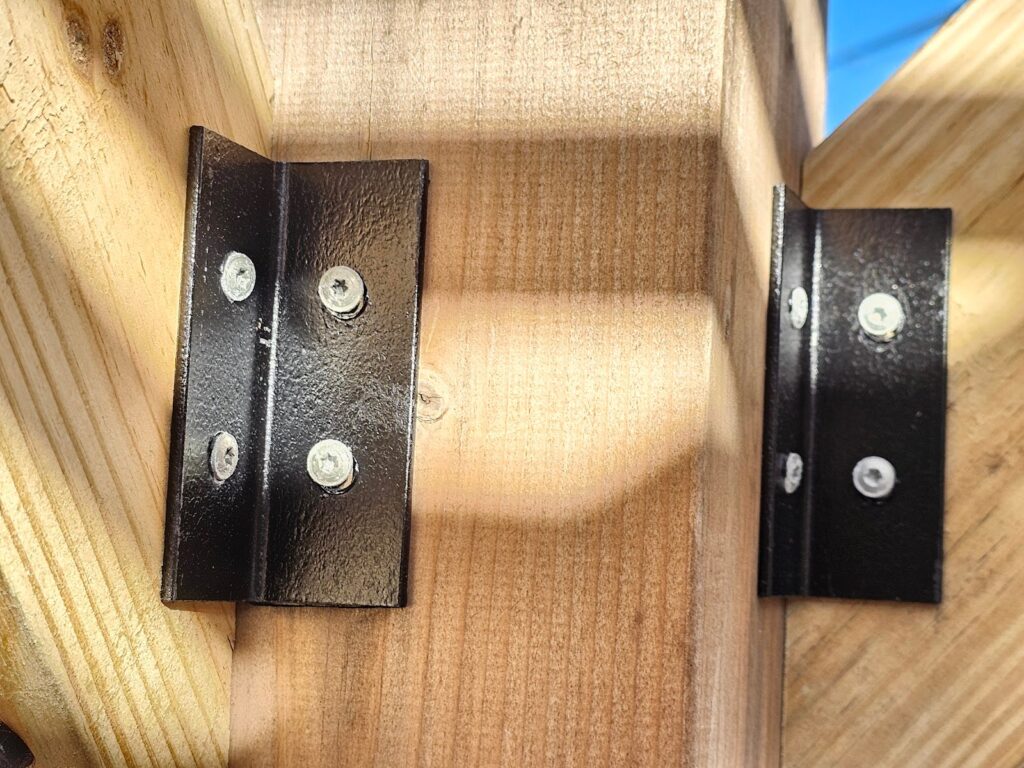
Hot rolled steel inside corner brackets have been installed at the joints between the beams and post. This is another type of connection or added strengthening hardware plate that really increases the propensity to maintain connectivity for many years and in many types of adverse weather conditions.
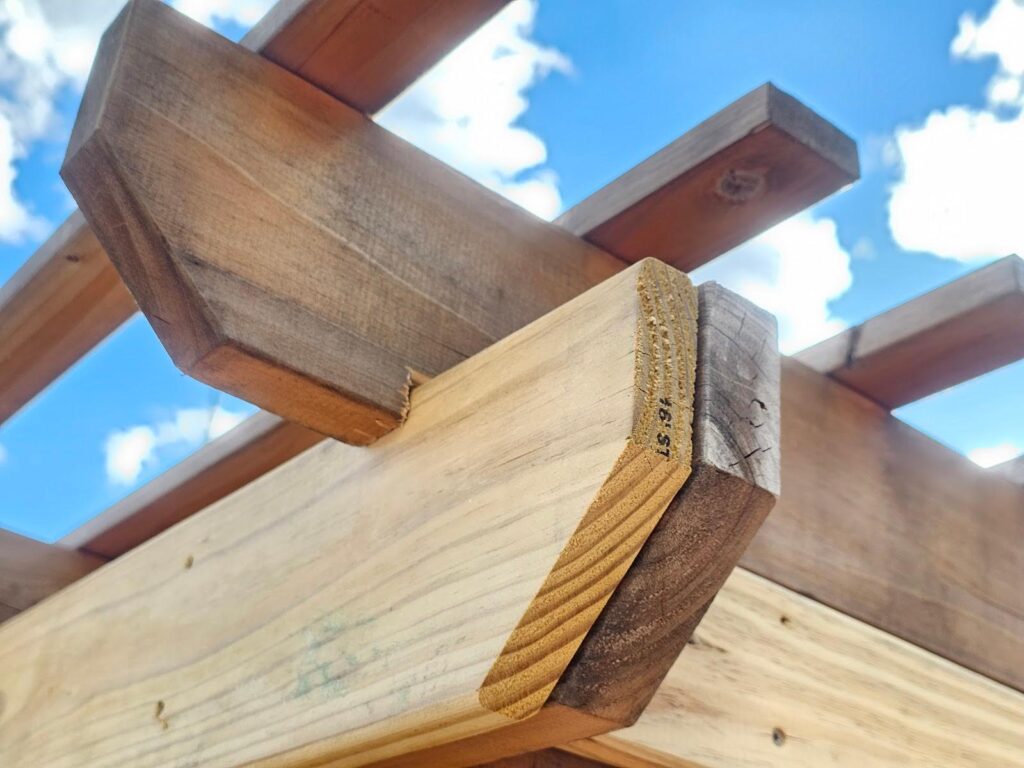
If you look at the boards composed in the beams at the end of the pergola edge, you might notice that one is a lot brighter and yellower than the other two, at the corner. It looks like the brighter one has replaced an older one. The old one may have started to crack or split or fail for some reason. Boards naturally twist and warp, and check and split and crack over time.
Sometimes it makes sense to replace a single board and keep the other remaining boards in place. In a situation like that, a board like this at the end where it’s laminated to another board can be sistered and bolted together. In most cases of laminating boards together, we recommend using a high strength exterior adhesive, in addition to the appropriate fasteners.
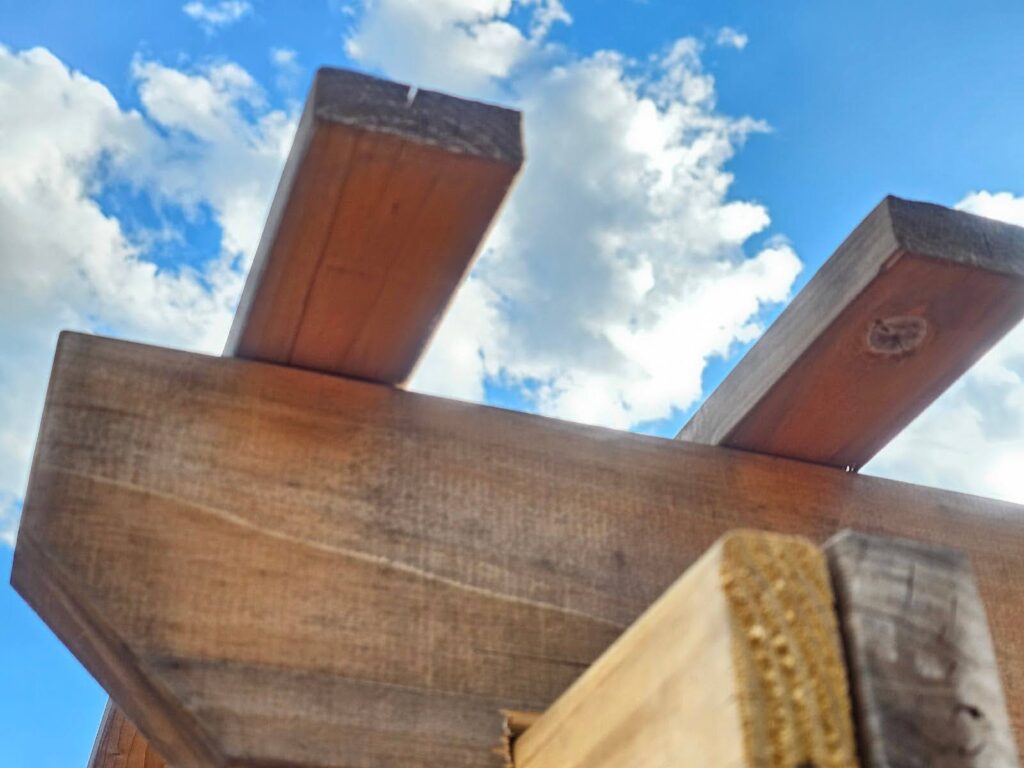
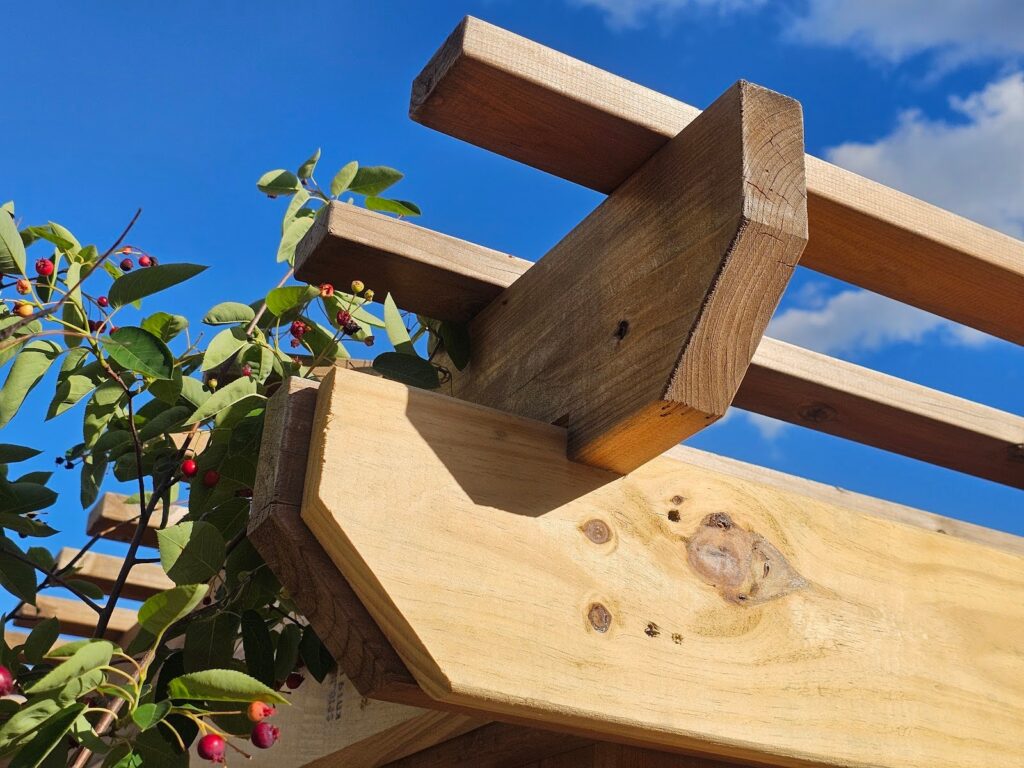
The next picture below shows a closer view of the 1×3 boards at the top of the pergola. These are the individual boards that are primarily creating the shading factor of the pergola. They’re kind of the point of the pergola. The rest of the frame is really there just to support these boards. Nonetheless, those other elements that are part of the frame also help create a shadow.
Like a trellis, this particular pergola has also been used to train some ornamental vines to grow on top of the pergola.
Use a contractor who understands and cares about doing things right. Always, feel free to reach out to us here at Dupont Decks and Patios. We are happy to help with almost all steps of the deck building and design process. A backyard and outdoor space should make a significant, positive impact on both quality of life and home value. We can help with more than just decks, we also build patios, pergolas, ramadas, awnings, gazebos, arbors, and privacy fences.
Let us know about your ideas and talk to us if you have questions about possibilities. We are happy to participate in improving your outdoor space and quality of life! You can call us at (202) 774-9128. You can find us online at https://dupontdeckspatiosdc.com/ and you can email us there as well at https://dupontdeckspatiosdc.com/contact-us