This past week we looked at three tools used in the joint raking process. The regular putty knife is just a typical tool used as a scraper. It can be used in all different types of construction work. The plug chisel though, by comparison, is very specific to mortar joint raking. It’s used to scrape out the old and partially deteriorated mortar from the brick joint. Even though the mortar might be defunct, essentially aged and falling apart, it doesn’t mean the mortar doesn’t still have the strength of a rock. When mortar is hard, like concrete, it can be very durable. As it deteriorates it becomes weaker and softer. Porosity increases and it can flake off at the edges into small pieces. Sometimes some areas are worse than others but generally when repointing is being done, unless it’s specifically spots repointing, larger areas of the surface need to be repointed at one time. It’s often much better to repoint a larger wholesale area instead of just repointing the worst spots.
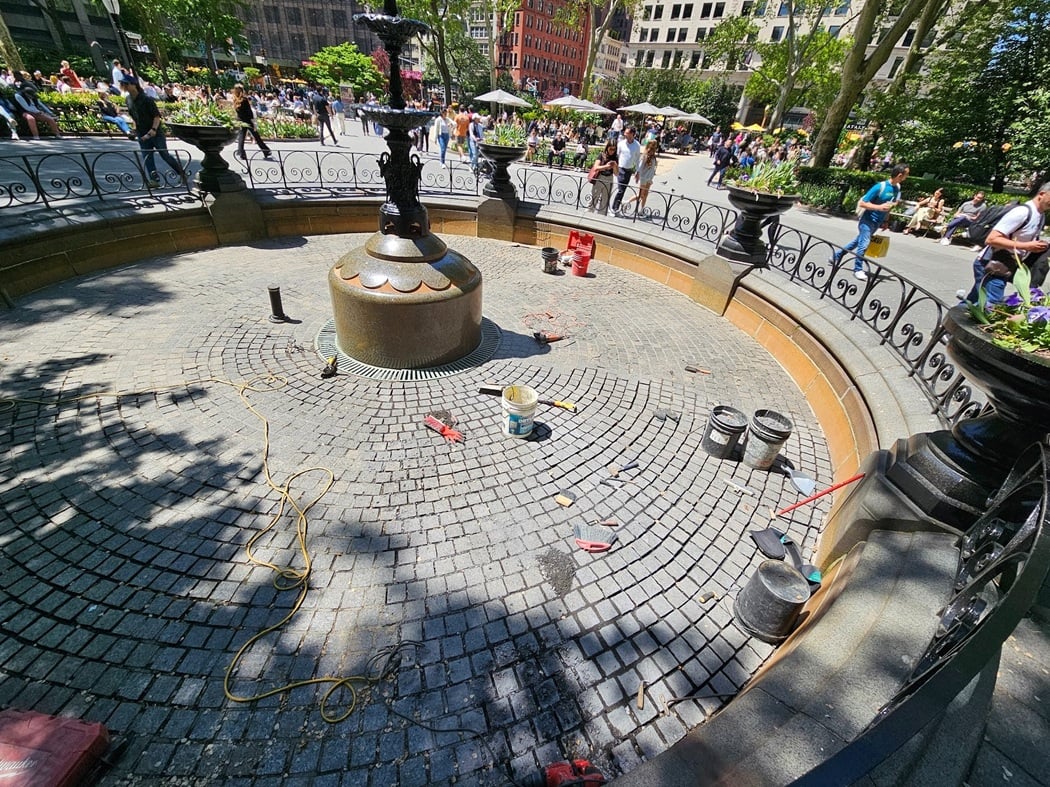
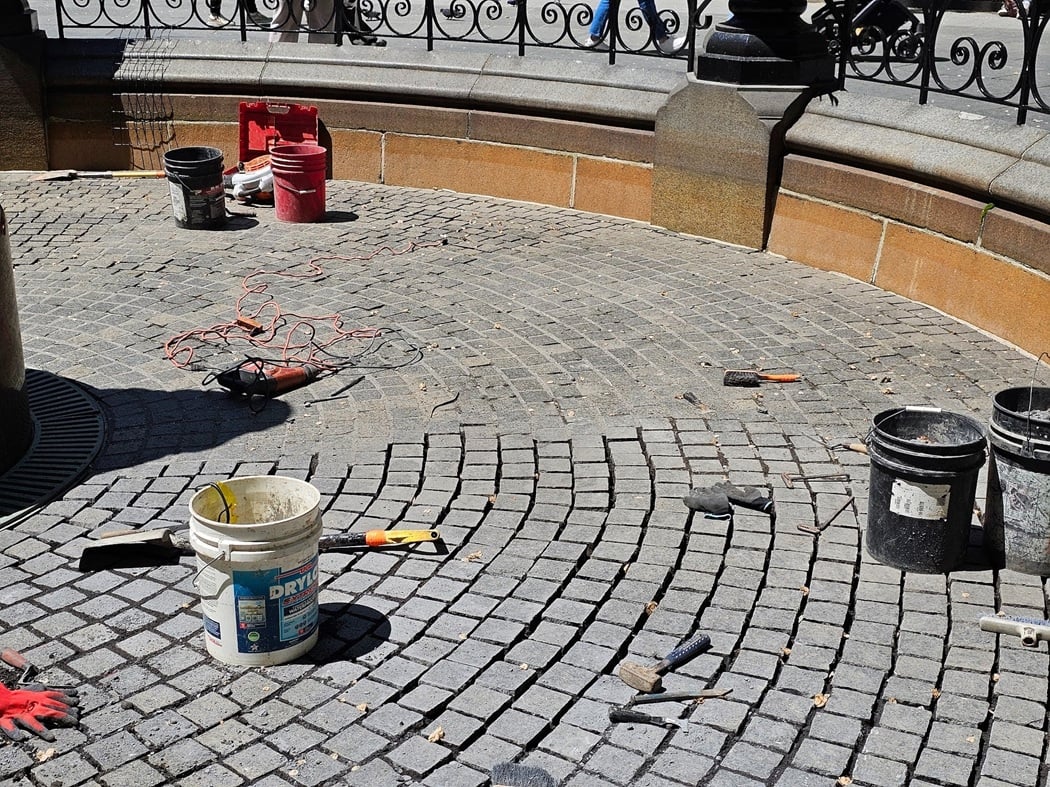
If you look at the area that’s closer in the picture, that area has already had the old motor removed. In the picture, the crew is working towards the farther side at the second half of the area shown. In the picture, the farthest side has not yet been raked. The process of raking removes the old mortar.
There are three different tools shown in the next picture below. The two shown in the picture below are joint raking bars. At the lower part of the picture, there is a tuck pointing trowel.
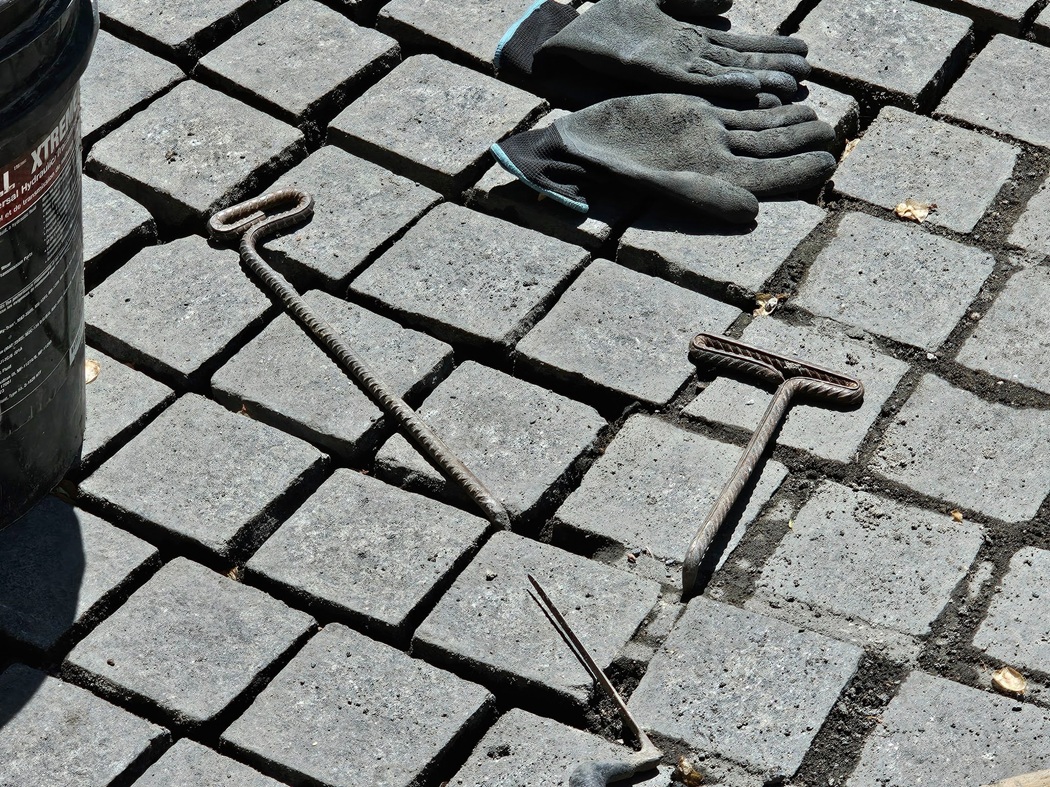
The tuck pointing trowel is very different than a regular brick trowel. The regular trowel can actually hold a large amount of mortar. The tuck pointing trowel, by comparison, is so thin that it is only large enough to fit between the bricks and stone masonry units. This particular type of trowel is intentionally made skinny so that it can fit between bricks and masonry units and pack mortar into the joint spaces.
The same sort of intentional thinness is required for the raking bar. It must be able to fit between these stones and or bricks without damaging the bricks or stone units. If it’s too large and it’s forced down between those joints, just like a plug chisel, it will damage the bricks or stones. In the picture below you can see one of the larger bars. It’s particularly long so that it can be used close to the face of the masonry and pulled back with two hands This allows for applying more pressure to the exposed face of the mortar.
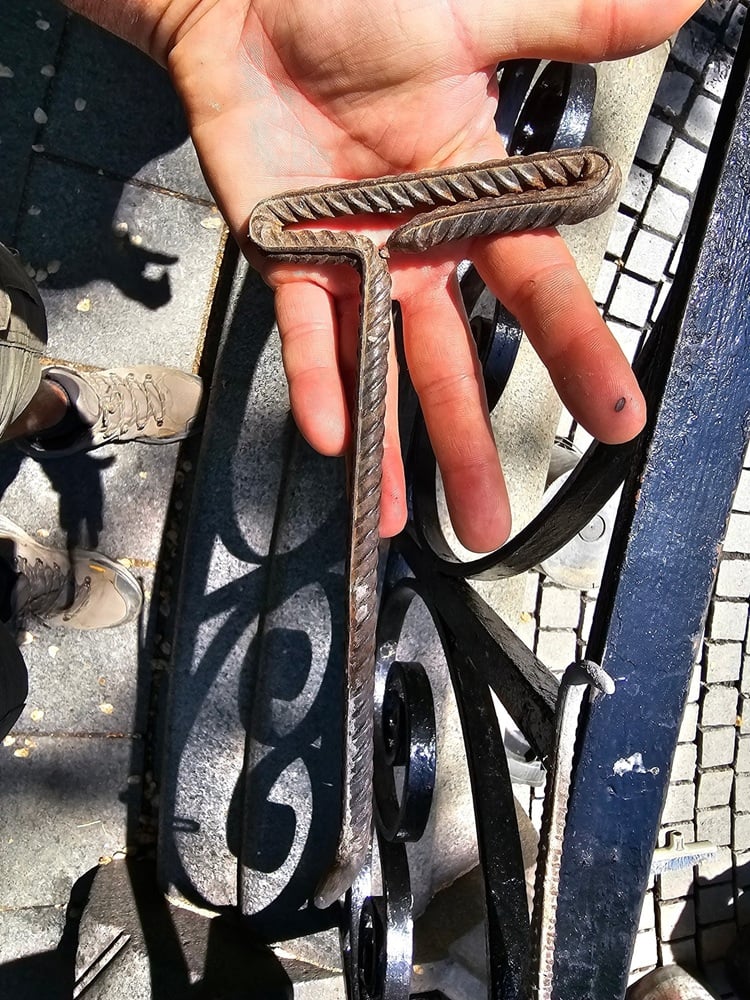
At the edges in the corners of the stone facings, the shorter bar is often better. Sometimes it’s hard to reach into tighter spaces with a longer bar because the angle at an inside corner will not allow for a longer reach.
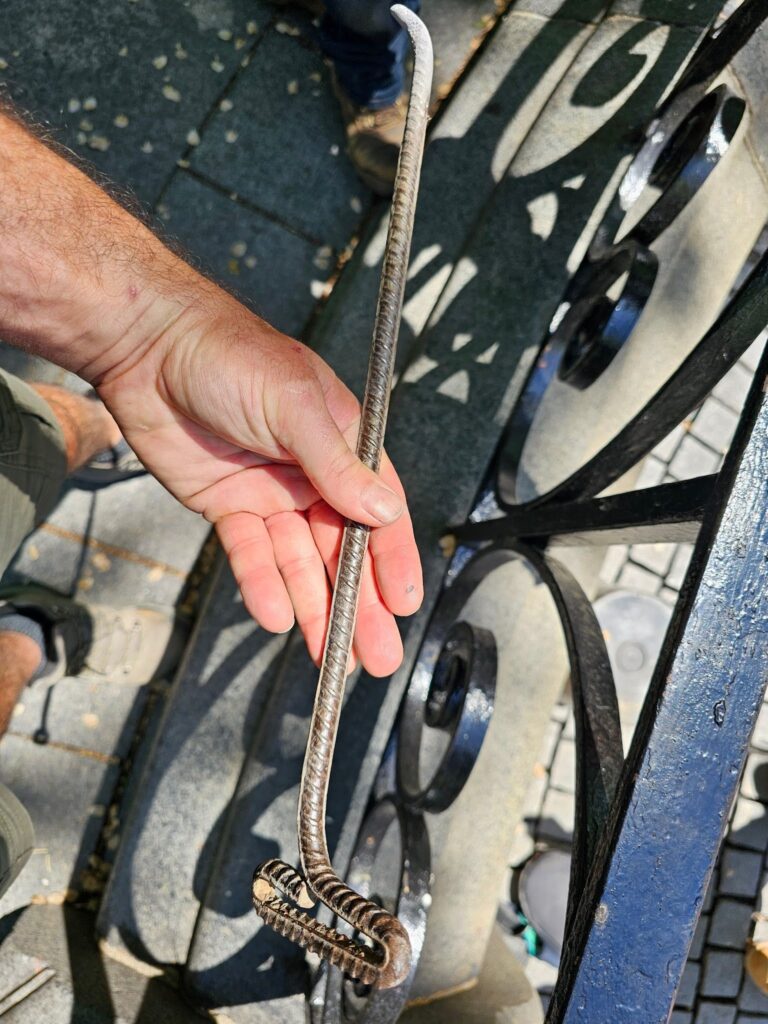
You may notice that these particular tools are not manufactured at a large tool warehouse or large tool supplier facility. They are bent up pieces of reinforcement bar. Rebar is generally thin enough to fit into the space between stone masonry units. That rebar happens to be a mild steel, not as strong as tempered steel but with a quenching and reheating process the tips of the tools can be strengthened.
The tight bends at the handmade handle, and where that handle connects to the shaft of the tool, are made by heating the rebar with an oxyacetylene torch. That type of torch can heat the metal up very quickly but as long as the oxygen isn’t fully engaged it won’t necessarily cut right through the rebar. Often, we will add cloth, wrapped in successive turns around the handle of the bar to create a makeshift type pad. Sometimes we will also use handles from other tools and weld them on to rebar or steel elements to create a larger gripping area.
The main reason we go through so much trouble to hand make our own tools is because brick and stone repointing is such a niche trade that the large manufacturers do not service our industry by creating the tools we need. We have little choice but to make them ourselves. In England and very old historic parts of Europe, tools of these types are a bit more common, but it’s very expensive and requires a significant amount of time to ship tools over all the way from Europe.
Use a contractor who understands and cares about doing things right. Always, feel free to reach out to us here at Dupont Decks and Patios. We are happy to help with almost all steps of the deck building and design process. A backyard and outdoor space should make a significant, positive impact on both quality of life and home value. We can help with more than just decks, we also build patios, pergolas, ramadas, awnings, gazebos, arbors, and privacy fences.
Let us know about your ideas and talk to us if you have questions about possibilities. We are happy to participate in improving your outdoor space and quality of life! You can call us at (202) 774-9128. You can find us online at https://dupontdeckspatiosdc.com and you can email us there as well at https://dupontdeckspatiosdc.com/contact-us