Bench Seating Around a Patio Planter Box in DC Area
This past weak, we looked at the planter and the surrounding bench that runs around the perimeter of the planter. We actually looked at one which was really similar to this but technically different. It’s built in a similar way though. The outside corners of the bench construction have miter joints where a group of four boards joined together, each one 2-inch x 6 inch in size. Together the total bench depth is about 24 inches which is very deep. It allows people to sit comfortably but doesn’t really provide a comfortable backrest.
In this particular case, this bench isn’t really intended to have the planter as a back rest. At the 90° angle, it wouldn’t exactly be comfortable. Adirondack chairs, for example, are more comfortable, and have an angle of around 105 degrees, in relation to the seat.
The angles are even more increased in relation to the floor though. And since the seat is also set at an angle away from the floor it makes the overall seating a bit more comfortable. Either way though, even in a regular chair, not quite as extreme as an Adirondack chair, there’s still more than a 90°. When sitting nestled deep into the seat, when a chair or seat has a 90° back, it’s not as comfortable. Here though since the seat is so deep you can sit comfortably without leaning all the way back.
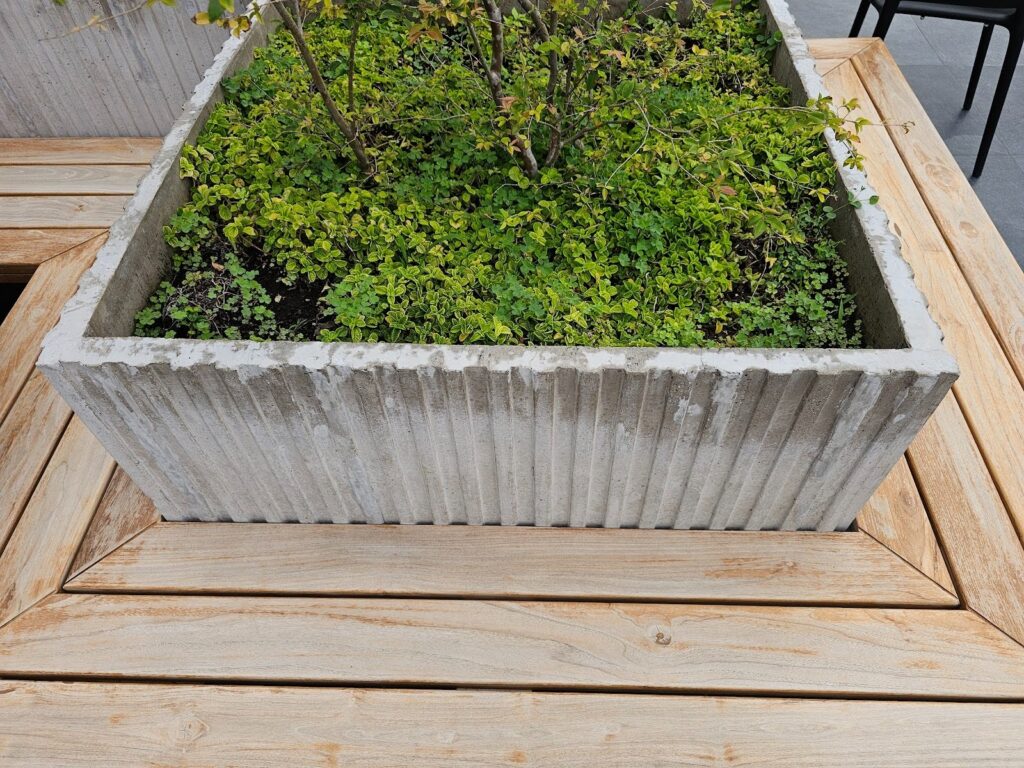
The concrete is also formed with a decorative design that has vertical ridges that run through the entire surface. The concrete is likely mixed with a polymer reinforcement and a resin and possibly fiberglass strands to prevent breakage when built thin. The texture on this concrete is also likely not comfortable against your back when seated against the planter. The significant depth of 24 inches helps though because you can sit on the seat comfortably without leaning all the way back.
The typical pressure treated Southern Yellow Pine lumber is something that we build with so often here in Washington DC. That type of woodland is a bit different than this teak wood. This teak wood has a very stable natural structure.
The properties of stability are inherent in the characteristics of the wood. The grain of the teak wood is so tight that even after significant rainfall, the moisture doesn’t permeate deeply into the wood. By comparison, pressure treated Southern yellow pine, although it has the pressure treatment to preserve it, still allows water to seep in deeply through the grain, through capillary action. That significant amount of moisture absorption leads to rot. Even with the chemical treatment, over long periods of time, without reapplication of wood sealers, the wood can start to deteriorate when exposed to significant amounts of precipitation and moisture.
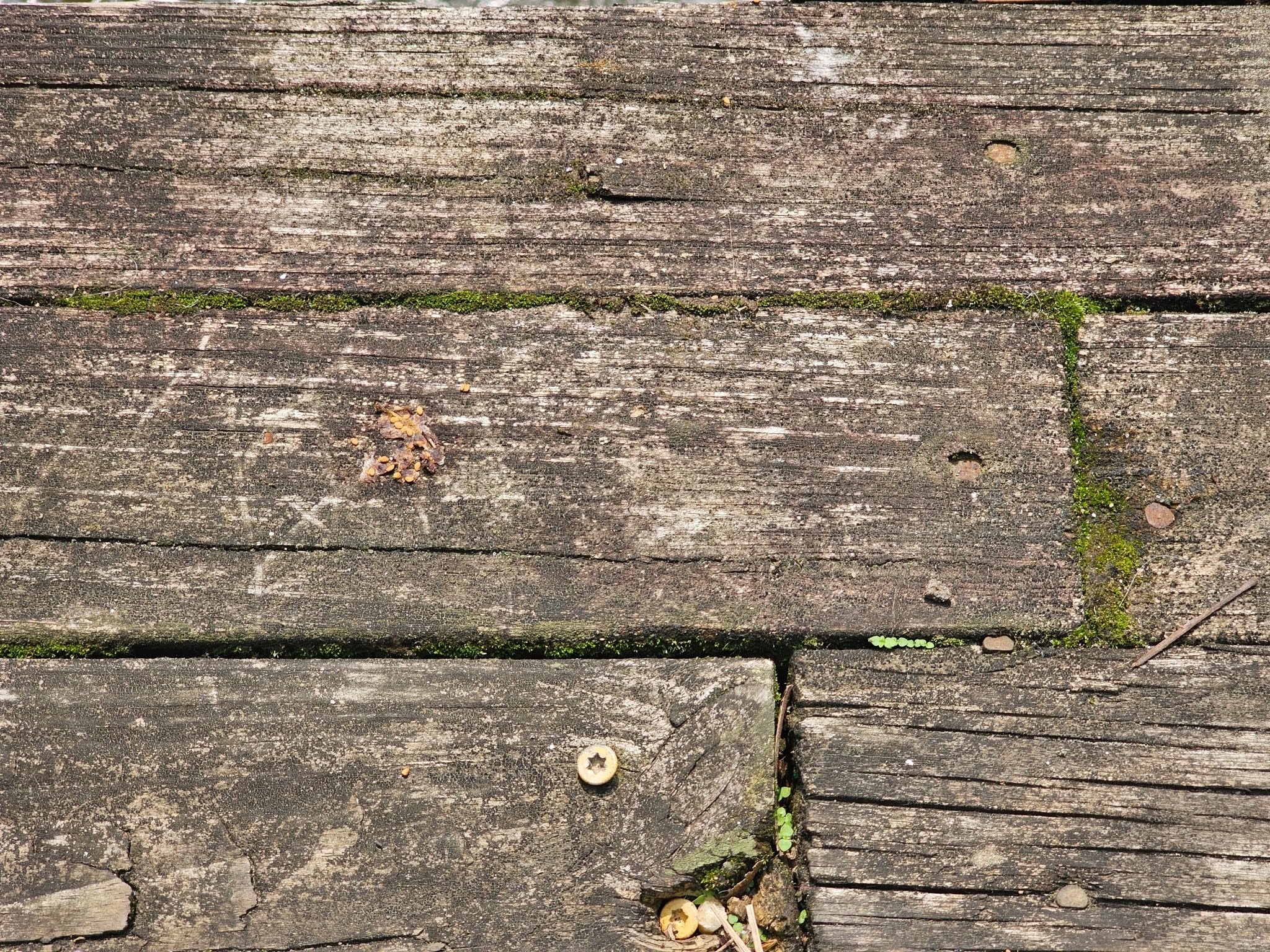
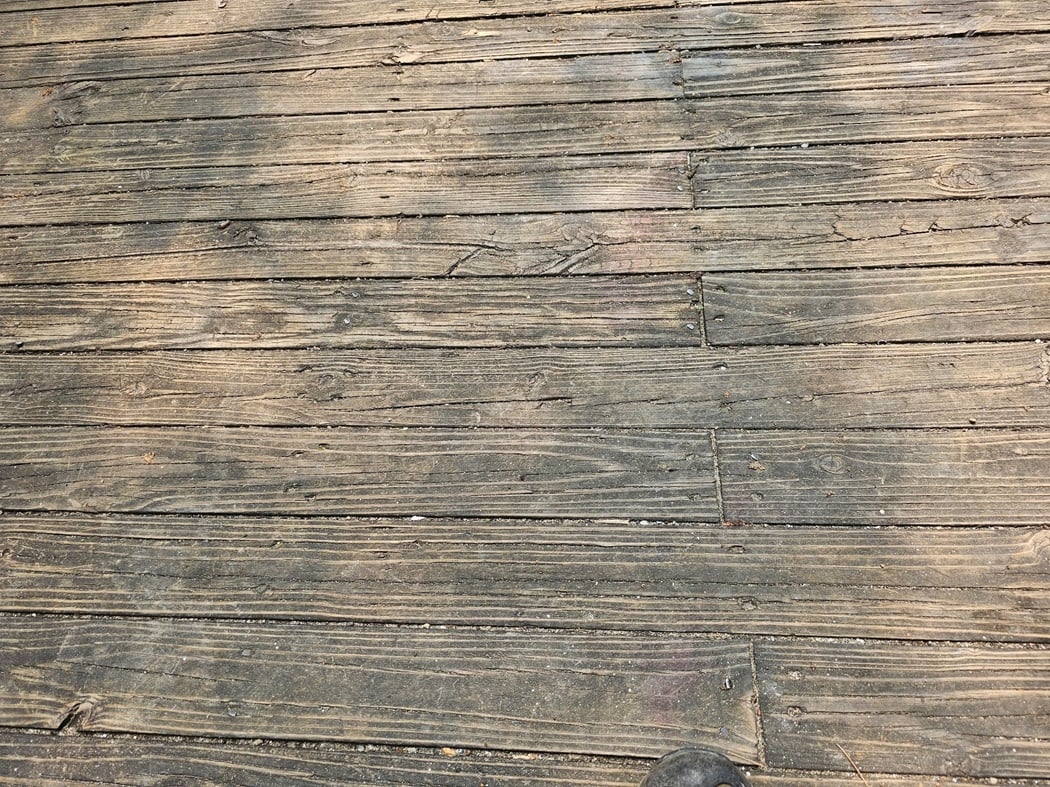
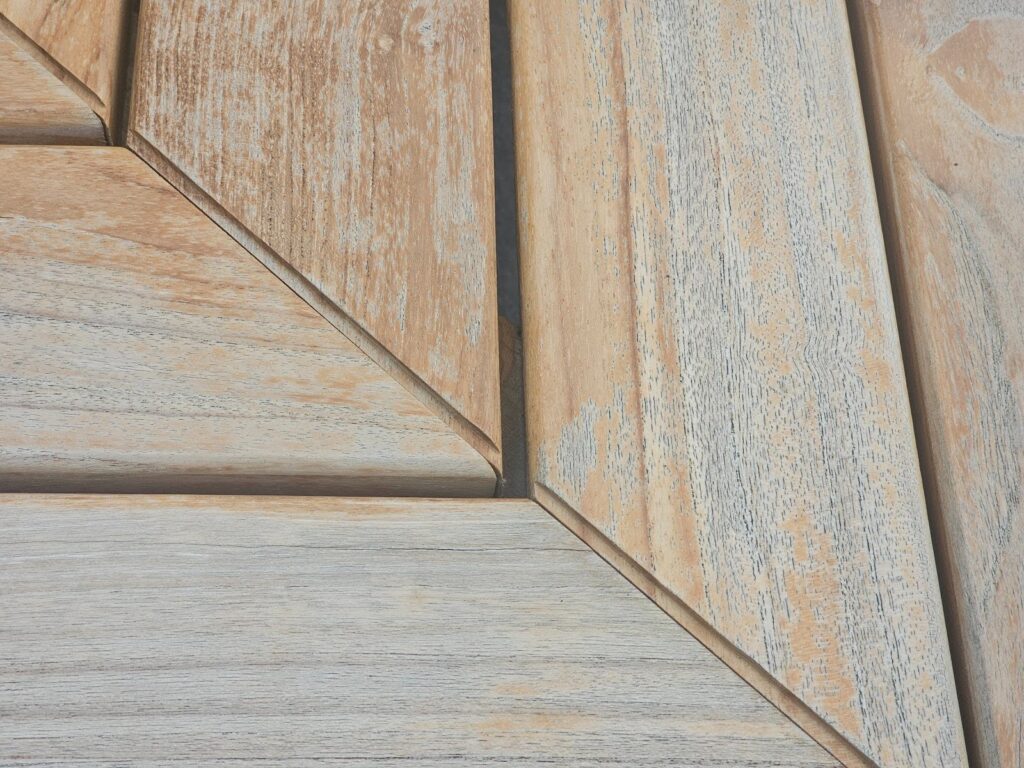
Most types of wood also have a degree of natural oils, present in the wood fiber instructor. With pine, the natural oils and resins may be concentrated into certain areas of the tree, but are generally not present in such high proportion in the majority of the wood structure. With teak, in contrast, the natural oils are distributed more evenly and therefore present, in higher concentration, throughout. Those oils help also to naturally preserve the wood and resist deterioration from the elements. In the picture below, you can see that even though there are many natural characteristics to help make the wood last longer, even teak has deterioration related to exposure to ultraviolet at the surface of the wood.
It looks like the legs of this bench are built directly down to the top of the masonry paving. That’s almost true. There’s a subtle detail though that you can’t see clearly. You can notice that there’s a line of Shadow underneath the edge of the board. That’s because there are small synthetic spacers that are mounted to the edge of the board just to keep the board a tiny bit above the masonry.
This this subtle detail helps preserve this type of wood in any type of wood significantly. Avoiding direct contact with a masonry substrate prevents a typical type of wicking that will occur between the wood grain and the masonry. Masonry, particularly at a ground area or patio, has a higher level of moisture and will cause wood and direct contact to have higher moisture at the contact point. Over years of time, that contact location can be a point of concentrated deterioration. In simple terms, when woods and direct contact with a masonry substrate the wood will generally rot right at that spot.
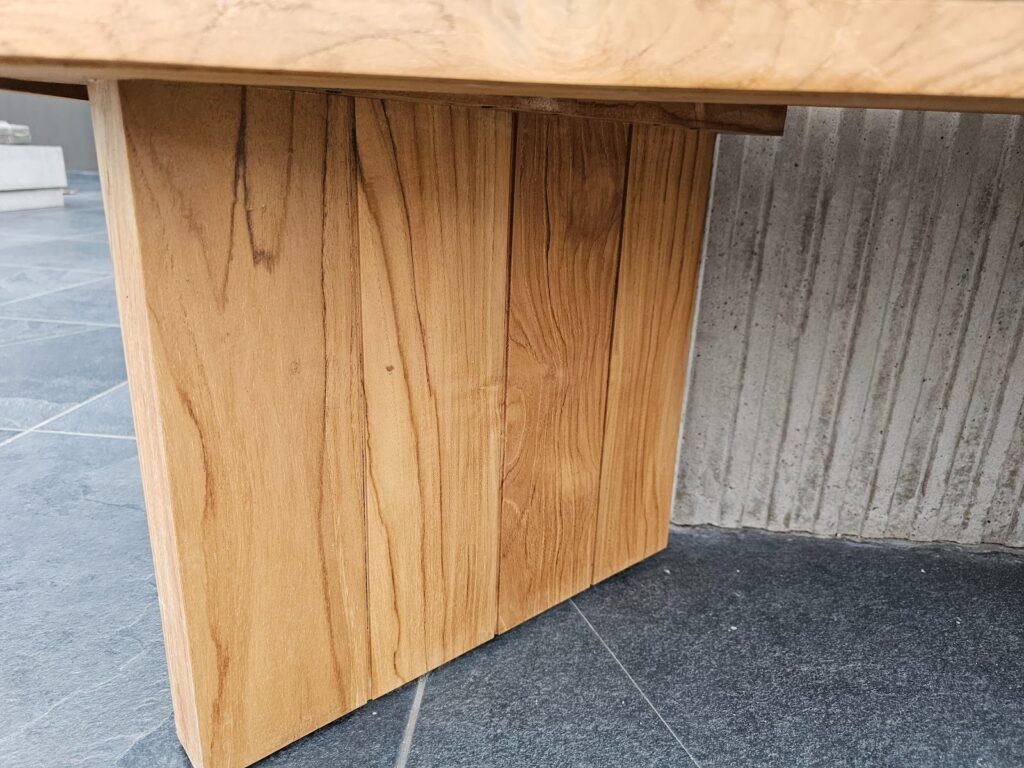
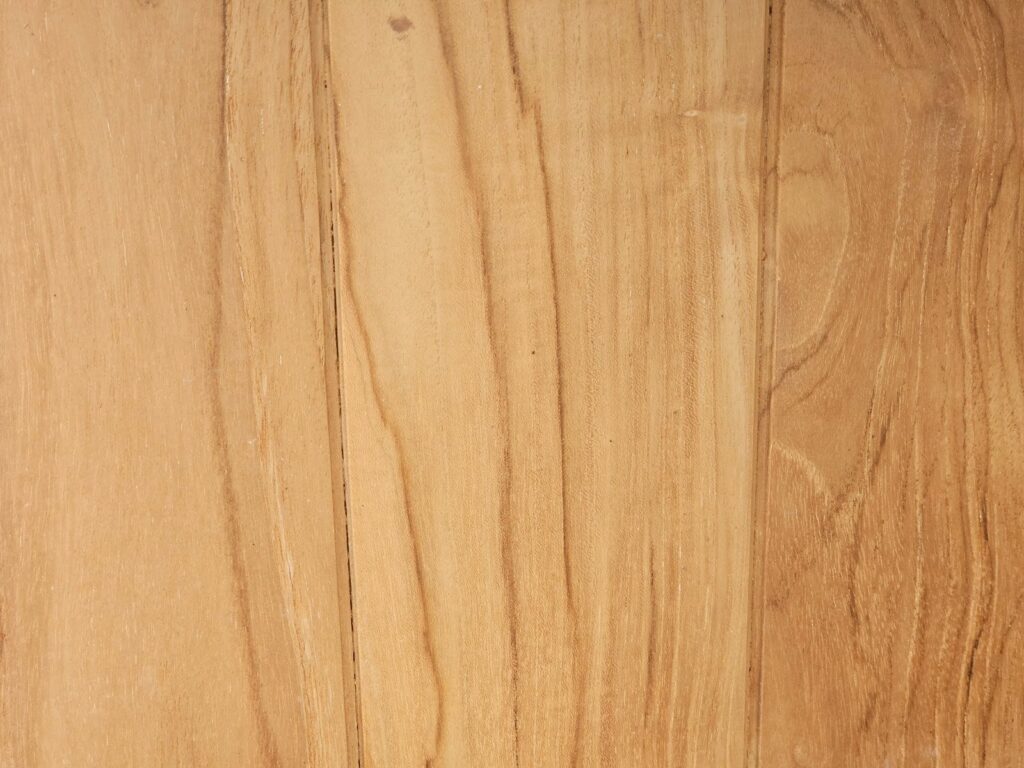
The individual pieces of the wood, at the legs of the bench were joined together like a table top. Essentially, the edges of the boards were milled and then glued together. In many cases we will recommend the use of a spline or at least biscuits or dowels to join boards at their edges when intended to create a continuous surface.
We recommend building and homeowners here in Washington DC use a contractor, like us, who understands and cares about quality, deck and patio longevity, and simply doing things right. Always, feel free to reach out to us here at Dupont Decks and Patios, you can give us a can or just drop us a line. We are happy to help with almost all steps of the deck and patio building and design process.
Have questions about your deck or patio ideas? Contact us at (202) 774-9128 to discuss your project and explore your options. You can also visit https://dupontdeckspatiosdc.com to learn more and get in touch with our team.