Strong Front Porch Post Reconstruction and Repair Ideas
This past week we finished a two-part series looking at several examples of rotted girders, fascias and soffits at the underside of the roof above the front porch of a historic row home here in Washington DC. Today we’re looking at something in a similar way but very different. Rotting girders, fascias, and soffits are one of the most common types of acute areas of deterioration in wood built front porches. The second most common area might be the post. Not all posts are made of wood. In some cases bricks are used and in other cases they’ll be made of steel lolly columns encased by wood trim boards.
Here, we had the opportunity to take a closer look at the reconstruction of some elements of the wood support post that are encased inside of a decorative trim on the outside of the post. This is not a complete reconstruction, it’s a partial reconstruction. In many cases, particularly with historic row homes, things need tune-ups. Most historic rooms here in Washington DC have been around for many many decades and after many years, things start deteriorating and falling apart. It’s extremely common.
It’s pretty simple to understand, as well, that wood is susceptible to moisture. Masonry does a really good job, inherently, innately, resisting the deleterious effects of exposure to moisture. Wood can be pressure treated and or certain types of wood can have natural qualities that make them more resistant to moisture. By and large though, most types of wood, will eventually rot in the presence of typical and natural moisture and precipitation.
Wood is naturally susceptible to moisture infiltration along most parts of the grain, but particularly the end-grain is most susceptible. The end-grain, where near or attached to the concrete slab at the base of a column is a particularly common point of accelerated deterioration.
For this particular context, the important thing to understand is that wood will rot at an accelerated rate when the end of a cut board, with the cut grain exposed, if it is in indirect contact with masonry or dirt. Masonry, concrete, and obviously the ground itself has a higher than normal moisture content. Those elements themselves are not necessarily severely damaged by the moisture, but most types of wood are highly susceptible.
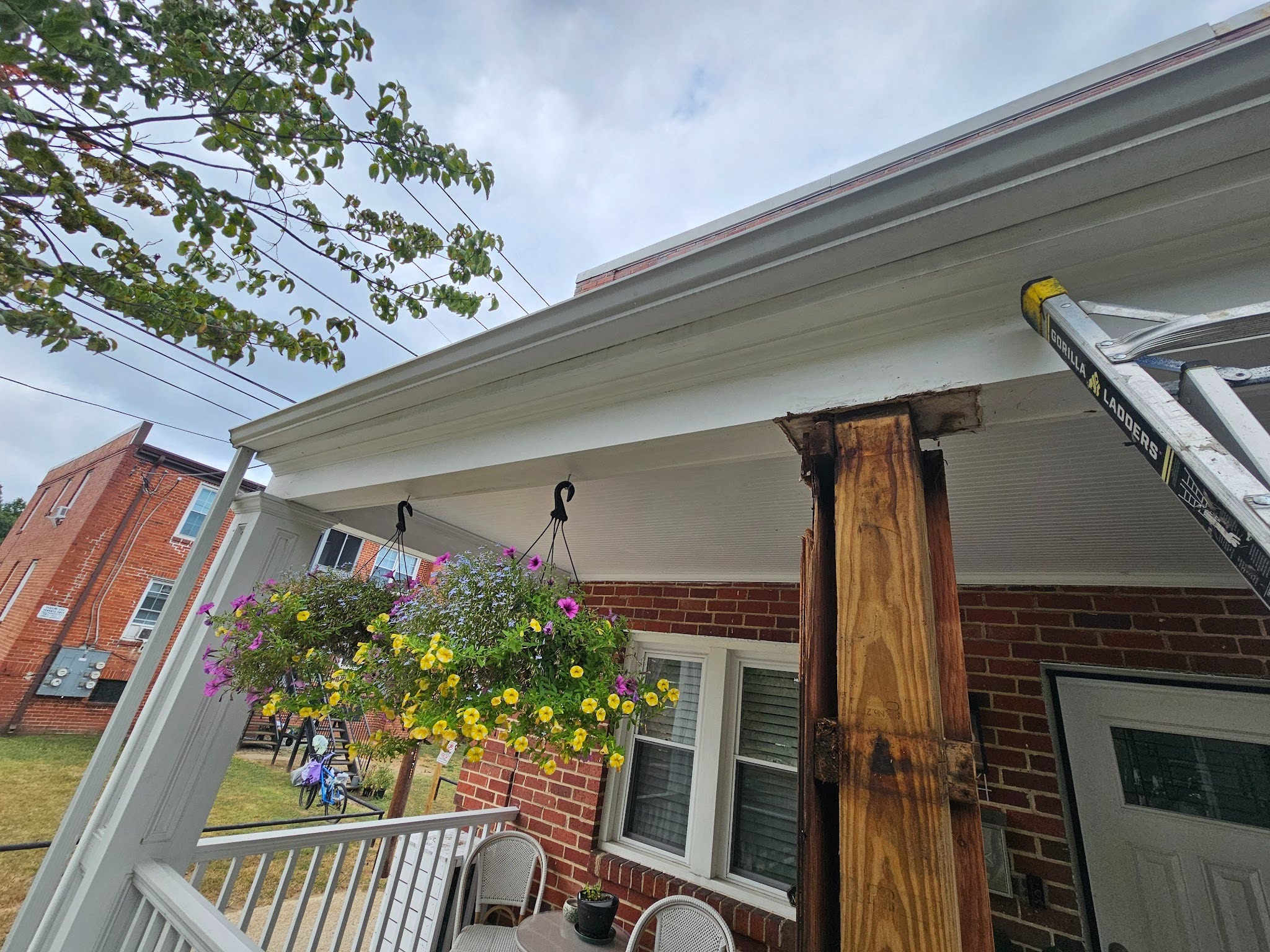
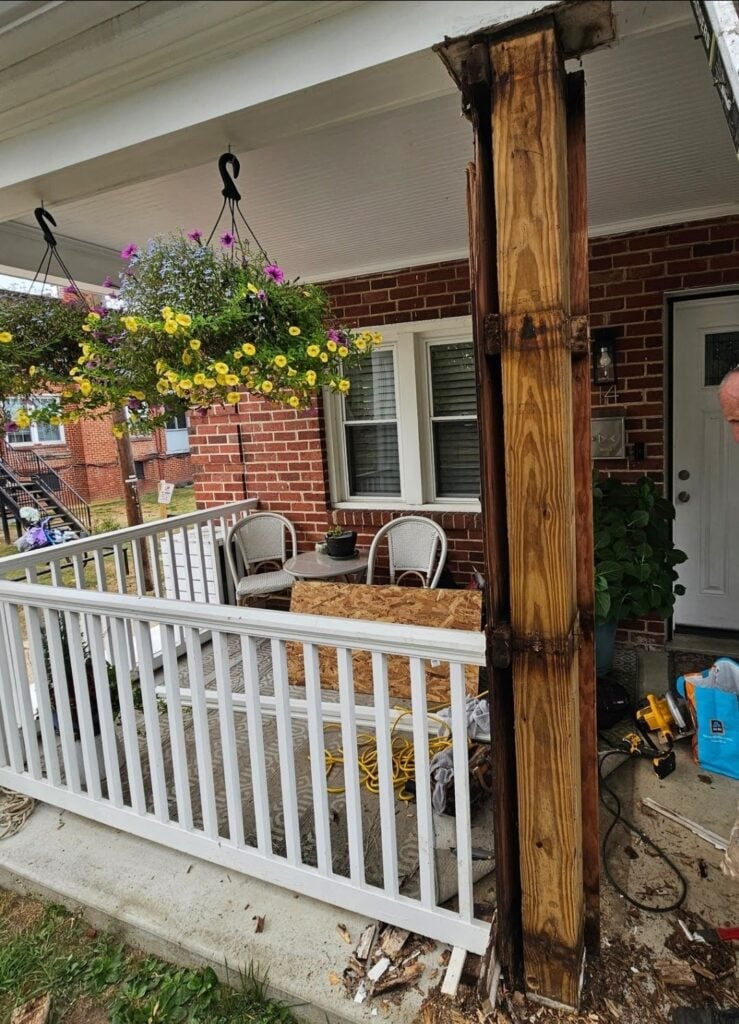
Here, the base of the post began to rot and the owner took a proactive move and had the post repaired before the rot got so bad that it led to structural destabilization. Because this was treated early, before things were terribly bad, the repair didn’t have to be extremely extensive, therefore also not extremely expensive. Nonetheless, the work is still a bit complicated because it had to be taken apart, in pieces, selectively.
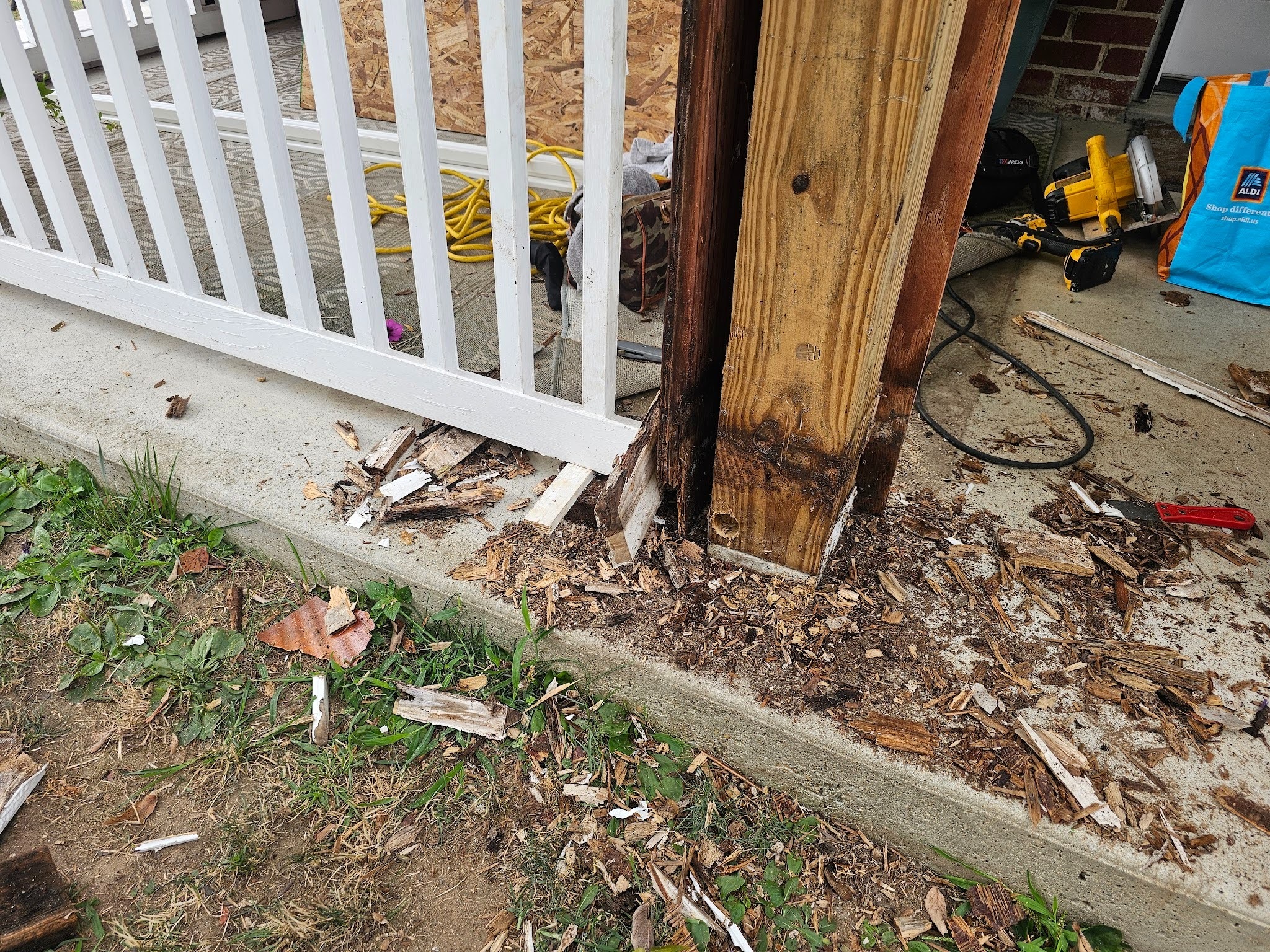
This particular front porch is built with 4×4 wood posts. They were pressure treated. Overtime though the pressure treatment can wear out a bit. Here it has done pretty well. In fact, at the very base column, instead of just sitting it directly on top of the concrete, they put the post on top of an impermeable base plate. That is a smart move. It deters and or prevents the wicking of moisture up into the grain of the wood through natural capillary action.
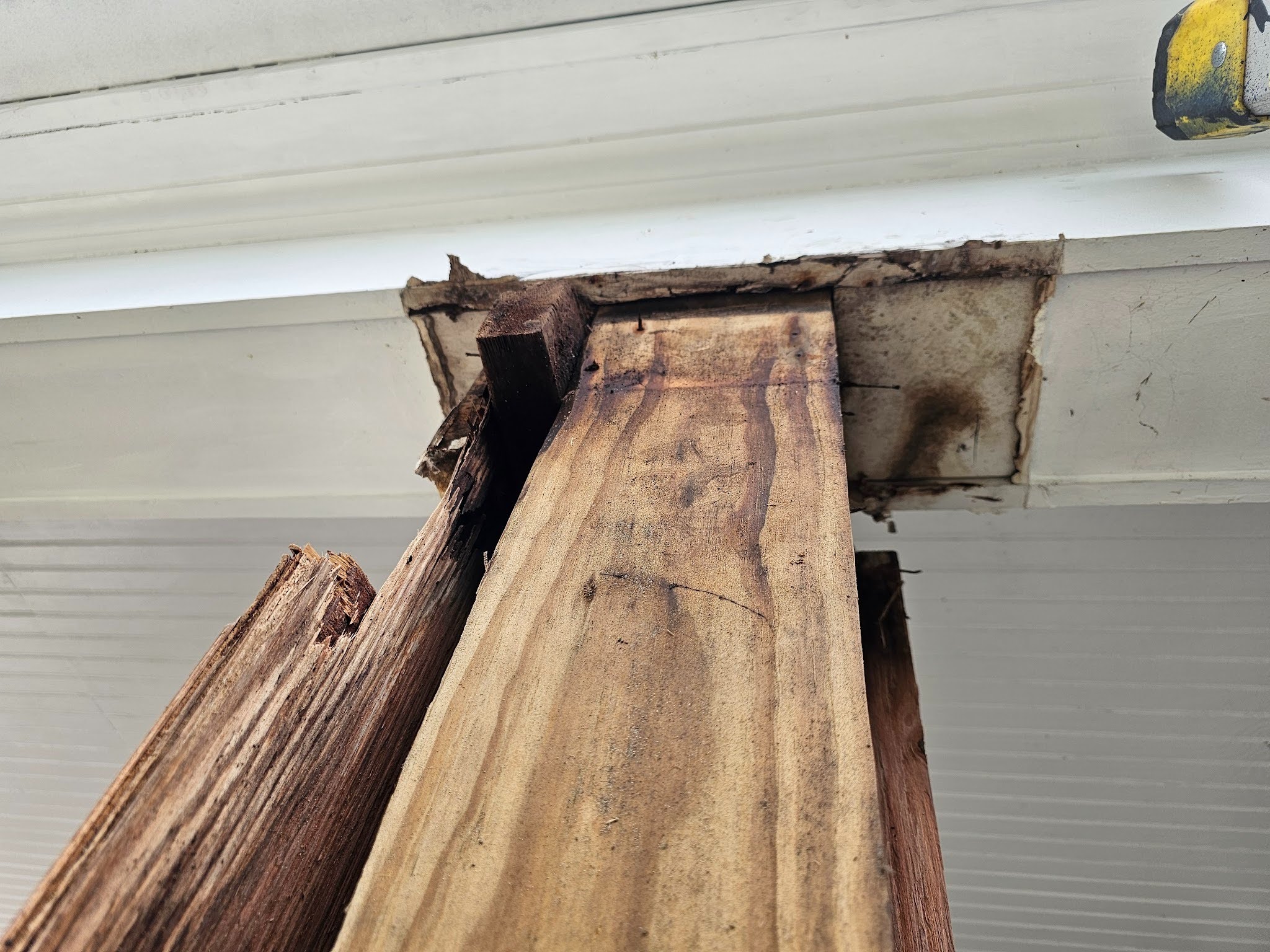
In this case, wood blocking was used to fur out the decorative trim boards used at the sides of the column. That furring fills the box-out of the trim boards in line with the original column shape.
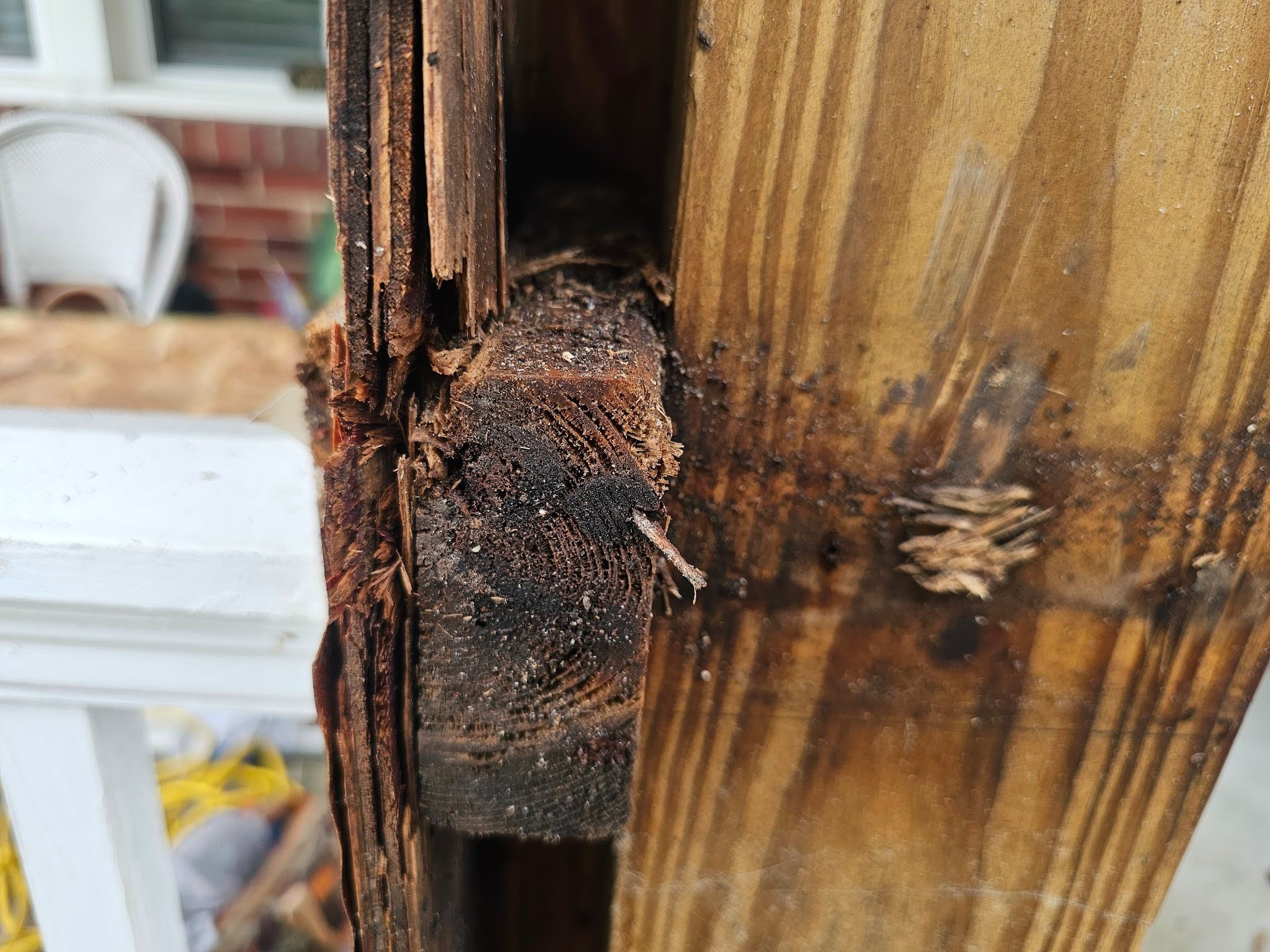
You can see lots of rotted wood chips that have fallen in the ground where the rotted trim boards were removed.
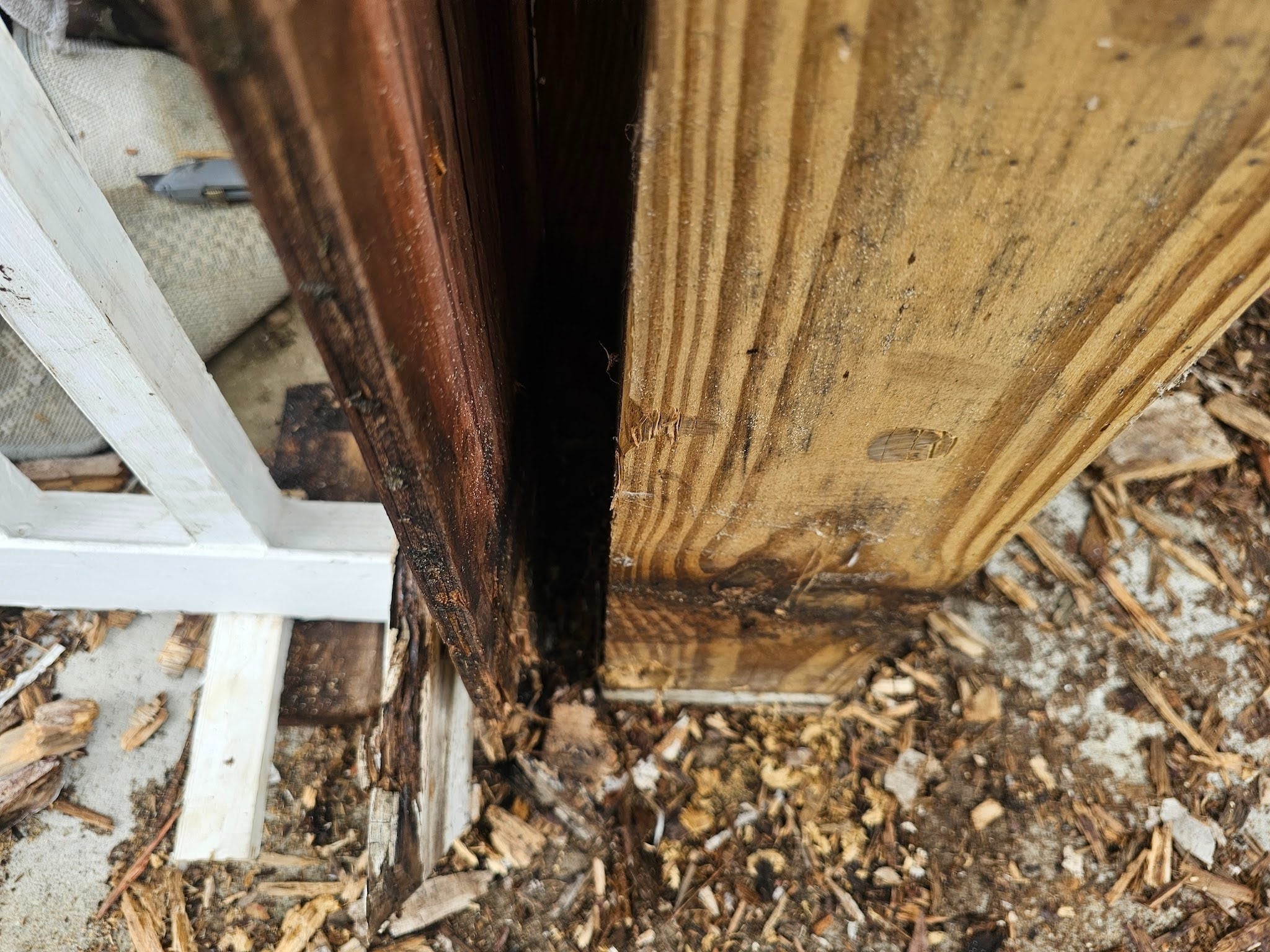
This particular column has experienced so much moisture that the nails which originally used to hold the trim boards in place have rusted through completely. We talked about some of the major types of moisture that happened at the ground, but in this case there’s also damage, just like last week’s case, from the roof of the porch. If a porch roof leak is left unabated for even a little bit of time, it can cause serious damage to the wood elements below. Many of those wood based elements are just not able to withstand hydration and resist rot.
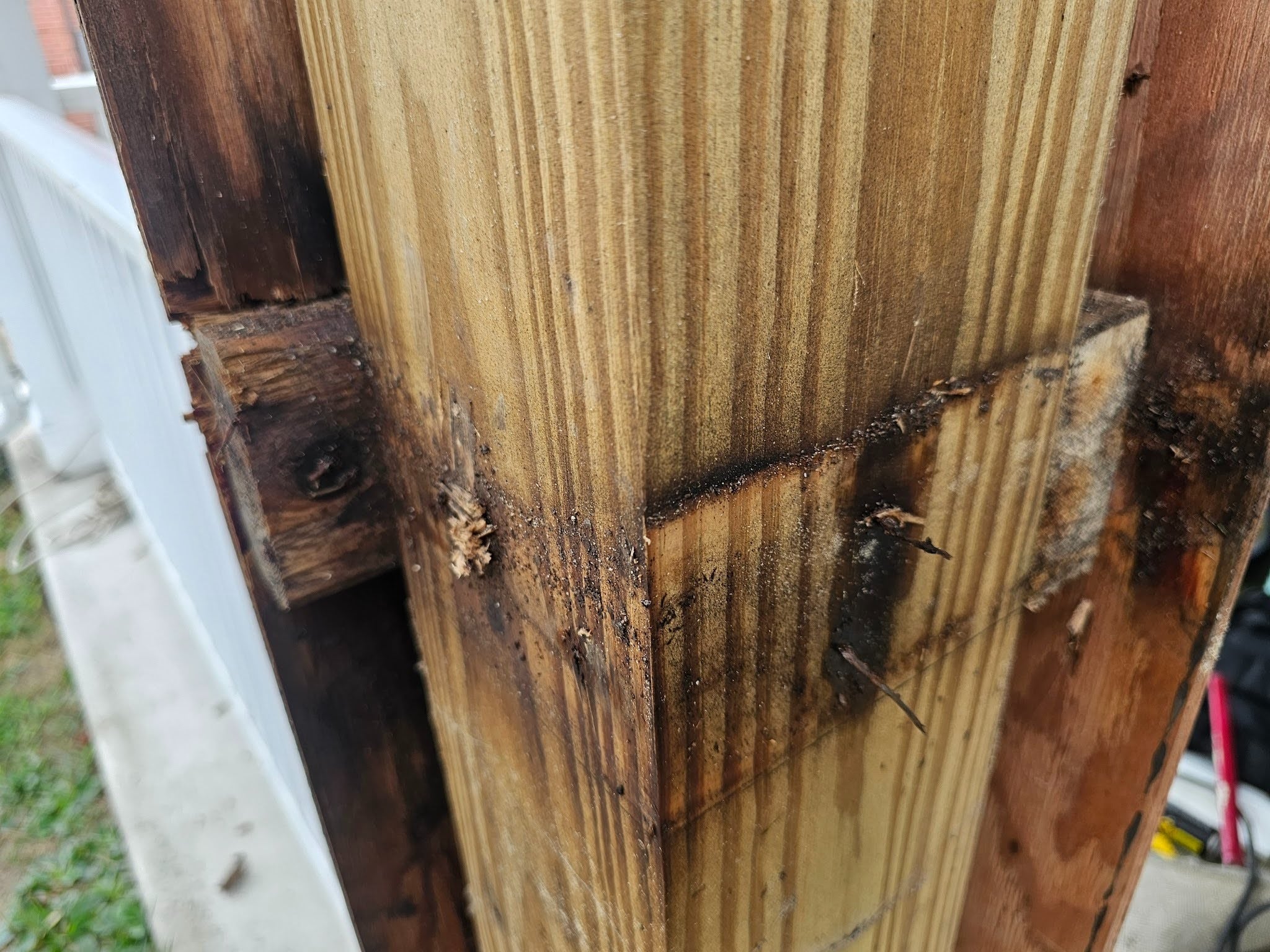
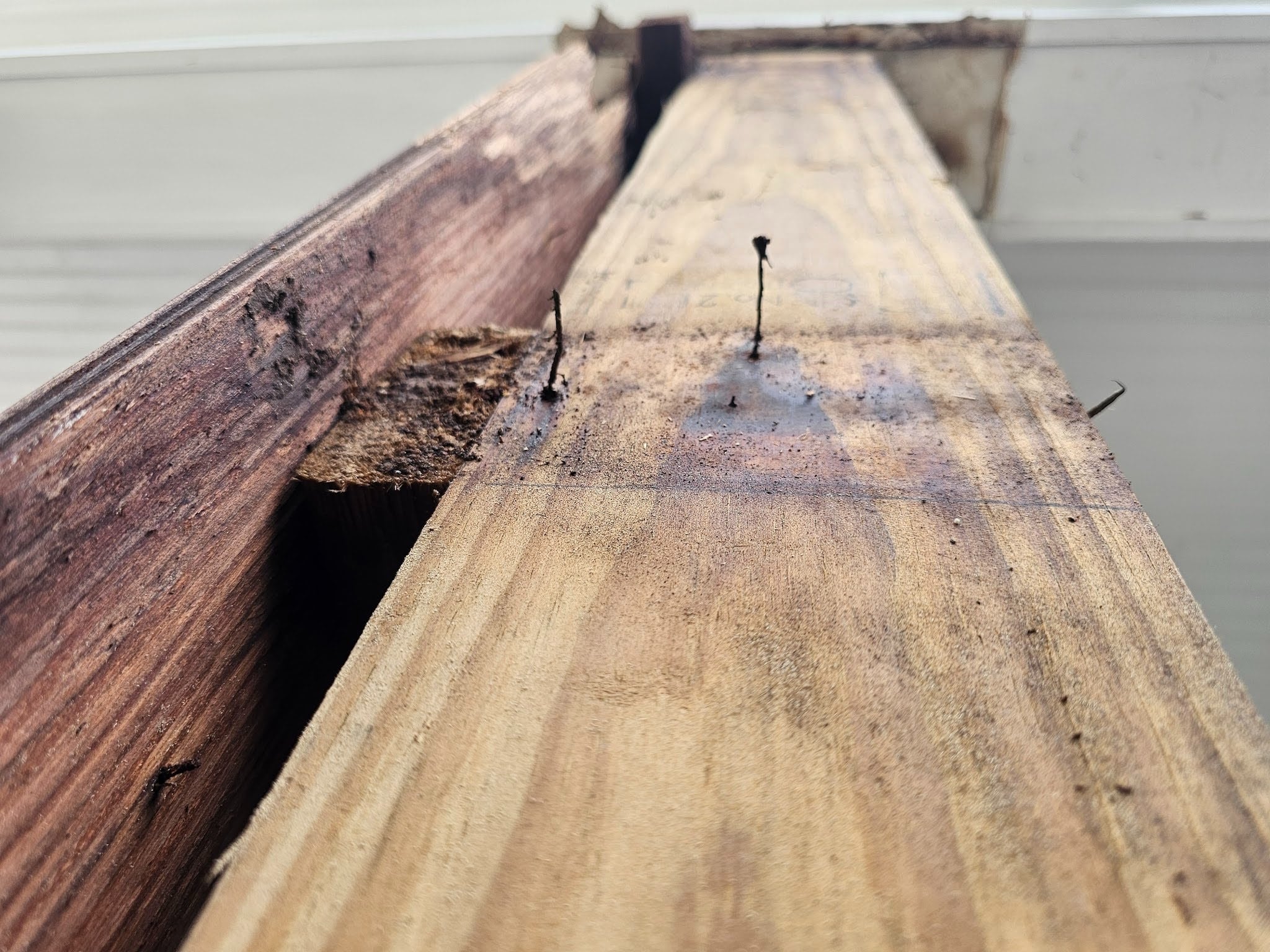
You can see some of the remnants of those rotted and rusted nails in the picture below. We highly recommend using hot dipped galvanized fasteners or stainless steel where possible. Trim nails are very hard to find in material types other than electrogalvanized, but electrogalvanized is not nearly as good as hot dipped or stainless.
Use a contractor who understands and cares about doing things right. Always, feel free to reach out to us here at Dupont Decks and Patios. We are happy to help with almost all steps of the deck building and design process. A backyard and outdoor space should make a significant, positive impact on both quality of life and home value. We can help with more than just decks, we also build patios, pergolas, ramadas, awnings, gazebos, arbors, and privacy fences.
Let us know about your ideas and talk to us if you have questions about possibilities. We are happy to participate in improving your outdoor space and quality of life! You can call us at (202) 774-9128. You can learn more about our services online at Dupont Decks and Patios DC through our website, and you can also reach us directly by visiting our contact page for inquiries and project details.