Rear Low Deck Design for Rowhomes in DC Homes
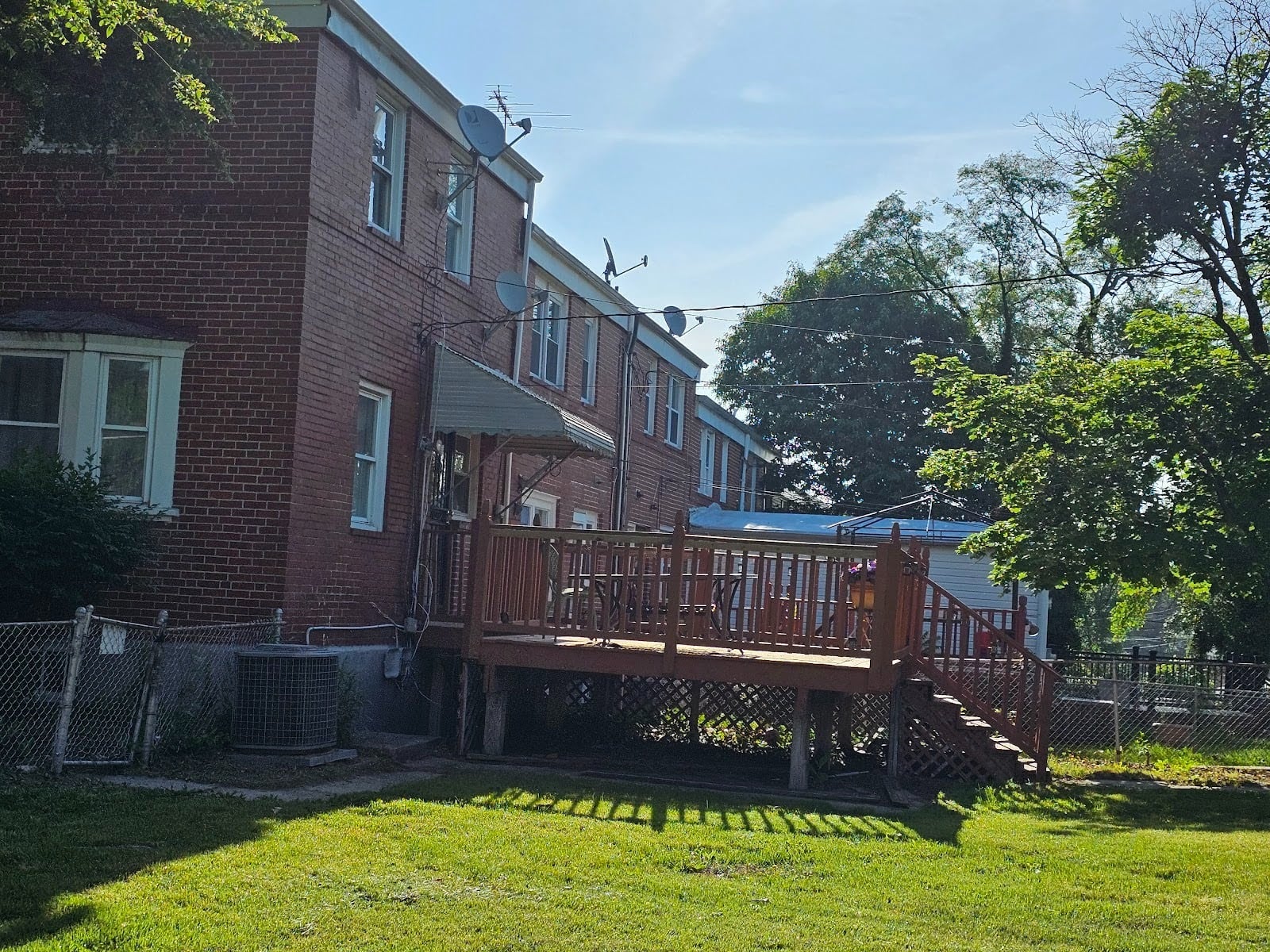
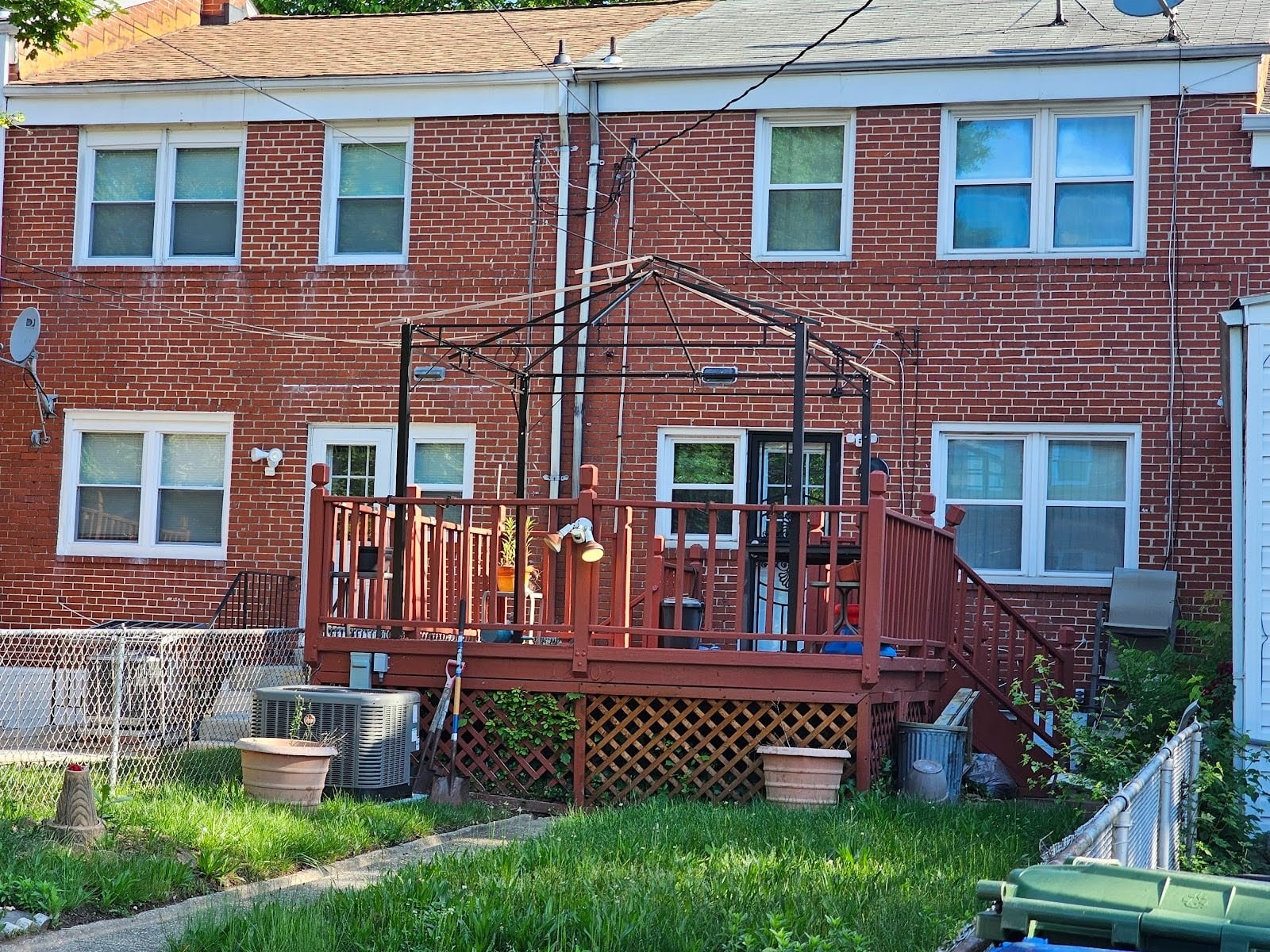
In the first part of this series on a low deck off the rear side of a historic brick building, we looked at the deck showing the picture below. This particular deck is interesting for a couple reasons. It’s not that different than most typical Washington DC row home decks. It just happens at this particular deck is built on a and lot of the row of houses sometimes row homes can be set into runs of many buildings in sequence.
The end lot is different than all of them because unlike the rest of them in the row, the end a lot only has an attachment to an additional adjacent building on one side. The other side is generally a larger yard. In fact in most cases and lots have a front yard and a backyard that is interconnected between a side yard.
That configuration describes this particular setup. Here they also made an interesting decision. They installed an air conditioning unit closer to the building and then, later, instead of moving and relocating the air conditioning unit to accommodate a wider width deck, they just notched the framing of the deck around the air conditioning unit. It makes the layout a bit awkward, but in this case they weren’t as constrained with yard space as they would be in many other cases. They had a little bit of extra abundance of space and therefore a little bit of extra latitude to make some weird layout decisions.
In general, we recommend against notching out a portion of a deck like this. In the picture below you can also see there are two sets of girders. Each of these girders is a structural compilation of framing elements made to support the deck between the pairs of footings. In this case, there’s a footing at each side, left and right from side to side across the deck. This girder is assembled by joining a pair of 2x framing materials, sandwiched together.
In most cases, where you have a deck that comes off the back of a building, you can use the back of the building to mount one of the areas, directly supporting the load path of the deck. Generally the deck can be mounted to the rear of the building by attaching a ledger board.
The ledger board can be bolted in to have significant attachment and strength for both sag resistance and also tensile or pull away type resistance to keep the ledger board attached to the back of the building. Here, instead, though with the second set of posts and girders, this deck could almost be structurally independent from the building itself and still have full capacity from a substrate structural perspective. Each of those posts is set on top of a concrete footing which gives it significant strength from both uplift and compressive resistance if built with proper attachment.
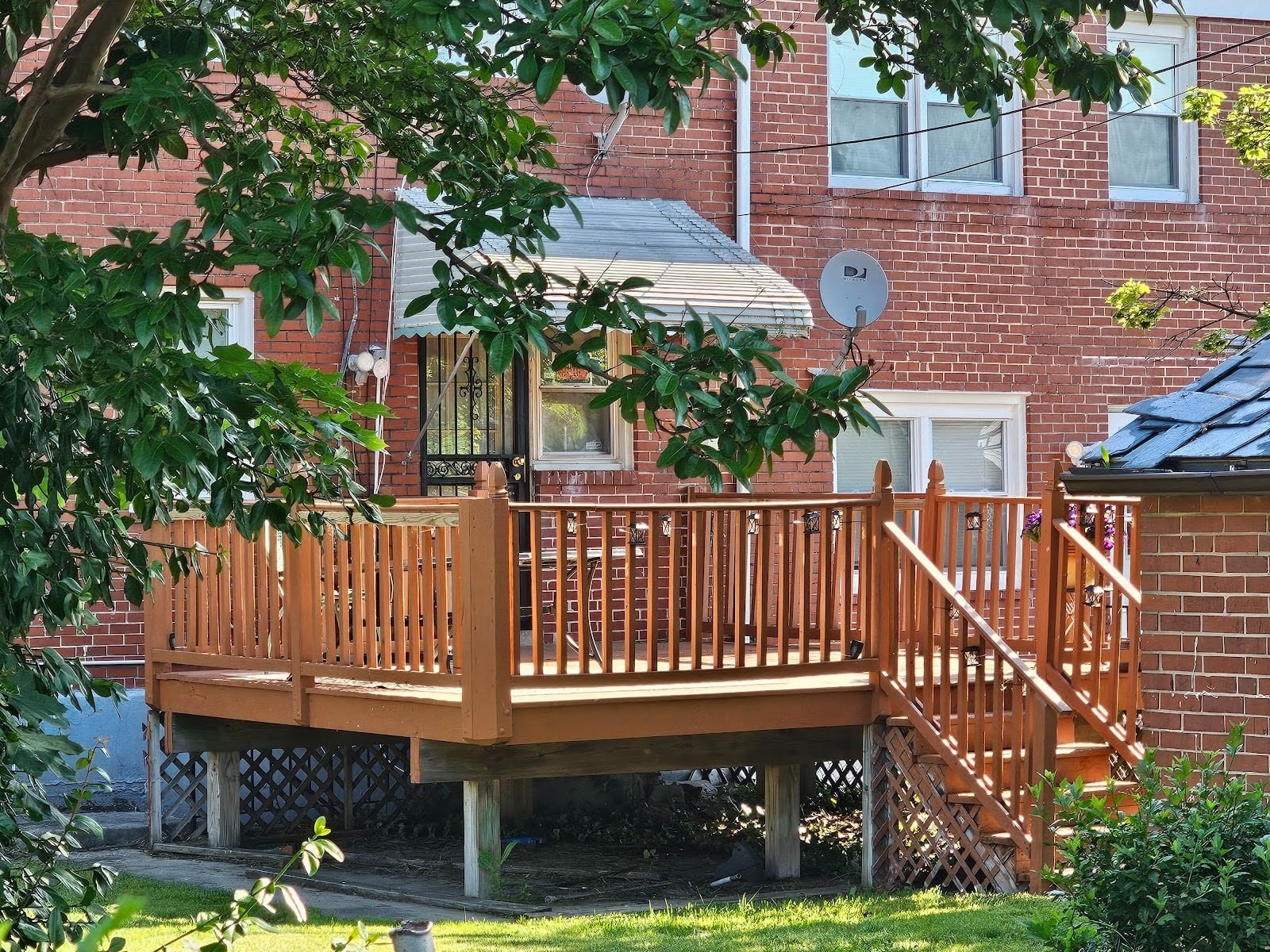
The next picture below switches gears and shows a deck that’s attached to the rear of a building set right in the middle of a row of homes. Like most homes, this one is attached to other buildings on both sides, left and right. The deck is a relatively moderate size, about 170 square feet total. The deck has its own stairway which leads to the backyard and you can also access the deck from the main level rear entry door from the kitchen.
This deck is similar to the one we looked at above, as well, this past week because it’s also a relatively low deck. It’s not right on the ground but it’s only about 40 inches above the ground.
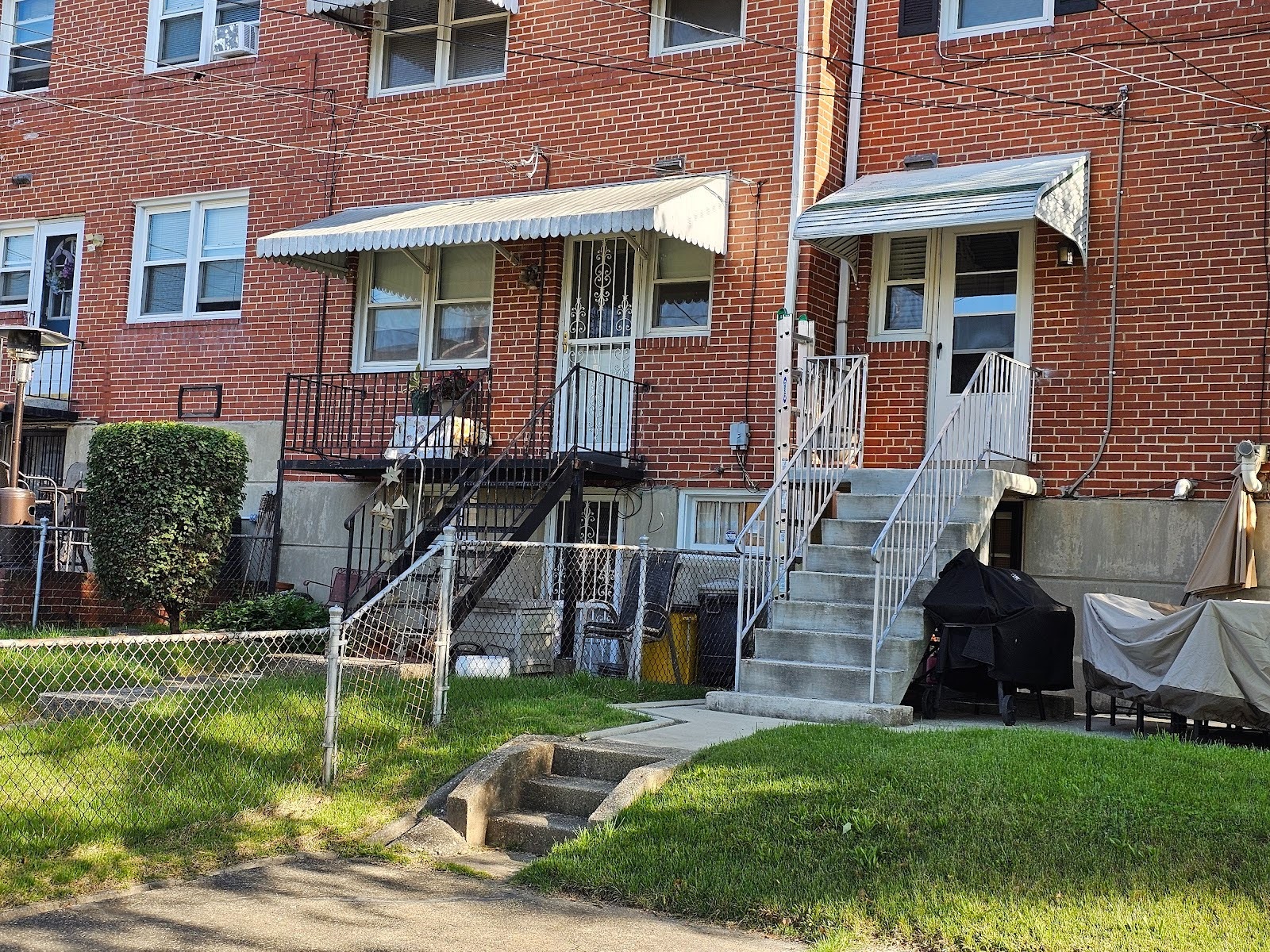
In the next picture below we’re showing a very similar deck, similar in both elevation and the location of attachment. This deck is very different though in material makeup. The other decks are built with framing lumber. That particular framing lumber used in those decks happens to be pressure treated so it can have a better chance of withstanding some of the harsh elements of the exterior such as precipitation and ultra violet light. The steel deck is different, though, in many ways.
One of the big benefits of a steel deck is that where you have a passageway such as the stairway to the basement below the deck, it allows for more headroom. The steel deck essentially uses a lighter frame. It’s not necessarily lighter on a unit basis, but it can have the same strength factor with thinner or volumetrically smaller elements.
Use a contractor who understands and cares about doing things right. Always, feel free to reach out to us here at Dupont Decks and Patios. We are happy to help with almost all steps of the deck building and design process. A backyard and outdoor space should make a significant, positive impact on both quality of life and home value. We can help with more than just decks, we also build patios, pergolas, ramadas, awnings, gazebos, arbors, and privacy fences.
Let us know about your ideas and talk to us if you have questions about possibilities. We are happy to participate in improving your outdoor space and quality of life! You can call us at (202) 774-9128. You can find us online at https://dupontdeckspatiosdc.com and you can email us there as well at https://dupontdeckspatiosdc.com/contact-us