Pool Patio Materials and Maryland’s Climate: What Homeowners Should Know
- If you’re a homeowner in Bethesda or the surrounding Montgomery County neighborhoods trying to plan a pool patio that will actually last, you’ve probably noticed something: Maryland’s weather has a mind of its own. One week, it’s freezing. The next week, it’s muggy enough to fog your glasses. Add the scorching summer sun layered with thunderstorms that dump inches of rain at a time, and suddenly the patio material you thought would last 20 years starts cracking by year three.
The real pain point? Most homeowners aren’t choosing the wrong materials; they’re simply choosing materials that weren’t designed for Maryland’s unique climate. And too many contractors don’t warn them.
- This is where Dupont Decks & Patio stands out. Their in-house construction team has spent years designing patios specifically for Maryland’s unpredictable mix of freeze-thaw cycles, humidity, and heat. They don’t just install materials; they engineer outdoor spaces that actually hold up here.
Why Maryland’s Climate Is So Hard on Pool Patios
Maryland sits in a transition zone. Hot, humid summers; cold winters; heavy rainfall; and frequent temperature swings. This creates a perfect storm for patio materials that weren’t built for these conditions.
Let’s break each factor down more deeply.
Freeze-Thaw Cycles
This is the silent killer of patios in Bethesda, Rockville, and Potomac. Here’s how it works:
- Water seeps into tiny pores or joints in your patio material.
- Overnight winter temperatures drop below freezing.
- The water expands by nearly 10%.
- That pressure causes the material to crack, chip, or heave upward.
Even high-quality patios can fail if materials aren’t freeze-thaw rated or installed with the right base. This is why you see perfectly fine patios in Florida, but the same materials fall apart in Maryland.
Humidity and Heavy Rain
Maryland summers routinely hit the high 80s and low 90s, with humidity over 70%. Add intense rainstorms, and you get:
- Trapped moisture beneath and within patio surfaces.
- Mold or mildew growth, especially on natural materials.
- Slippery surfaces formed around the pool.
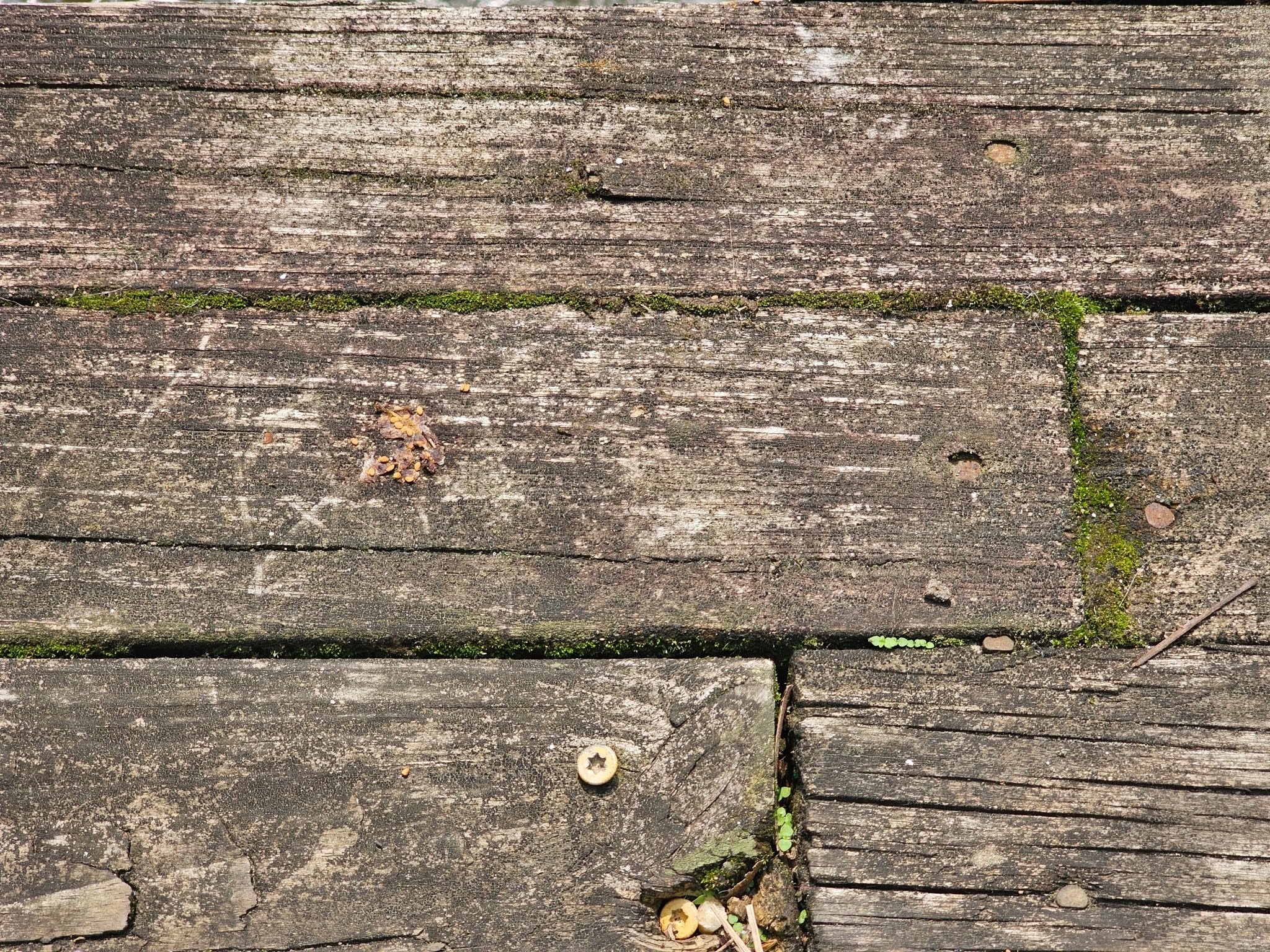
- Rotting or swelling in wood decking.
- Erosion under improperly installed pavers.
Your pool patio needs to breathe, drain, and resist water intrusion, or it becomes a maintenance nightmare.
UV Exposure and Intense Summer Heat
People underestimate how hot a patio can get in July. Some materials become so hot they’re unusable barefoot.
Maryland’s UV exposure can cause:
- Fading in wood.
- Bleaching in some concrete finishes.
- Warping in lower-grade composites.
- Surface breakdown in porous stone.
- Heat retention that makes certain colors unbearable.
This is why material color and density matter so much for pool patios here.
Pool Chemicals
Chlorine and saltwater don’t just affect your pool; they affect any material that surrounds it.
Poorly chosen materials will:
- Discolor
- Weaken
- Pit
- Corrode
- Break down faster.
Patio materials around pools must be chemical-resistant and non-reactive to avoid early failure.
Materials That Struggle in Maryland’s Climate
Poured Concrete
Poured concrete is popular because it’s cost-effective, but affordability doesn’t equal longevity. Not in Maryland.
Concrete’s biggest issues include:
- Cracking from freeze-thaw cycles.
- Surface flaking (spalling) occurs when moisture freezes within the surface.
- Long-term discoloration from UV exposure.
- Uneven settling due to our region’s clay-heavy soils.
To survive here, poured concrete needs frost footings, expansion joints, top-tier mix quality, and experienced installers. Most homeowners aren’t offered that level of preparation.
Standard Wood Decking
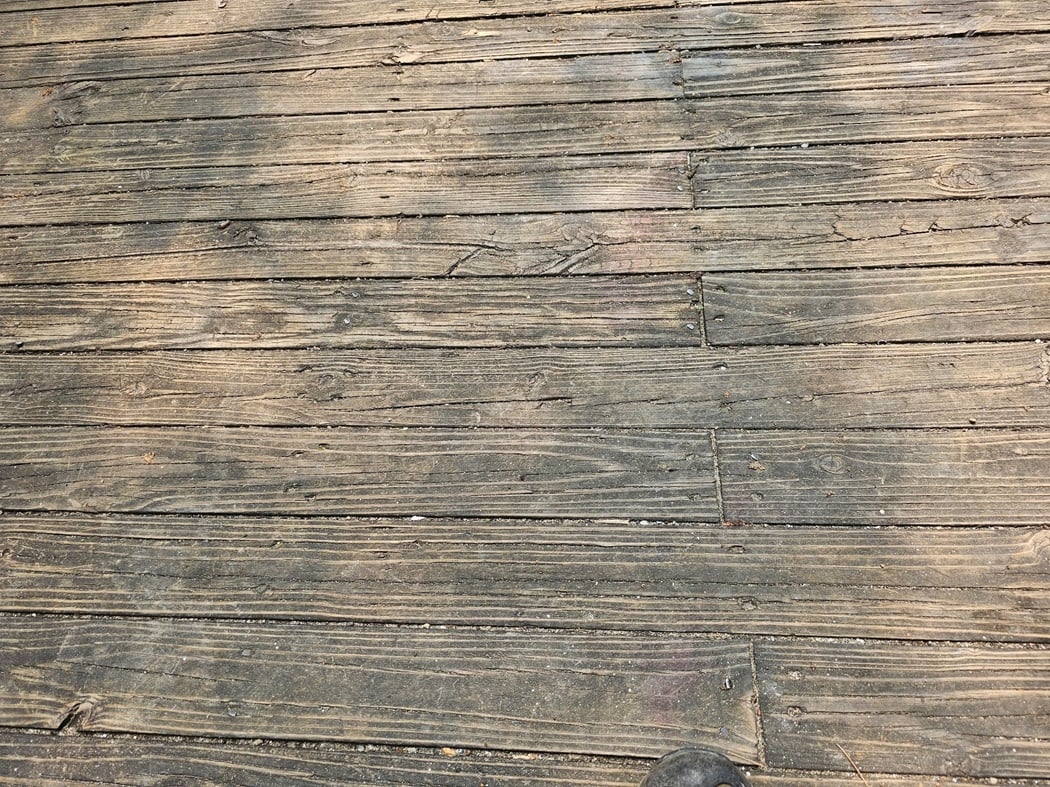
Pressure-treated pine and cedar look great for a season, maybe two. After that, Maryland weather takes over. Expect to deal with:
- Warping from moisture.
- Cracks from heat cycles.
- Rot from humidity.
- Constant sanding or staining.
- Slippery surfaces near the pool.
It’s beautiful, but too high-maintenance to be practical around a pool in our climate.
Porous Sandstone
Not all natural stones are created equal. Some imported sandstones, while pretty, absorb water easily. This means:
- Bursting layers during freezing temperatures
- Flaking
- Surface erosion
- Loss of structural integrity
Maryland simply isn’t the right environment for these softer stones.
Best Pool Patio Materials for Maryland’s Climate
These materials are proven to survive Bethesda’s weather, look stunning, and last for decades with minimal maintenance.
Concrete Pavers
Concrete pavers excel in Maryland for one simple reason: they can move without breaking.
What makes them ideal:
- They’re engineered for freeze-thaw durability.
- If the ground shifts, individual pavers adjust rather than crack.
- You can replace just one paver, not the entire patio.
- They come in thousands of colors, styles, and textures.
With a properly compacted base (Dupont Decks & Patio always uses one that extends below frost levels), pavers can outlast almost every other material.
Natural Stone: Bluestone & Travertine
Bluestone
Locally loved and extremely durable, bluestone is dense and holds up exceptionally well outdoors. It has the following benefits:
- Elegant, timeless appearance
- Great traction when wet
- Superior freeze-thaw resistance
Travertine
Travertine is one of the best materials for pool patios nationwide, and especially in Maryland.
Why it’s exceptional:
- Naturally stays cool underfoot (huge perk during summers)
- Resists cracking
- Doesn’t get slippery
- Handles chlorine well
Just be sure you’re getting Premium Select Travertine, which Dupont Decks & Patio sources for long-term durability.
Composite Decking / Composite Pavers
Engineered materials shine in humid climates. High-quality composite products:
- Resist moisture absorption
- Don’t warp or rot
- They are protected against UV fading
- Hold up well around chlorine
- Require minimal upkeep
For pool patios, lighter colors work best; they stay cooler in the summer sun.
Brick Pavers
Brick has been used for centuries in the Mid-Atlantic, and for good reason.
Brick pavers offer:
- Unbeatable freeze-thaw performance
- Long-term structural stability
- Excellent traction
- A warm, timeless aesthetic that fits Bethesda’s architectural style
They do require joint maintenance, but nothing major.
PVC Decking
PVC decking is 100% synthetic, which means water cannot penetrate it. That alone makes it a standout for pool decks.
Additional perks:
- Mold and mildew resistant
- Doesn’t swell, warp, or splinter
- Lighter colors stay impressively cool
- Minimal maintenance.
It does expand and contract with temperature, so professional installation is key. Dupont’s team knows exactly how to account for this.
Installation Matters More Than Most Homeowners Realize
Even the best material won’t last if it’s installed incorrectly. Many patios in Maryland fail because contractors skip steps that are not optional in this climate.
A long-lasting pool patio must include:
A Deep, Compacted Base Below the Frost Line
If the base isn’t below Maryland’s frost depth, the freeze-thaw cycle will lift and shift your patio every winter.
Proper Drainage Systems
Standing water results in cracks, mold, erosion, and hazardous surfaces. Your patio needs:
- the right slope (⅛–¼ inch per foot)
- channel drains if needed
- correctly installed gravel layers
Jointing & Edge Restraints
Without solid edge restraint, pavers will wander. Without proper polymeric sand, joints absorb water and fail.
Material-Specific Build Standards
Travertine, bluestone, pavers, PVC, and composite all require different installation methods. Dupont’s team specializes in matching the right build technique to the right material.
Commonly Asked Questions
What is the best material to put around a pool in Maryland?
Concrete pavers, travertine, and PVC/composite decking are top performers because they handle humidity, freeze-thaw cycles, and chlorine exposure without cracking or warping.
What is the most durable patio material for Maryland weather?
Premium concrete pavers and dense natural stones, such as bluestone, are consistently the longest-lasting options.
What pavers stay cool around pools?
Travertine is the coolest natural stone material. Among engineered products, lighter-tone composite and PVC decking stay comfortable even on hot July afternoons.
What is the coolest material for pool decking?
Travertine wins here. Its natural density and porous structure help dissipate heat, keeping it cooler than concrete or most pavers.
Thinking About a Pool Patio Upgrade in Bethesda? Let Dupont Decks & Patio Help
Your pool patio is something you want to enjoy, not constantly repair. Maryland’s climate demands materials and installation techniques tailored to our region. Dupont Decks & Patio brings years of local expertise, in-house builders, premium materials, and climate-ready installation practices to every project.
If you want a pool patio built for beauty and durability, reach out today. Call Dupont Decks & Patio at (202) 774-9128, or visit our website.