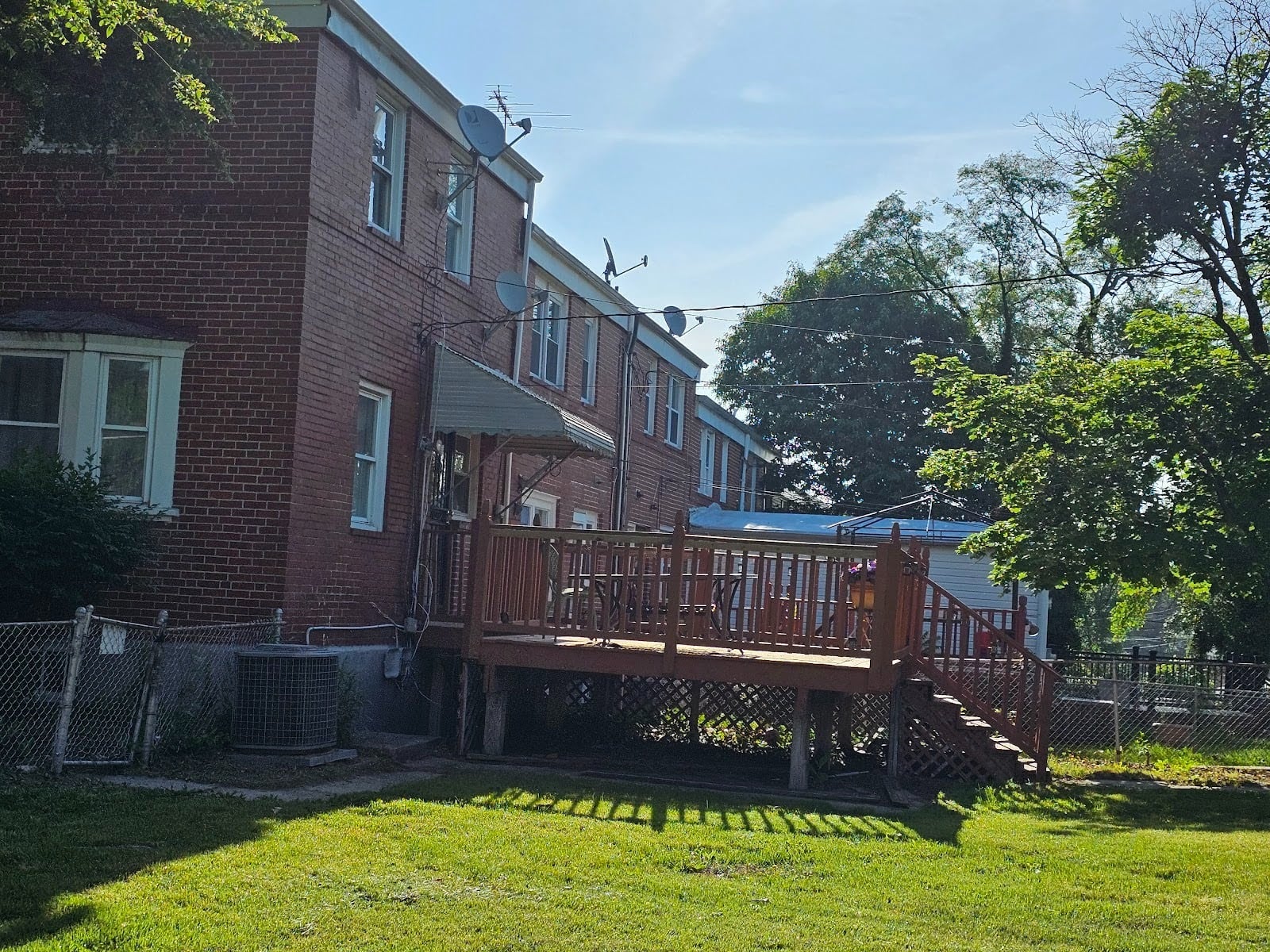
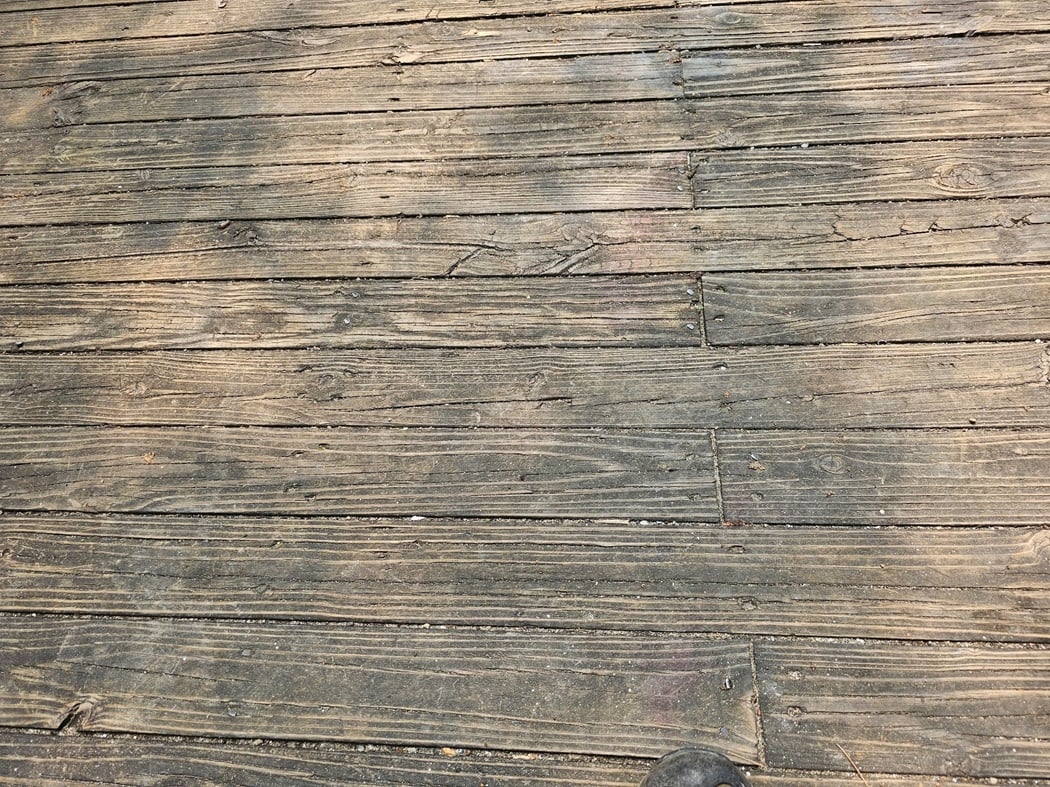
This past week we looked at a deteriorated deck surface. This deck surface could have been preserved longer by just having routine upkeep and maintenance and residual coatings of stain and sealers applied, as required. Instead, since the deck boards were left to age without care, they became significantly deteriorated at the upper surface. You can see, the wood here is retaining moisture. Without the sealer in place, water enters readily and dries out excessively slowly.
The gapping and deterioration around the grain lines between the summer and spring wood has inflated and become pronounced. Particularly around the knots in the boards, there are recesses which allow water to pool up. As that water puddles into those small areas, it seeps deeper. This leads to increased hydration which leads to increased deterioration.
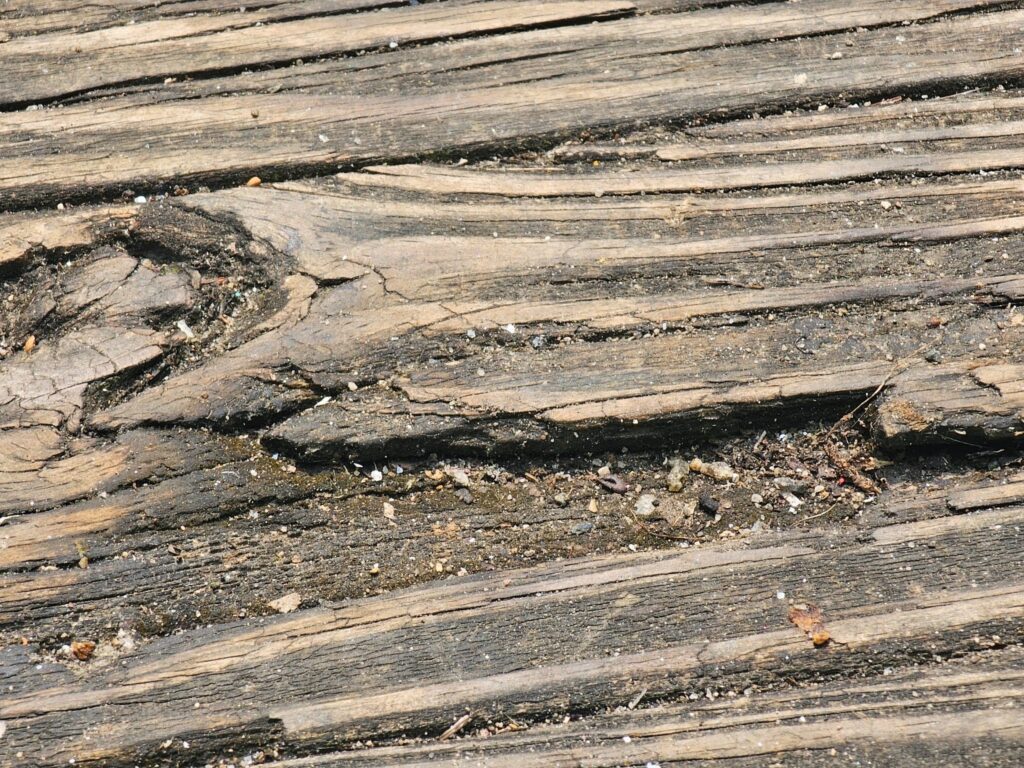
You can see cracking coincident with fastener heads and you can see the alligatoring at the surface where the the upper exposed portions of the wood are cracking and peeling away.
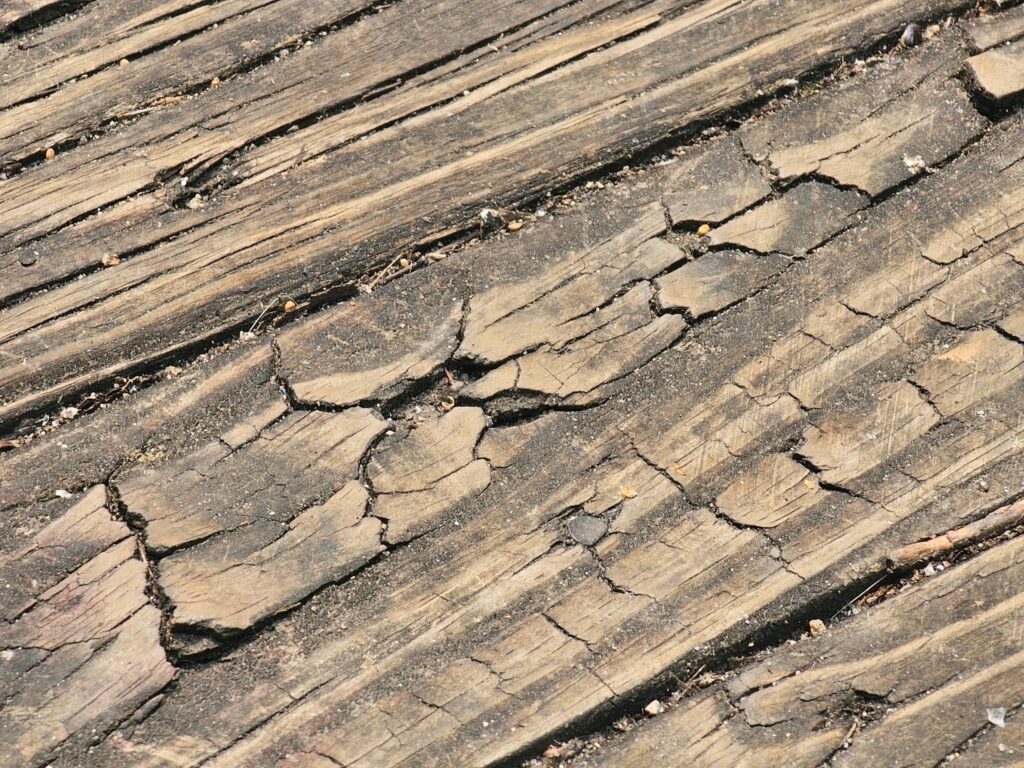
The next picture below looks straight downward at the top of the wood surface. The cracks and crevices here are deep. On a microscopic level, the cellular structure of wood is a lot like a sponge.
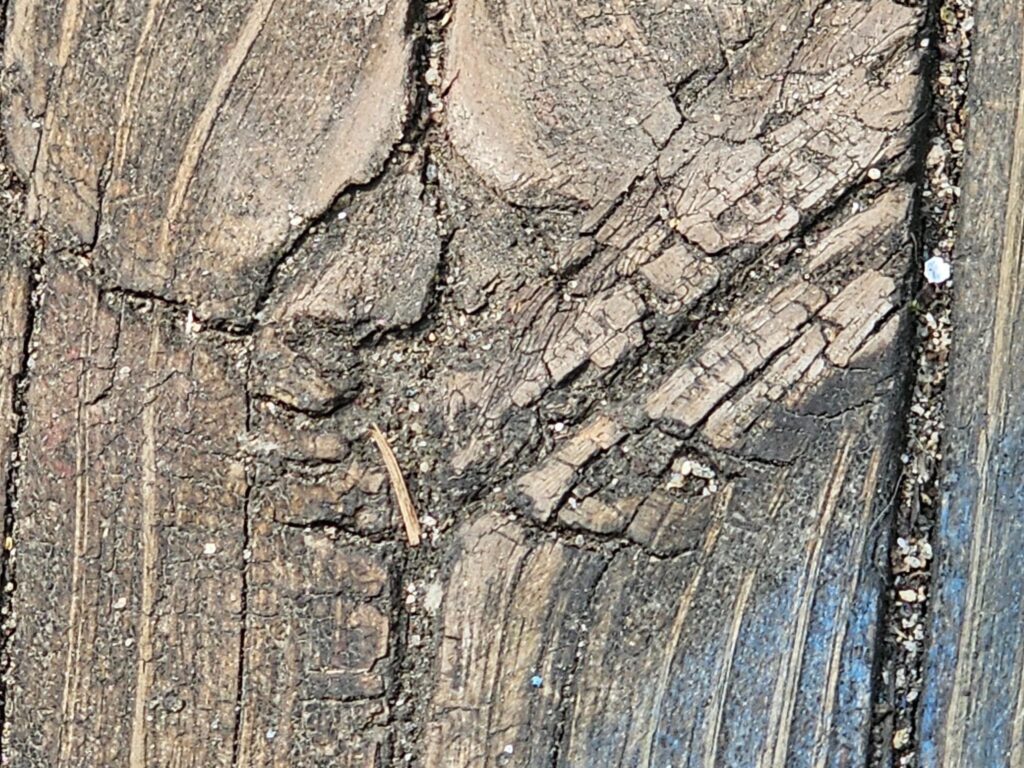
When cared for properly and sealer is applied routinely, the sealer will fill many of those porous surface areas. The sealer prevents much of the absorption that happens here without sealer applied.
Not only has this deck not been given proper upkeep and care, but it’s also been damaged by the building occupants. At an area in the picture below, a portion of the surface of the deck has been burned. It’s likely they had used a fire pit that was positioned above the deck. However either by falling embers that fell out of the fire pit or by excessive heat in the fire pit within close proximity to the wood, the surface has become burned. Although the burning has caused damage, in some cases burning the surface of wood can actually protect it. It seems very counterintuitive.
In Japan though, there are historic methods of charing just the outside of siding boards to preserve them without the use of chemicals. We aren’t recommending that, but it’s just an interesting facet of different types of preservation of wood throughout the world.
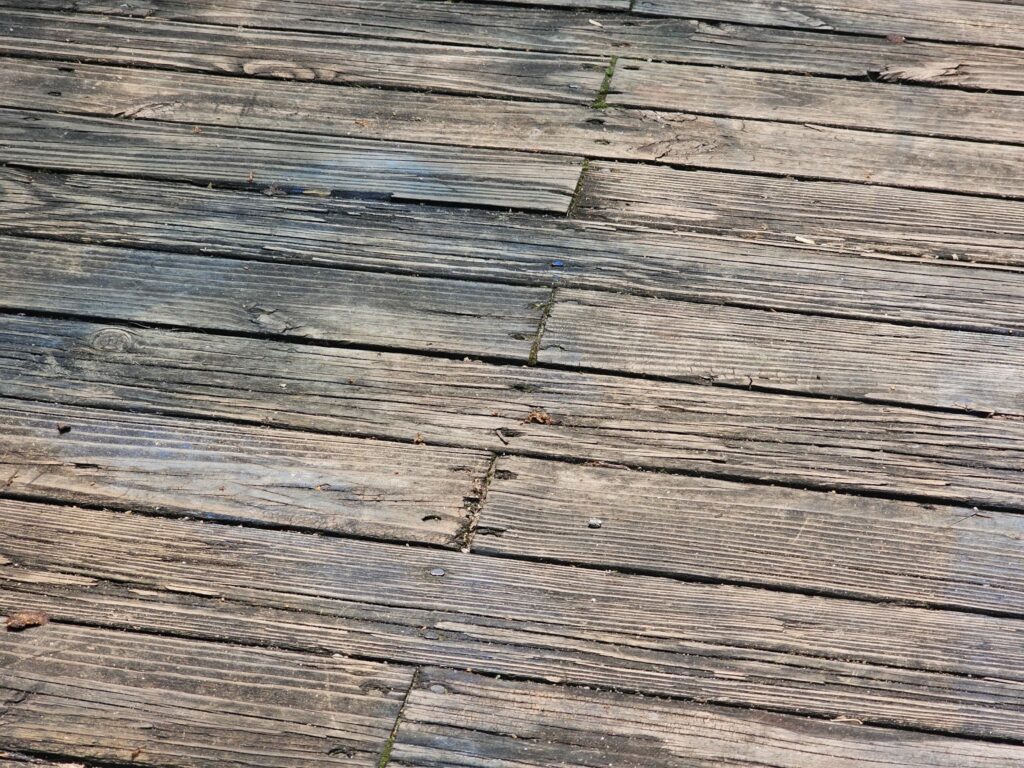
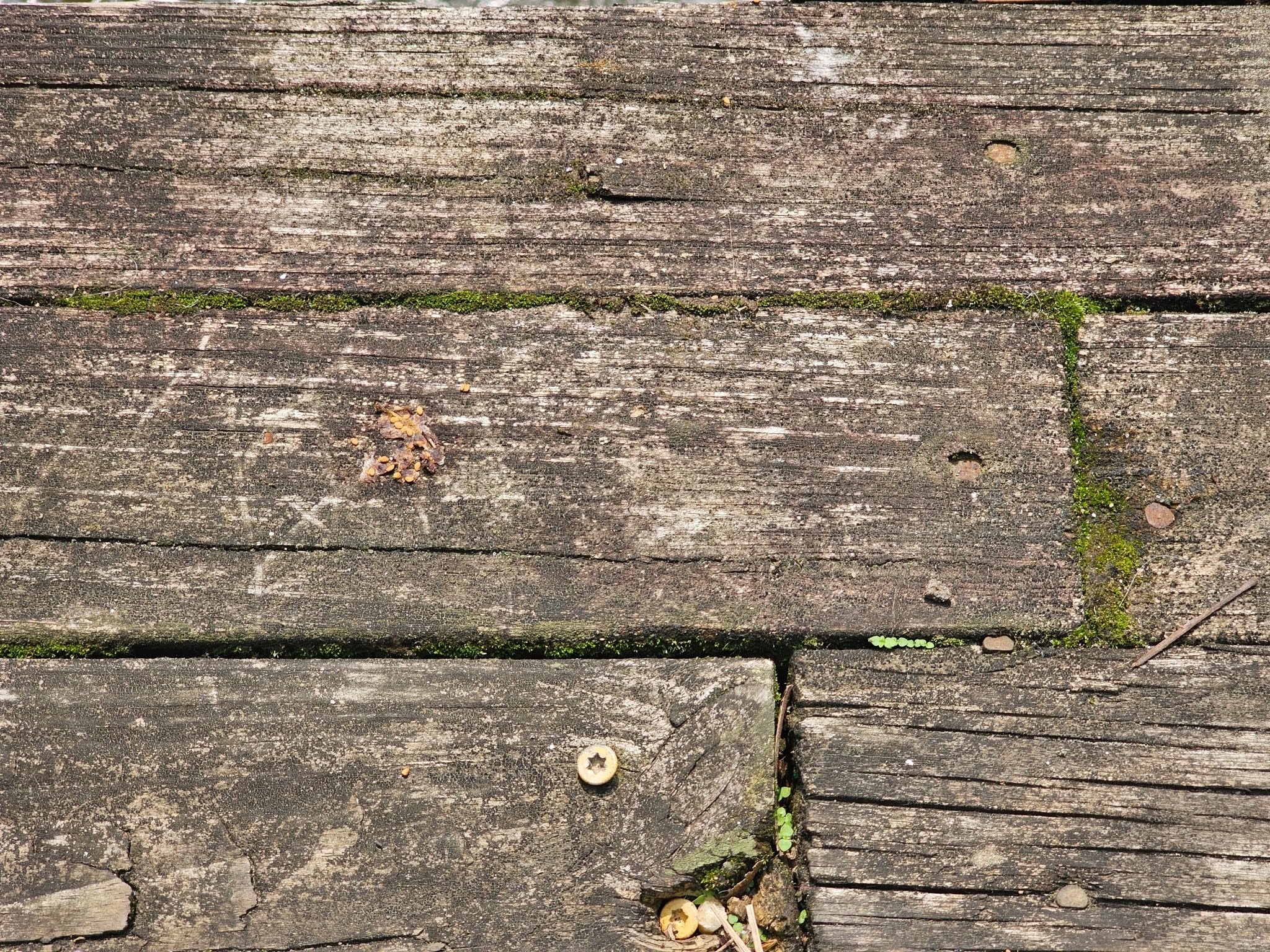
If you look closely down at the joints between these boards, you might notice that not only this wood has elevated moisture which you can see by darker areas in the wood fiber, but it also has microbiological growth. There’s a little bit of moss and plant growth coming out of the joints.
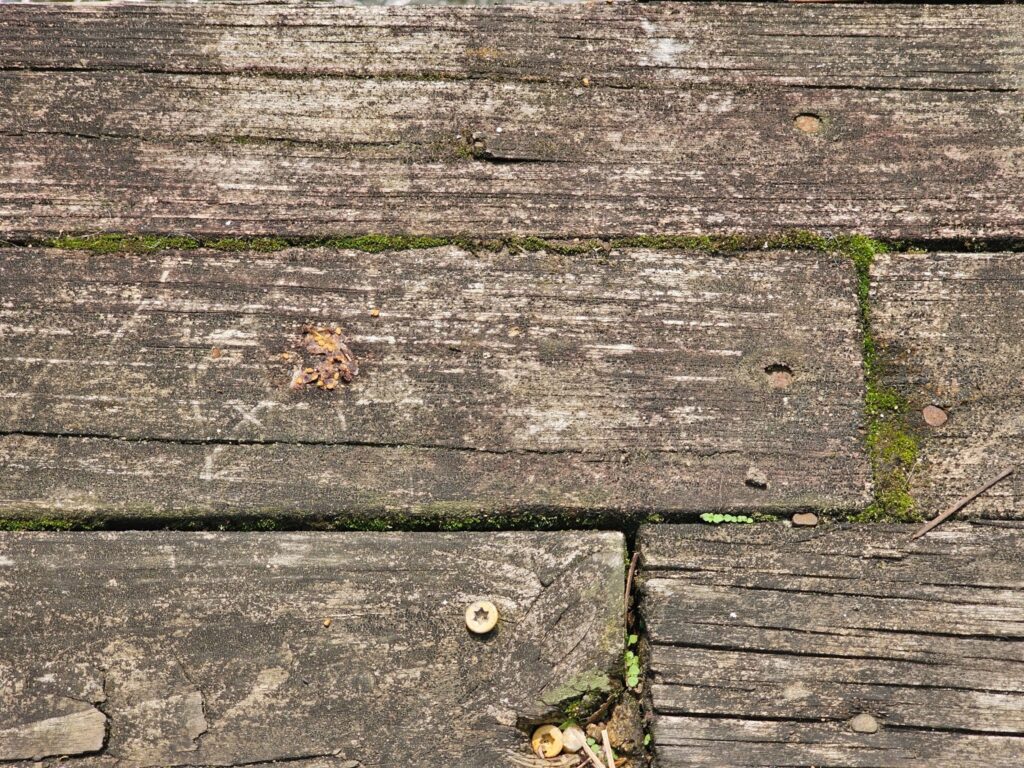
You can see one of these areas in the next picture below. This means that the wood has begun to rot. It’s become a bit like a breeding ground for plant life.
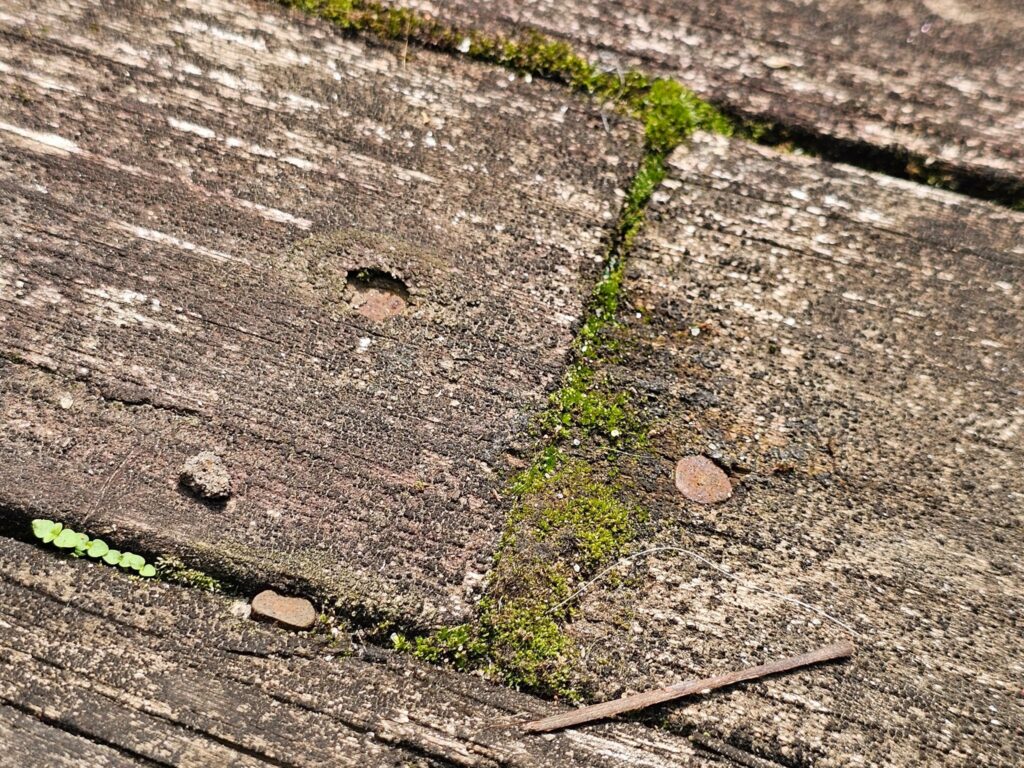
As the parts of the wood have deteriorated, they have left voids and omissions that are like little puddle areas where water can build up and deteriorate deeper down into the fiber of the wood. As that wood deteriorates, it allows for even more compounding deterioration.
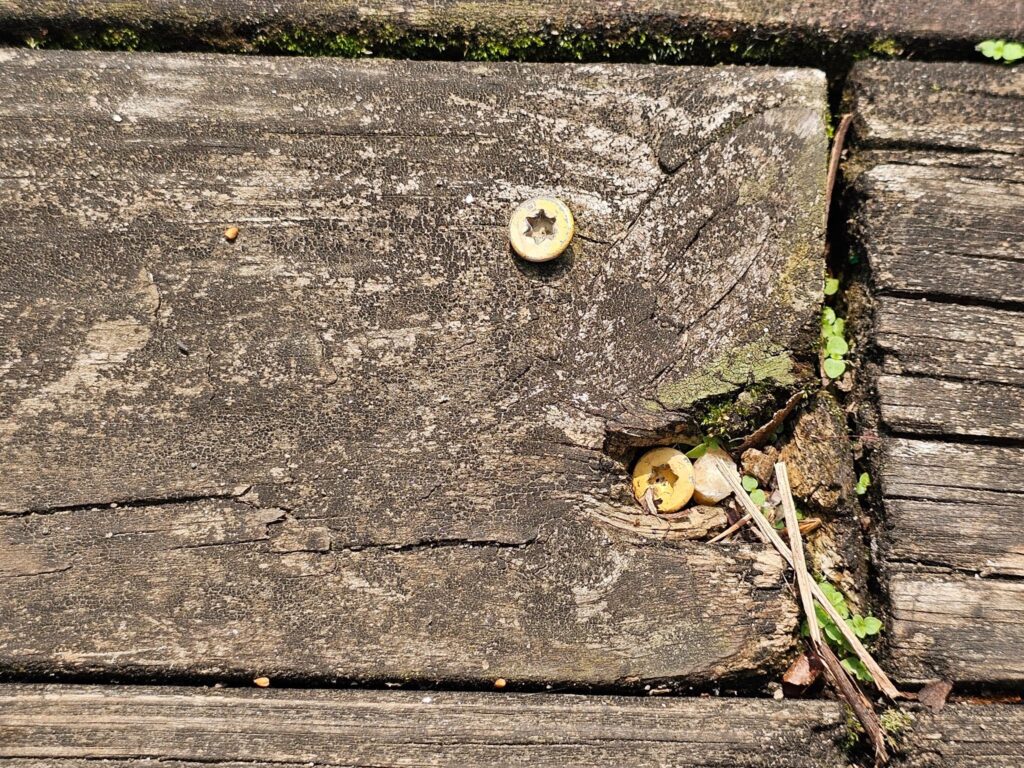
If you look at the tiny seedling growing out of the joint in the boards in the next picture below, you can see that this isn’t just microbiological growth, it’s even complex plant life. This is just a seedling but it will grow much bigger.
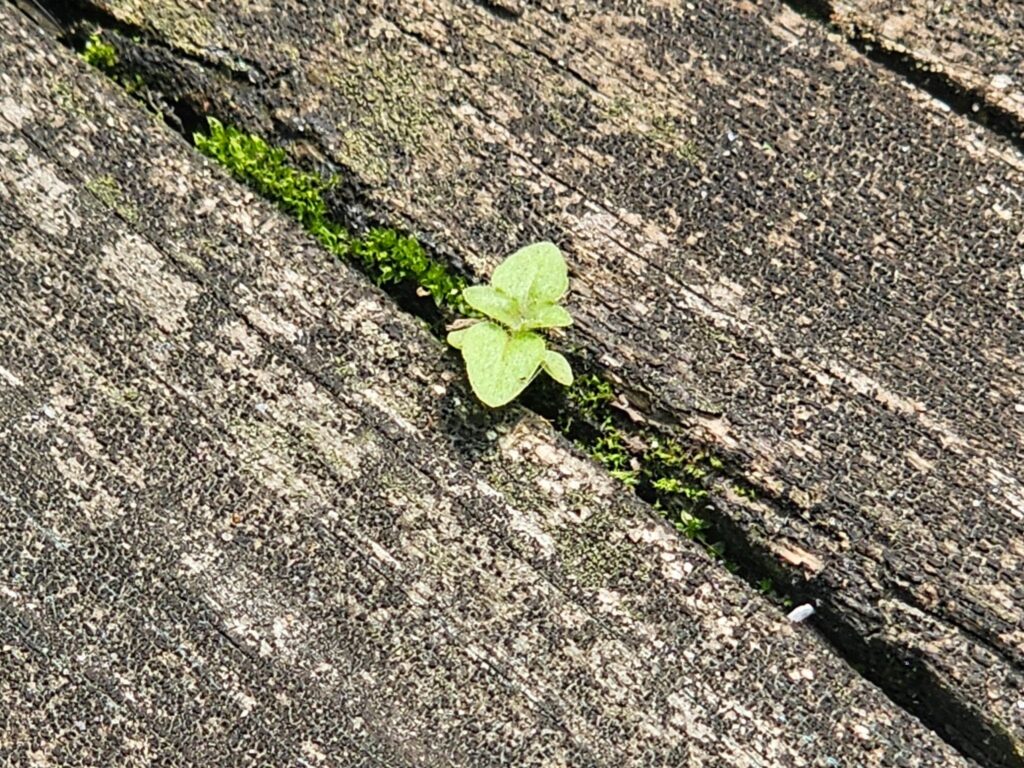
The deteriorated tissue and fiber of the wood is a perfect breeding ground for this type of biological life.
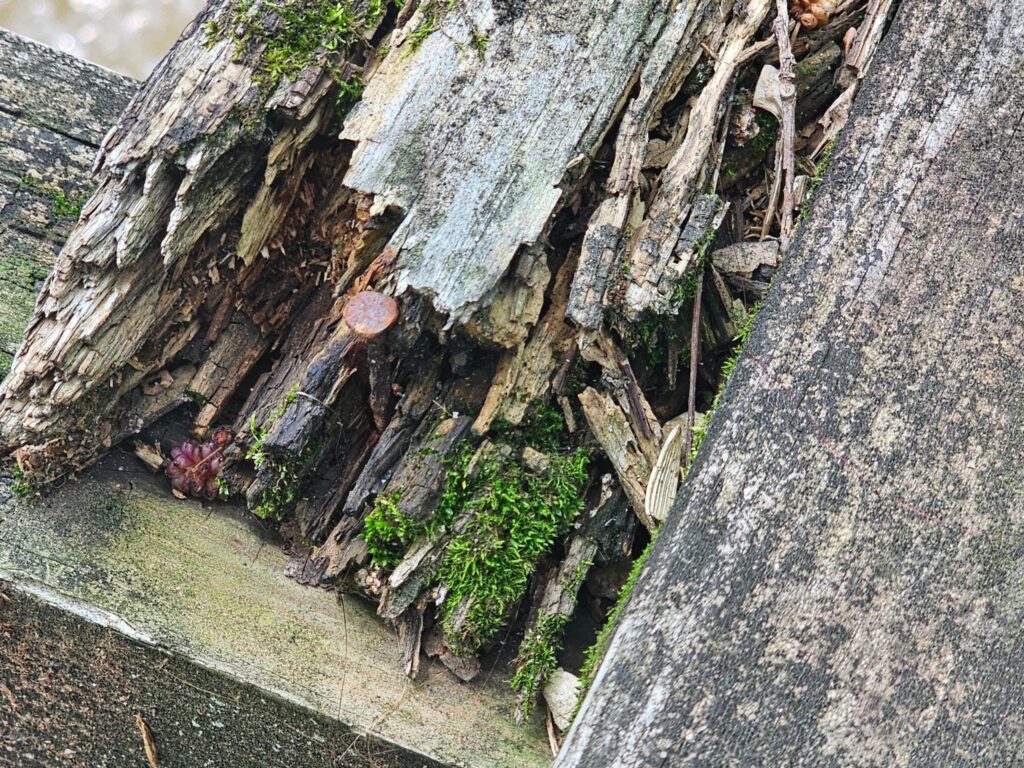
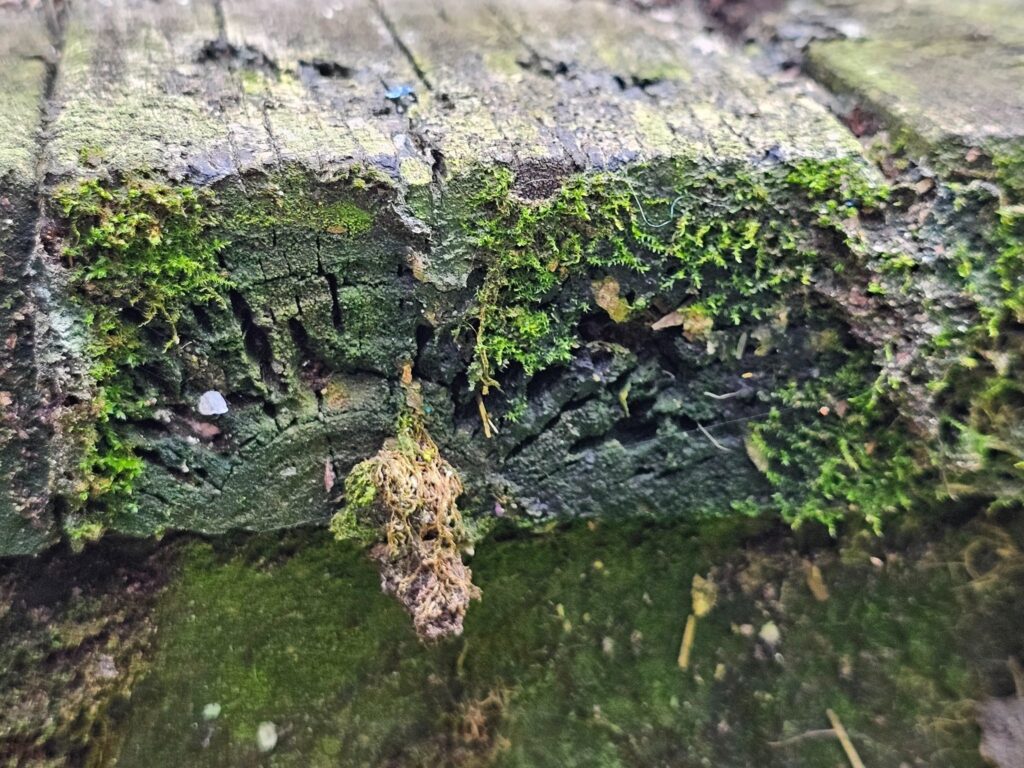
The ends of the boards are always one of the most sensitive areas to decay and deterioration. If you look at the cut end of the wood under a microscope it’s a bit like looking at a stack of straws. Wood enters into the capillary configuration of those cellular areas and will be pulled into the wood itself.
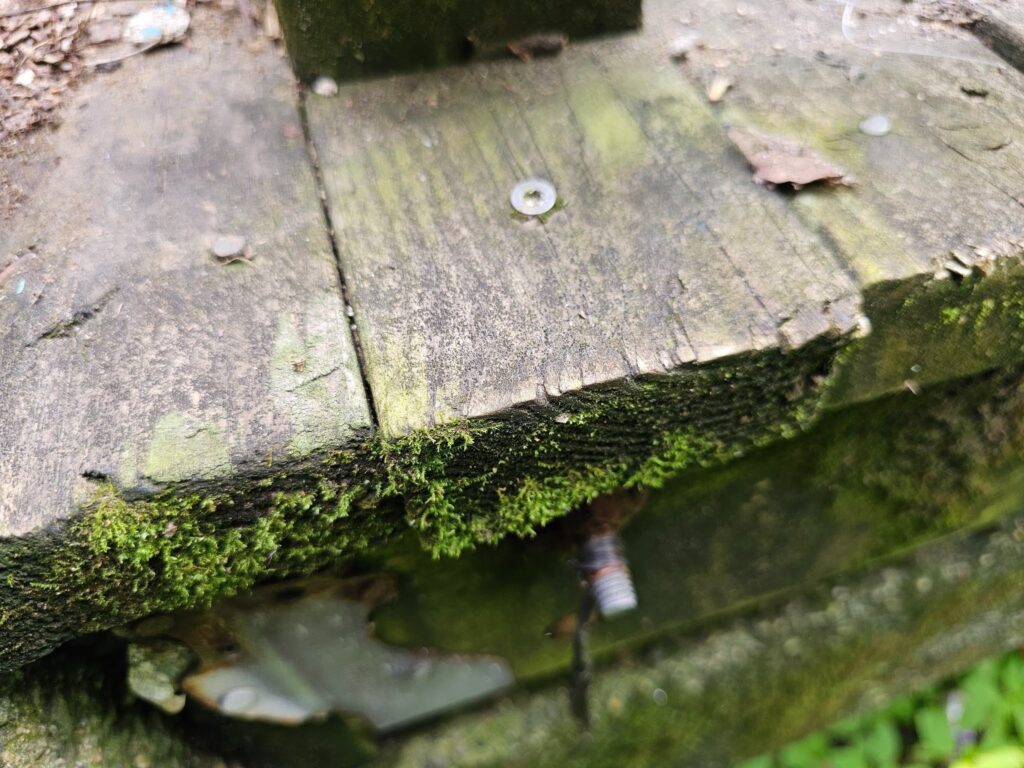
You can see this even closer in the next picture below. It’s a view of a thriving life. Even though these little areas of biological growth are each individually small, they are green and robust and growing. Unlike complex plant life, this is moss. It’s not vascular which means that it doesn’t have an internal framework of tubes (xylem and phloem). Nonetheless, from a building material perspective, these types of plant growth are always problematic. Where you have a less complex plant life growing, it will almost invariably lead to continued destruction to the point that more complex plant life grows there, without mitigation.
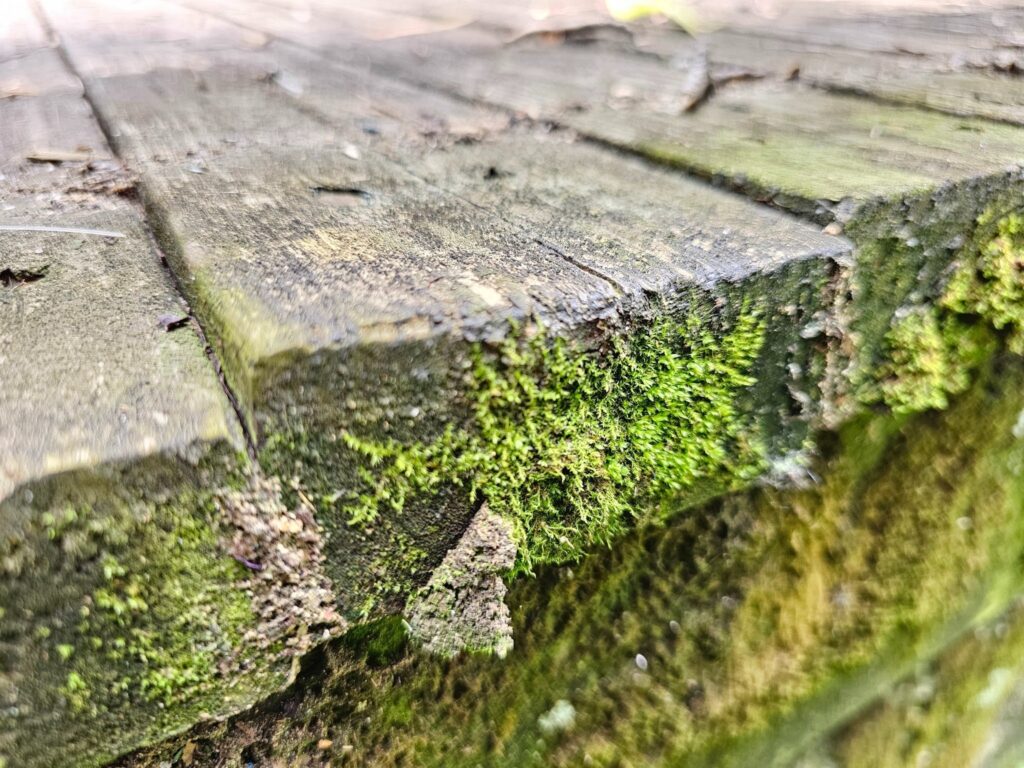
At the cut and grain, you can see voids and concentrations of moisture.
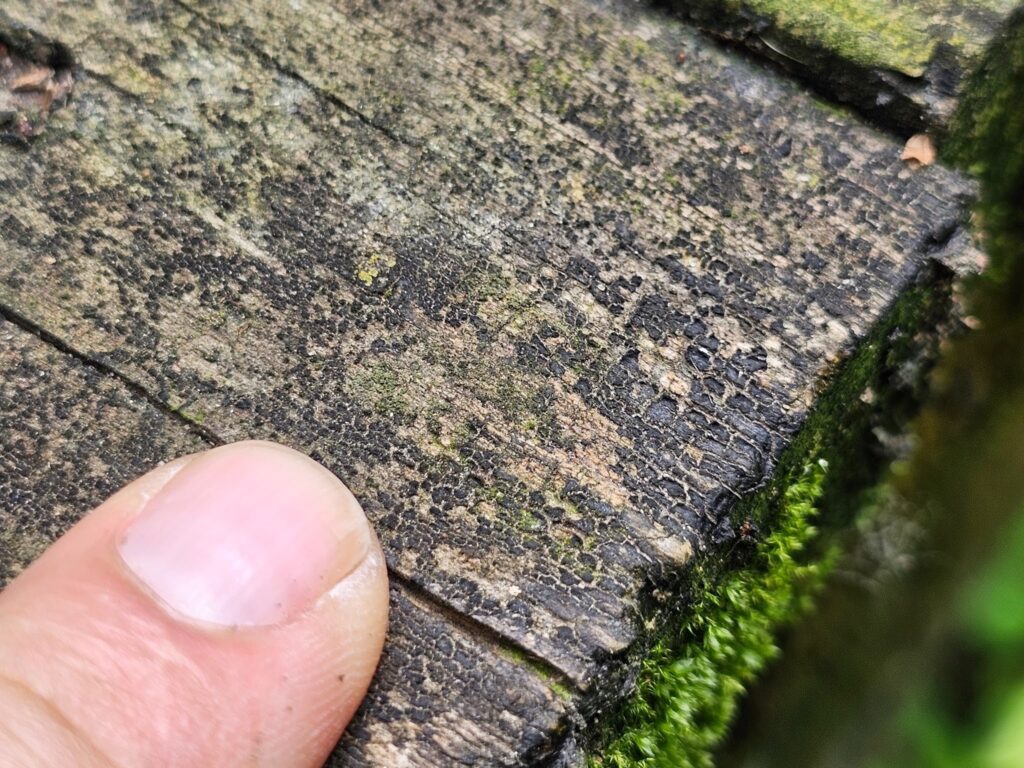
The darkness on top of the surface of the wood, in line with the direction of the grain, not only indicates concentrations of over-hydration, it also indicates moss and lichen growth on the surface of the wood. These things are both related to deterioration and they are related to one another.
We recommend building and homeowners here in Washington DC use a contractor, like us, who understands and cares about quality, deck and patio longevity, and simply doing things right. Always, feel free to reach out to us here at Dupont Decks and Patios, you can give us a can or just drop us a line. We are happy to help with almost all steps of the deck and patio building and design process.
Let us know about your ideas and talk to us if you have questions about possibilities. You can call us at (202) 774-9128. You can find us online and you can email us there as well at https://dupontdeckspatiosdc.com/contact-us/