Asphalt Melting Through Brick Paving: Causes, Damage & Prevention
This past week, we looked at brick paving that was installed without mortar. Essentially, these bricks were set tight to each other without mortar between them. In some cases, bricks can be set in a paving with integral spacers that allow for limited joint space but still not large enough for mortar. Even in a small space where it’s just a quarter of an inch between pavers, that’s generally considered to be too small for mortar. Instead bricks that are set with offset spacers between them, can have sand or even polymer sand placed between them.
This type of installation with spacers and sand in the open joint will allow for flexibility and movement. Here, the installation does not have an integral spacer between the bricks. Instead there is a thin sand powder but really the installation is intended to be pretty tight. The asphalt or bitumen covering on the substrate is intended to just provide a little bit of cohesion but allow for flexibility and movement.
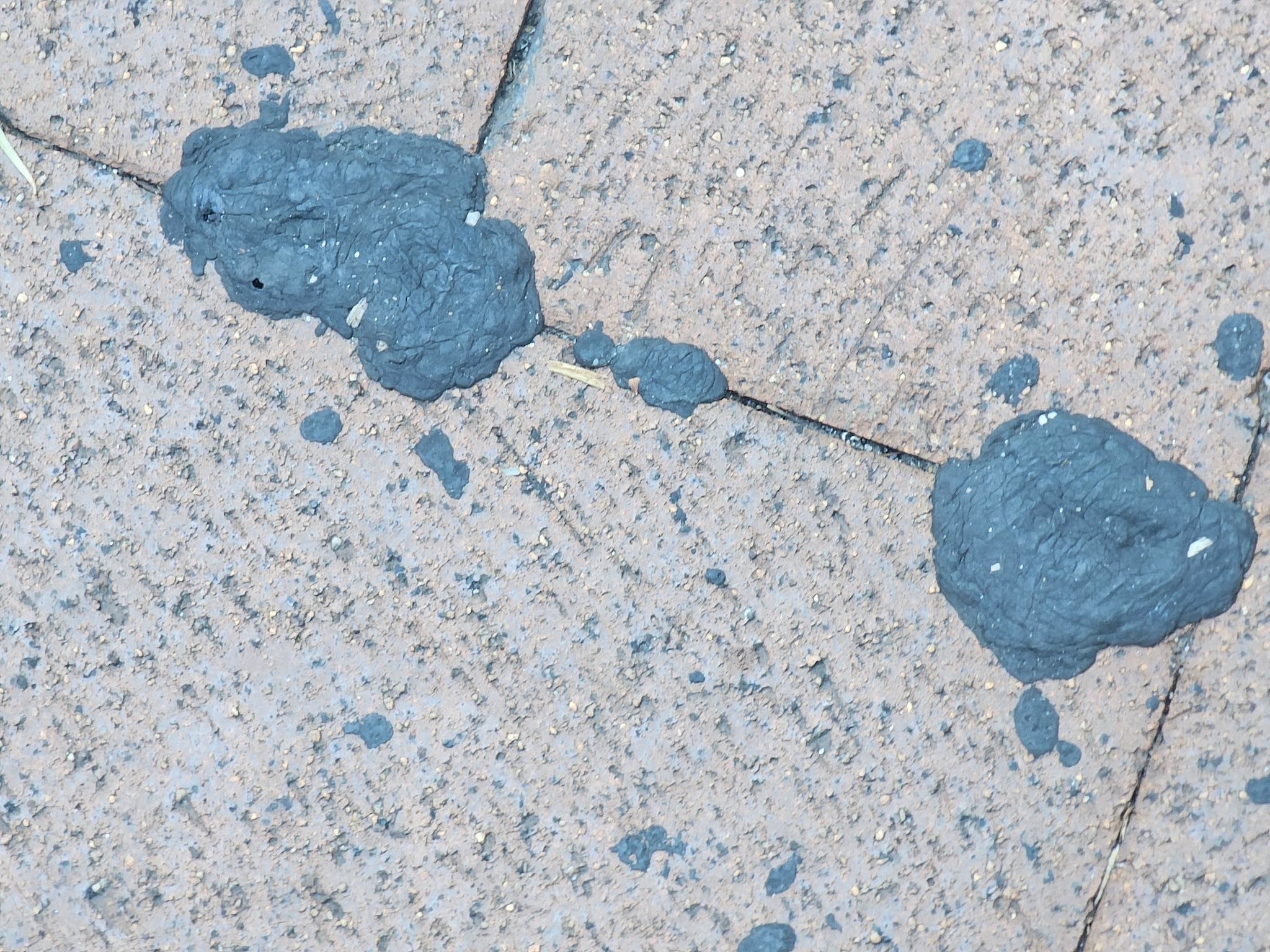
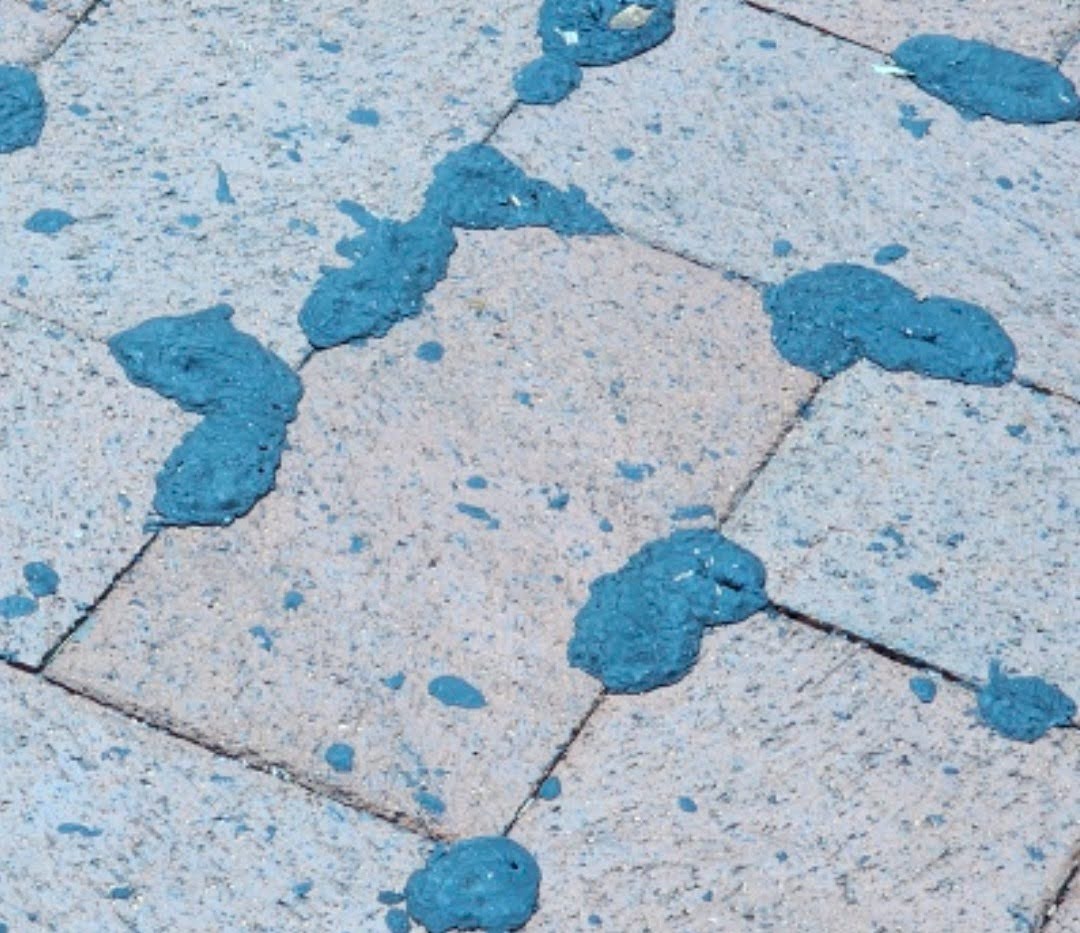
This past week, we looked at how this particular asphalt ended up oozing through the bricks from below. It caused a big problem because it ruins the aesthetics and also causes a functional problem. Especially when it’s very hot, when people walk on that brickwork, they’re getting that bitumen asphalt into the soles of their shoes. Later when they sit in their car or walk into their home or office that bitumen then gets on to the floor. It’s not easy to clean the bitumen off of the floor.
If the floor is carpet, you consider the application or accidental spotting of little areas of bitumen or asphalt to be damaged. It’s hard to fix that type of damage. The solvents needed to remove the asphalt or bitumen from a rug or carpet will often damage many types of carpet materials.
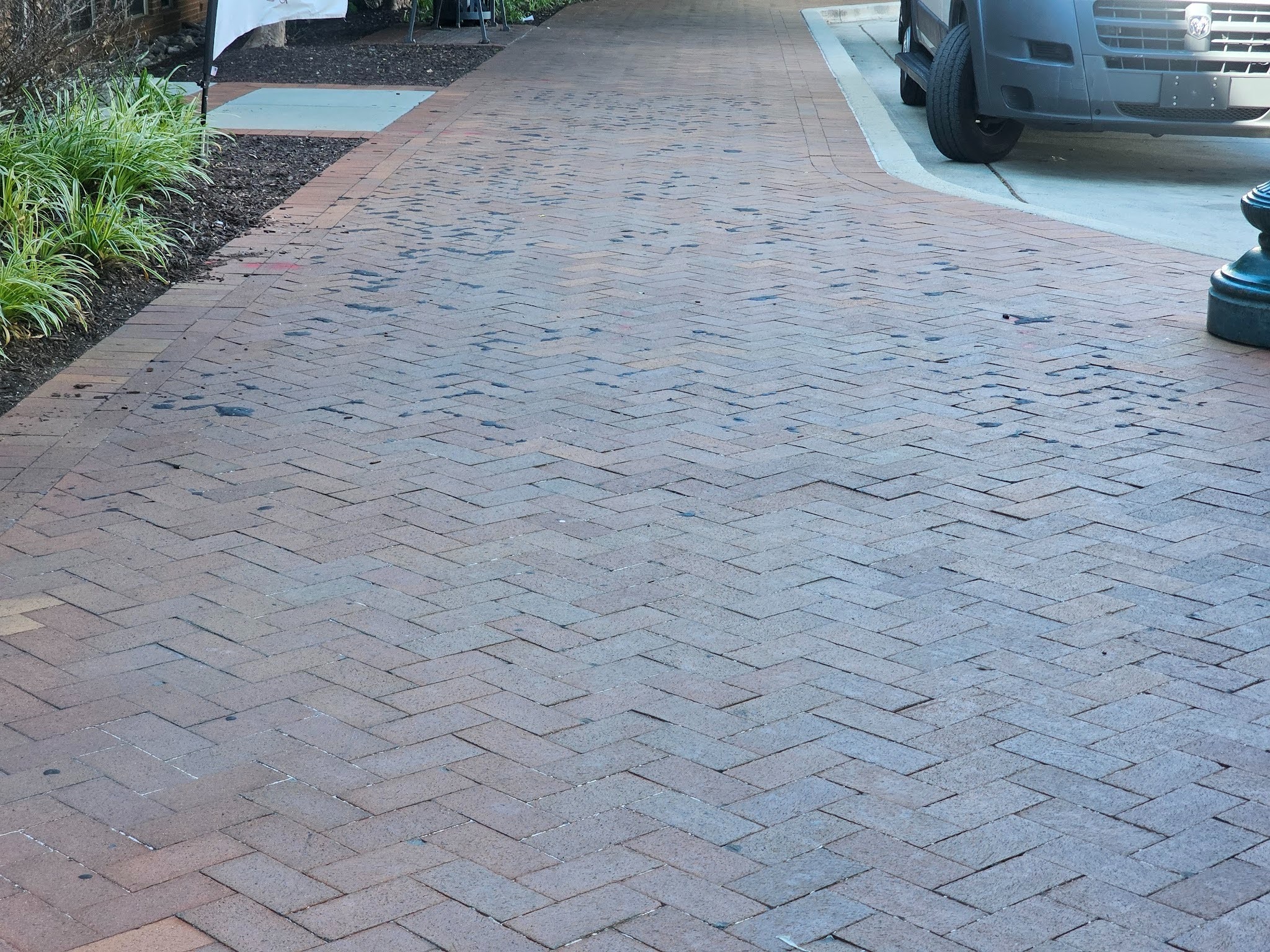
So the problem here where the spots have come up throughout the brick work, is very problematic. We looked back to try to understand why this happened. One of the big problems is, here, unlike many of the historic neighborhoods of Washington DC, there wasn’t enough tree shade. Some of the brick areas are in direct sunlight. Especially with global warming happening at an increasing rate. The rays of the sun and ambient temperatures are getting hotter.
People generally understand the implications of global warming, unless they’re politically or economically motivated to erroneously obfuscate the reality and deny it. It is real, it doesn’t matter how much the media arms controlled by one political side tell you it isn’t. We don’t have enough data to tell you that this particular problem is specifically related to just global warming. We also think it’s probably an issue of lack of shading and the cure time allowed before high pressure and high temperatures were applied to the surface.
If you look closely in the picture below, you can see that there are limited areas where the problem is extensive. There are other areas though where the asphalt doesn’t really show up as much. The areas where it shows up much more are the areas where there’s less tree coverage. Therein, we recognize a correlation between the amount of exposure to sunlight and the amount of bitumen that has oozed out between the bricks.
Most of our companies work focuses on the installation decks and patios. We’re not always working on restoration of historic brick, but we think it’s important to point out that the brick working used in this particular paving happens to be a more modern type of brick. The important takeaway is that there is a difference between historic brick and modern bricks. Generally modern bricks will have a much higher compressive strength and slightly higher tensile strength.
Both types of bricks have relatively weak tensile strength resistance though. When installed properly with good substrate compaction, the tensile strength is generally not as important. If vehicles or things like that are being moved or driven over brickwork where it’s only intended to have a subgrade compaction to support non-vehicular traffic, that can be a big problem.
Use a contractor who understands and cares about doing things right. Always, feel free to reach out to us here at Dupont Decks and Patios. We are happy to help with almost all steps of the deck building and design process. A backyard and outdoor space should make a significant, positive impact on both quality of life and home value. We can help with more than just decks, we also build patios, pergolas, ramadas, awnings, gazebos, arbors, and privacy fences.
Let us know about your ideas and talk to us if you have questions about possibilities. We are happy to participate in improving your outdoor space and quality of life! You can call us at (202) 774-9128. You can find us online at our contatc us page and you can email us there as well.